Every breeder you will ever come across says they love their dogs. Every website features cute puppy photos and promises about health and temperament. But the reality is that there is an enormous difference between breeders who are truly doing the work and those who are cutting corners — and the consequences of that difference land squarely on the puppy and the family who takes them home.
If you are looking for an Australian Shepherd, knowing what to look for (and what to run from) in a breeder can save you years of heartache and thousands of dollars in veterinary bills. Here is what responsible breeding actually looks like.
Health Testing That Actually Protects Puppies
The single most important thing a breeder can do is health test their Australian Shepherds — and we are not talking about a standard vet visit where the vet says the dog looks healthy. We are talking about specific, standardized tests that screen for conditions known to affect Australian Shepherds.
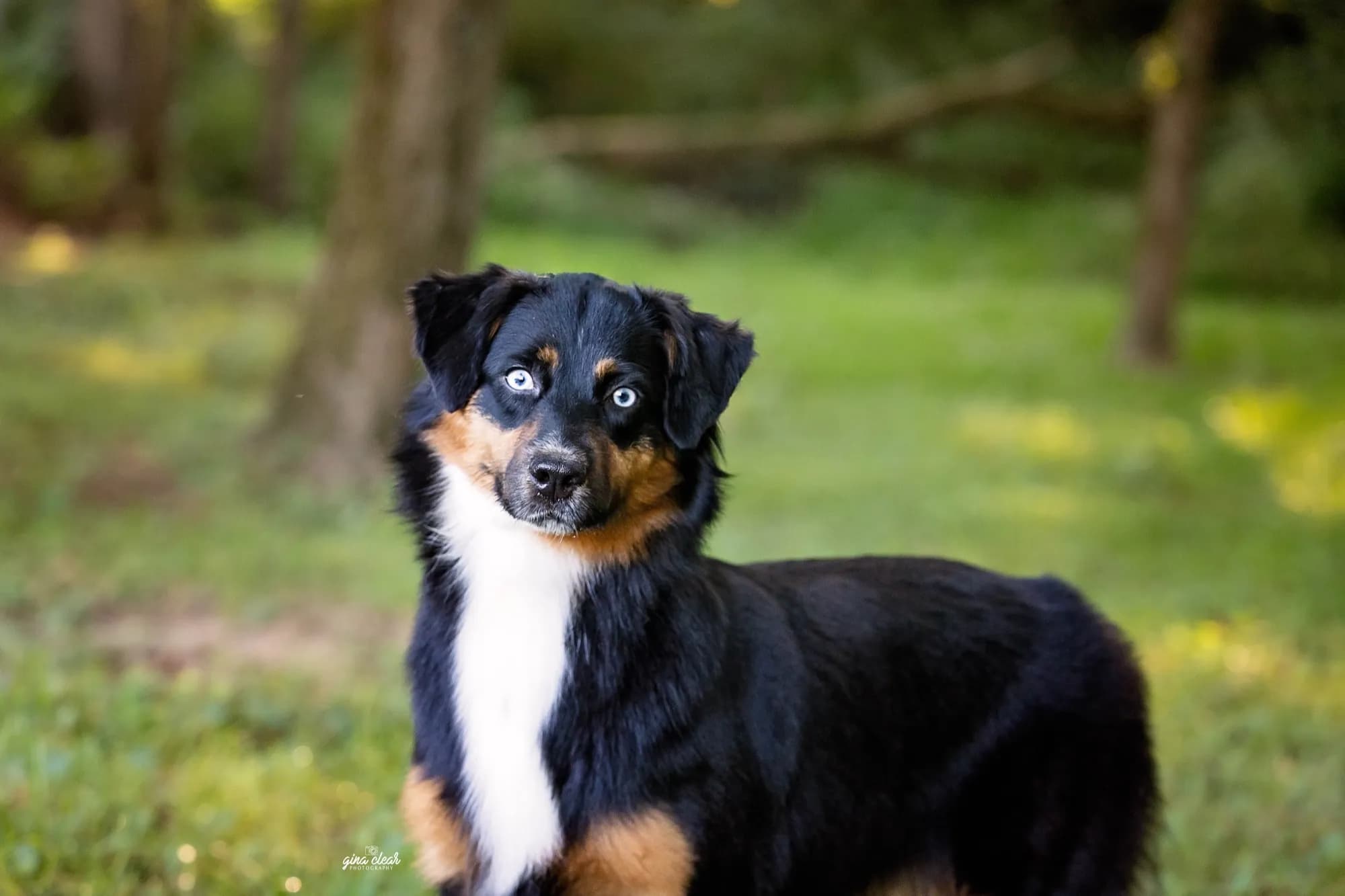
At minimum, a responsible Aussie breeder should be performing:
- Hip and elbow evaluations through the Orthopedic Foundation for Animals (OFA)
- [CAER](https://www.ofa.org/diseases/eye-certification) eye certification by a board-certified veterinary ophthalmologist
- Comprehensive genetic panels screening for MDR1 drug sensitivity, hereditary cataracts (HSF4), Collie Eye Anomaly (CEA), Progressive Retinal Atrophy (PRA), and other breed-relevant conditions
These results should be publicly verifiable. You can look up any dog's OFA results on the OFA website by searching their registered name or number. A breeder who tells you their dogs are "vet checked" but cannot provide OFA numbers or genetic test results is not health testing — they are guessing.
Temperament Should Lead the Conversation
Structure and health testing get most of the attention in breeder evaluations, and they should. But temperament is what you live with every day. A dog with perfect hips and a nervous, reactive, or unstable temperament is not a good companion for anyone.
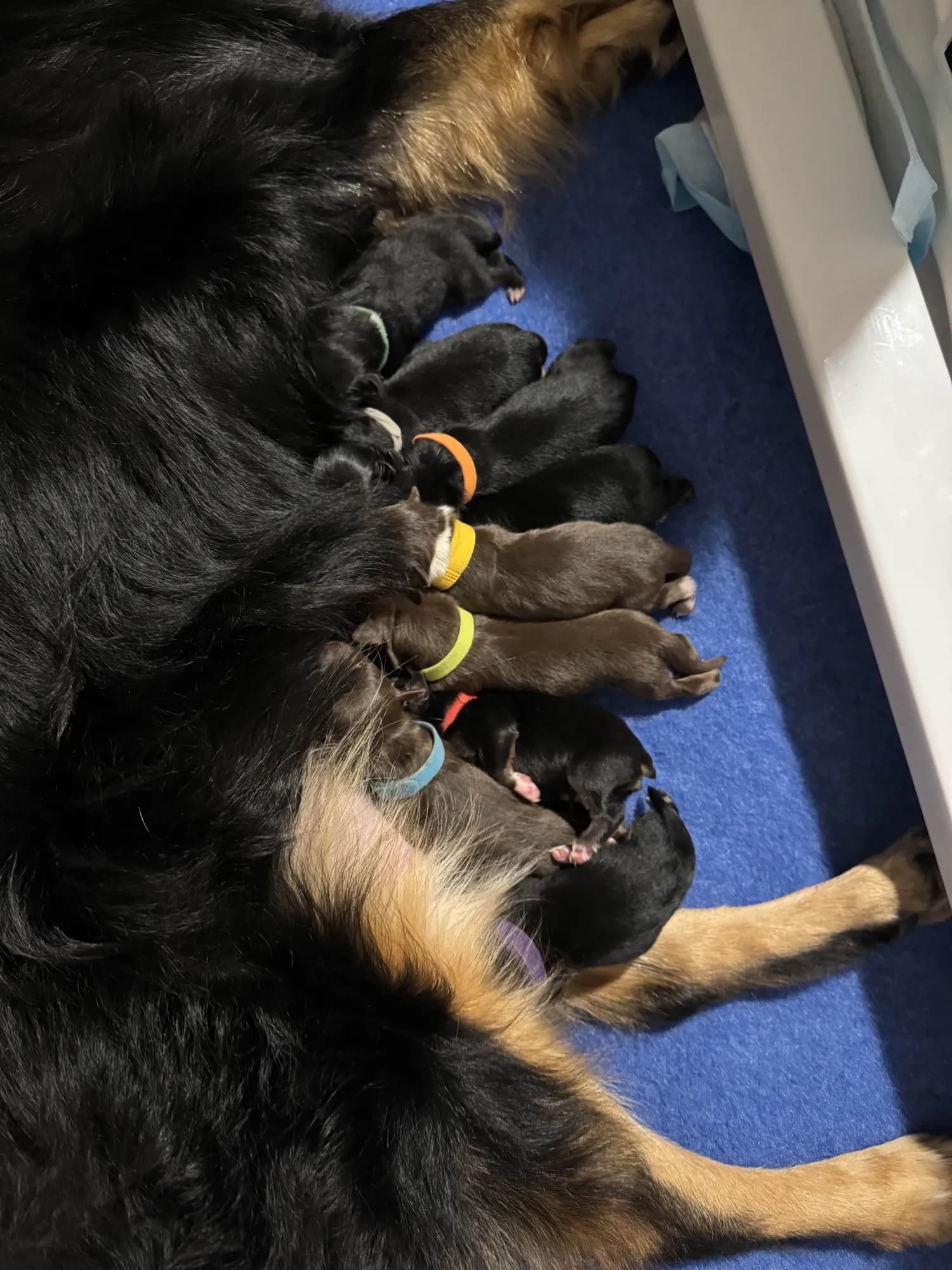
Responsible breeders evaluate temperament seriously. They know each of their dogs' personalities inside and out — their strengths, their sensitivities, their drives, and their quirks. They select breeding pairs not just for what they look like on paper, but for the behavioral traits they will pass to their puppies.
Ask a breeder to describe their dogs' temperaments in detail. A good breeder will light up talking about each dog as an individual. A breeder who only talks about color, size, or price is telling you where their priorities lie.
The First Eight Weeks Matter More Than Most People Realize
How a puppy is raised from birth to eight weeks has a profound impact on who that dog becomes. The socialization window that opens during this period is one of the most critical phases of a dog's entire life. A breeder who understands this will have a structured enrichment and socialization program in place.
Look for breeders who:
- Perform [Early Neurological Stimulation](https://www.akc.org/expert-advice/dog-breeding/early-neurological-stimulation/) and Early Scent Introduction
- Introduce puppies to a variety of surfaces, sounds, objects, and people
- Begin the foundations of crate training and potty habits
- Observe and document each puppy's individual temperament and development
- Raise puppies inside the home, not in outdoor kennels or barns
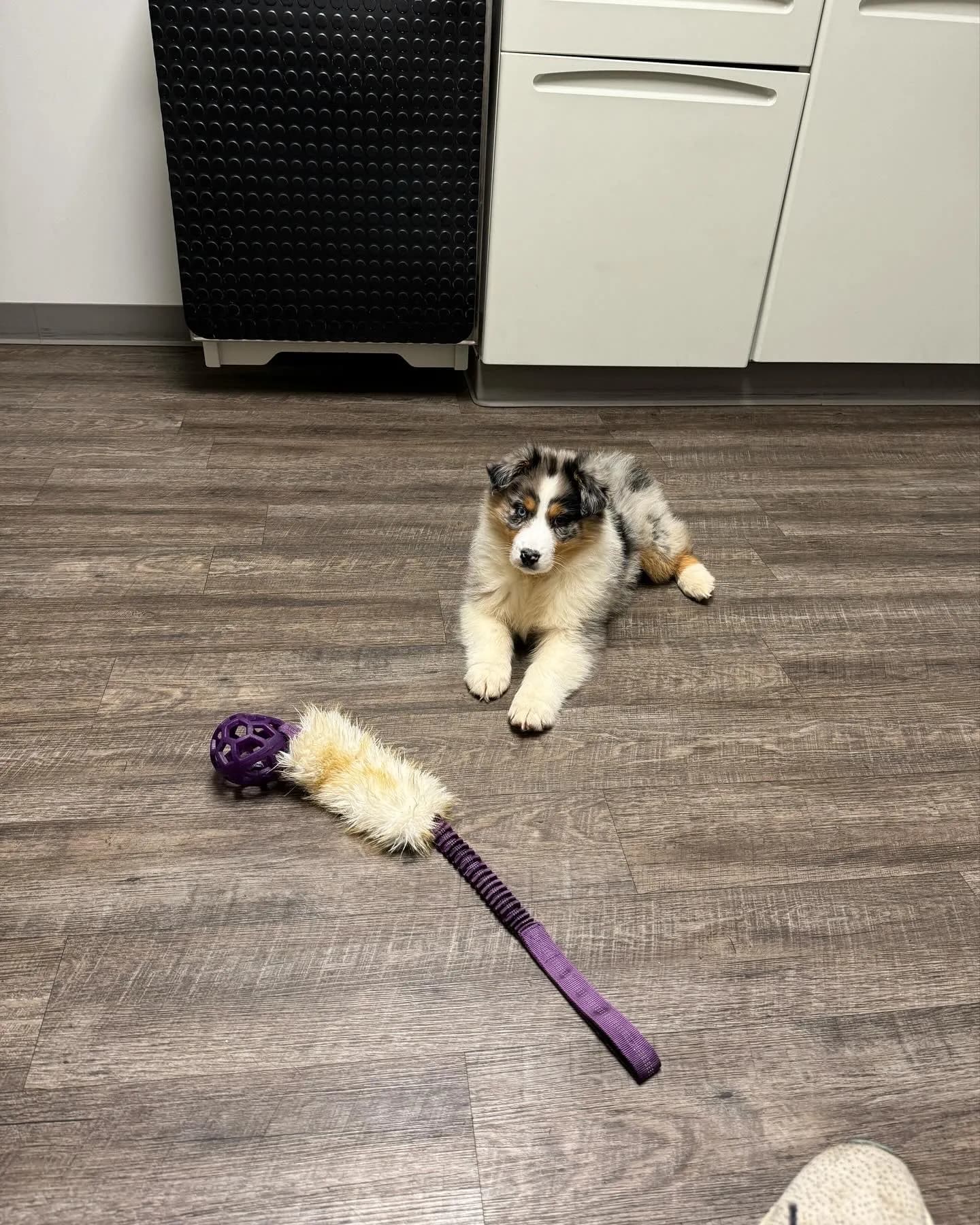
A breeder who sends puppies home at eight weeks with no socialization, no enrichment, and no individual assessment is sending those puppies out at a disadvantage that can take months or years to overcome — if it can be overcome at all.
Contracts, Support, and Lifetime Commitment
A responsible breeder stands behind every puppy they produce. That means a written contract that includes a health guarantee, spay and neuter requirements for pet puppies, and a clause requiring the dog to be returned to the breeder if the family can no longer keep it.
That last point is non-negotiable for ethical breeders. Every dog we bring into this world is our responsibility for life. If a family's circumstances change — a move, a divorce, a health crisis — that dog comes back to us. It does not end up in a shelter. It does not get rehomed through Craigslist.
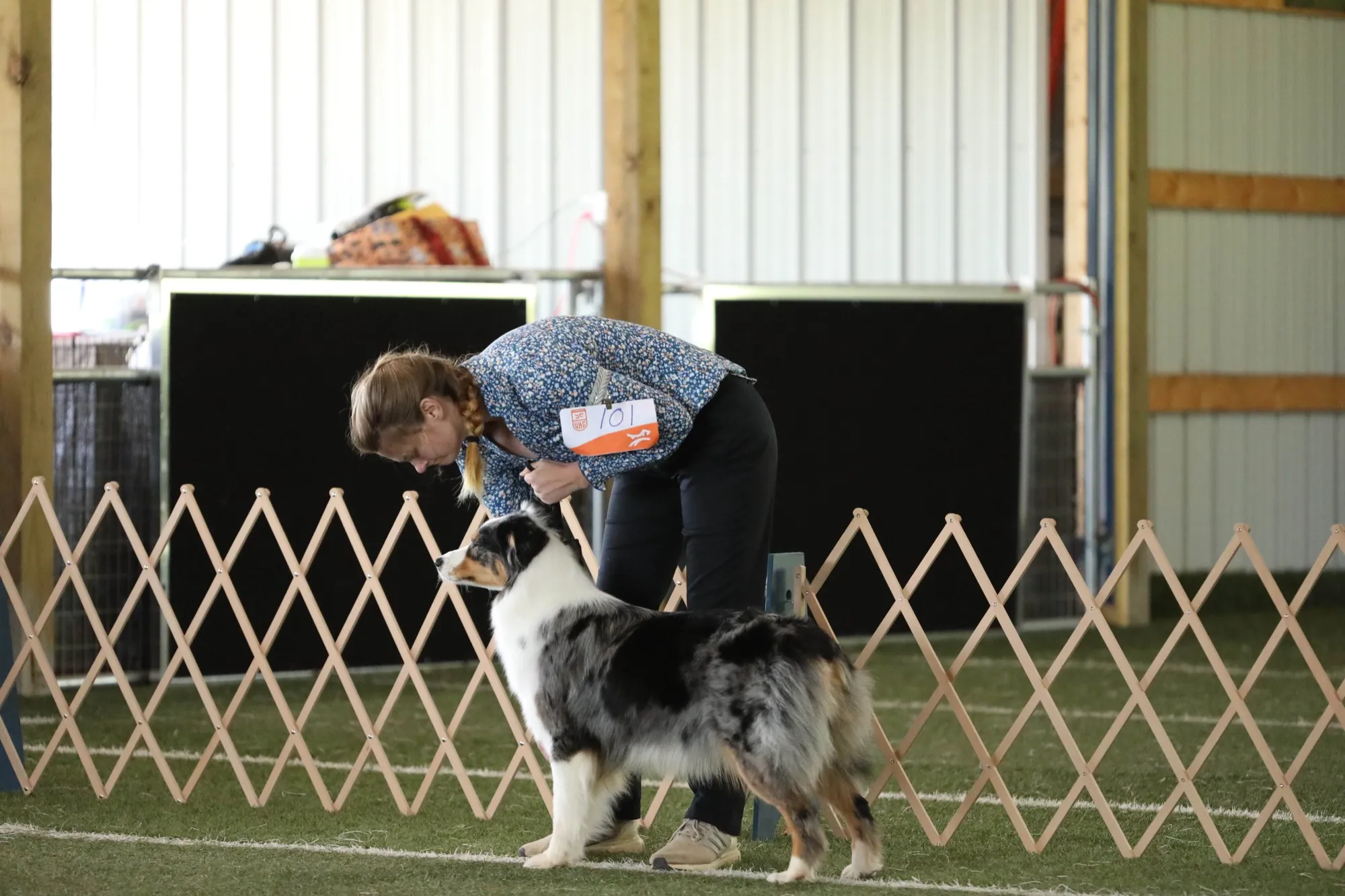
A good breeder is also a lifelong resource. They should be available and willing to help with training questions, health concerns, and life transitions for the entire life of the dog. If a breeder sells you a puppy and disappears, that is a red flag.
Red Flags to Watch For
Not every breeder who does things differently is a bad breeder, but there are clear warning signs that should make you pause:
- No health testing, or health testing that is limited to a basic vet check
- No titles or evaluations on the parent Australian Shepherds — no conformation, no performance, no objective assessment of quality
- Multiple litters available at all times, or breeding many different breeds
- Puppies available without an application or screening process — if anyone with cash can get a puppy, the breeder is not prioritizing placement
- No contract, or a contract that does not include a return clause
- Resistance to questions — a good breeder welcomes questions and sees them as a sign that you are a serious, responsible buyer
- Pressure to decide quickly — ethical breeders are not in a rush to sell puppies
- Puppies going home before eight weeks of age
- No willingness to let you meet the parent dogs or see where the puppies are raised
- "Mini," "Toy," "Teacup," or "Pocket" Australian Shepherd labels — there is no such breed. The label is a marketing term, and the only legitimate smaller breed in the Aussie family is the AKC-recognized Miniature American Shepherd. Our post on why "Mini" and "Toy" Aussies aren't a real breed walks through what those terms actually mean.
If something feels off, trust your instincts. A responsible breeder will never make you feel rushed, pressured, or uncomfortable for asking hard questions.
Choosing the Right Breeder Benefits Everyone
When you choose a responsible breeder, you are not just getting a healthier, better-adjusted puppy. You are supporting a model of breeding that prioritizes the welfare of the dogs above profit. You are investing in a relationship with someone who will be in your corner for the life of your dog. And you are helping to ensure that the Australian Shepherd breed remains healthy, sound, and true to its purpose for generations to come.
Take your time. Do your research. Ask the hard questions. The right breeder will be glad you did.
Frequently Asked Questions
What is the difference between a responsible breeder and a backyard breeder?
A responsible breeder performs full breed-standard health testing on every breeding dog (OFA hips and elbows, CAER eye exam by a board-certified ophthalmologist, comprehensive genetic panel), titles or otherwise objectively evaluates their dogs, raises puppies inside the home with structured socialization, screens buyers carefully, contracts for the dog to come back to the breeder if the family cannot keep it, and remains a resource for the life of the dog. A backyard breeder typically does none of those things and prices puppies based on what the market will pay rather than what went into producing them.
How do I verify a breeder's OFA health testing claims?
Ask the breeder for the registered name of each parent dog and search that name at ofa.org. The dog's complete OFA record — hips, elbows, eyes, any other submitted evaluations, and CHIC status — will appear if those tests were actually completed and submitted. If no record appears, the dog has no OFA testing on file. Our companion post on what health tested actually means walks through the full verification process.
What questions should I ask an Australian Shepherd breeder before buying a puppy?
Ask for the registered names and OFA numbers of both parents so you can verify the health testing yourself. Ask what genetic panel was run and request a copy of the results. Ask how the breeder evaluates temperament and what their socialization protocol looks like in the first eight weeks. Ask for the written contract and read the return clause carefully. Ask how many litters the breeder produces per year and how they choose families. A responsible breeder will welcome every one of these questions.
Is it a red flag if a breeder offers a puppy without an application process?
Yes. A responsible breeder is choosy about who their puppies go to because they will stand behind every puppy for the life of the dog. A breeder who will sell a puppy to anyone with a deposit is not screening for fit, which means they are either not committed to lifetime support or not concerned about whether the placement is right. Either way, it is a red flag.
How much should I expect to pay for a well-bred Australian Shepherd puppy?
A well-bred Australian Shepherd from a fully health-tested, titled program in the United States typically runs $2,500 to $4,500 for a pet-home puppy on a spay or neuter contract. Breeding-rights or show-prospect puppies are priced higher. The price reflects what went into producing the puppy — health testing, titling, quality nutrition, eight weeks of structured raising — and a responsibly produced puppy is almost always less expensive over its lifetime than a poorly bred puppy that develops avoidable health or temperament issues. Our post on what it really costs to breed Australian Shepherds responsibly breaks down what those numbers actually cover.