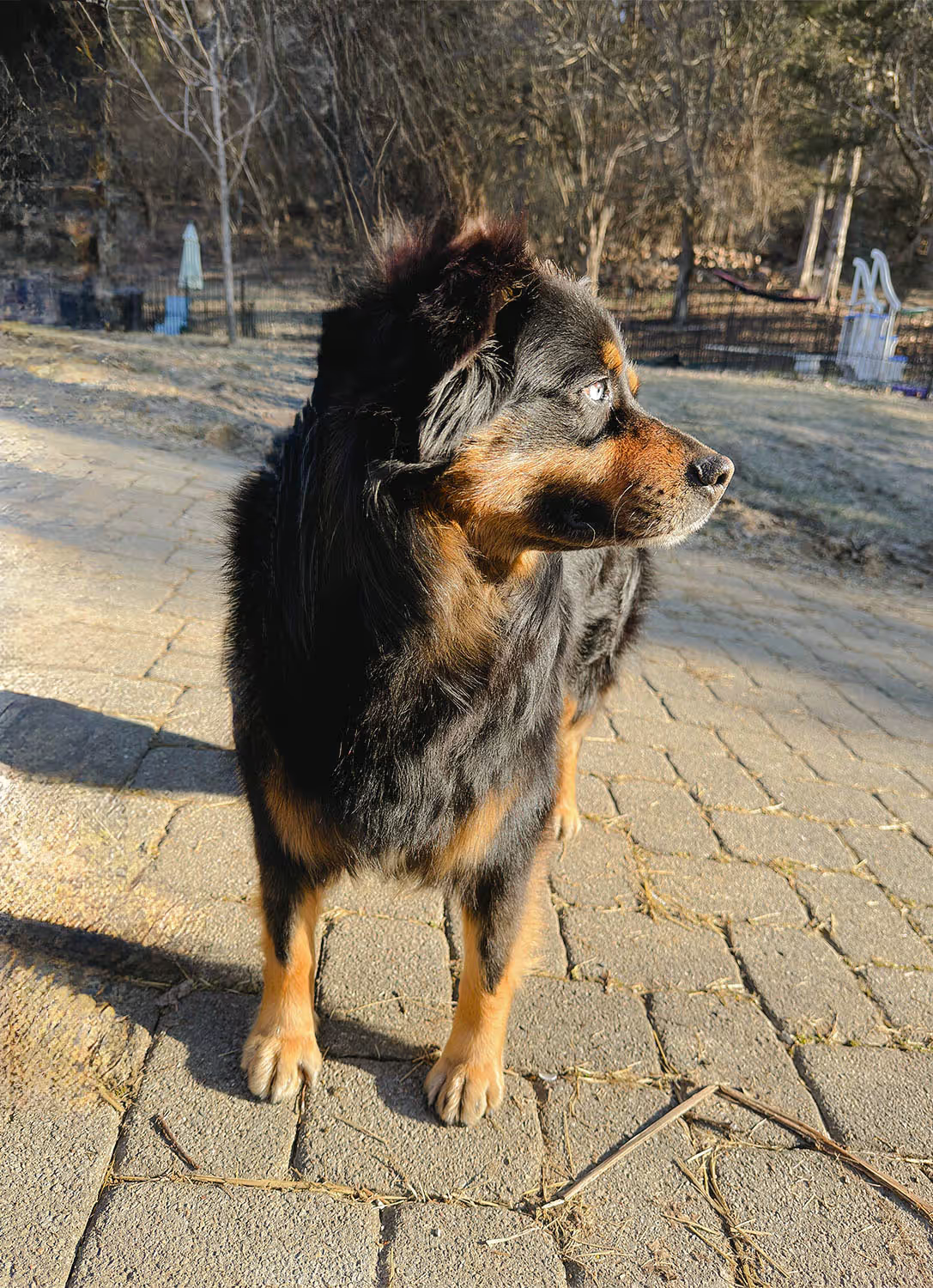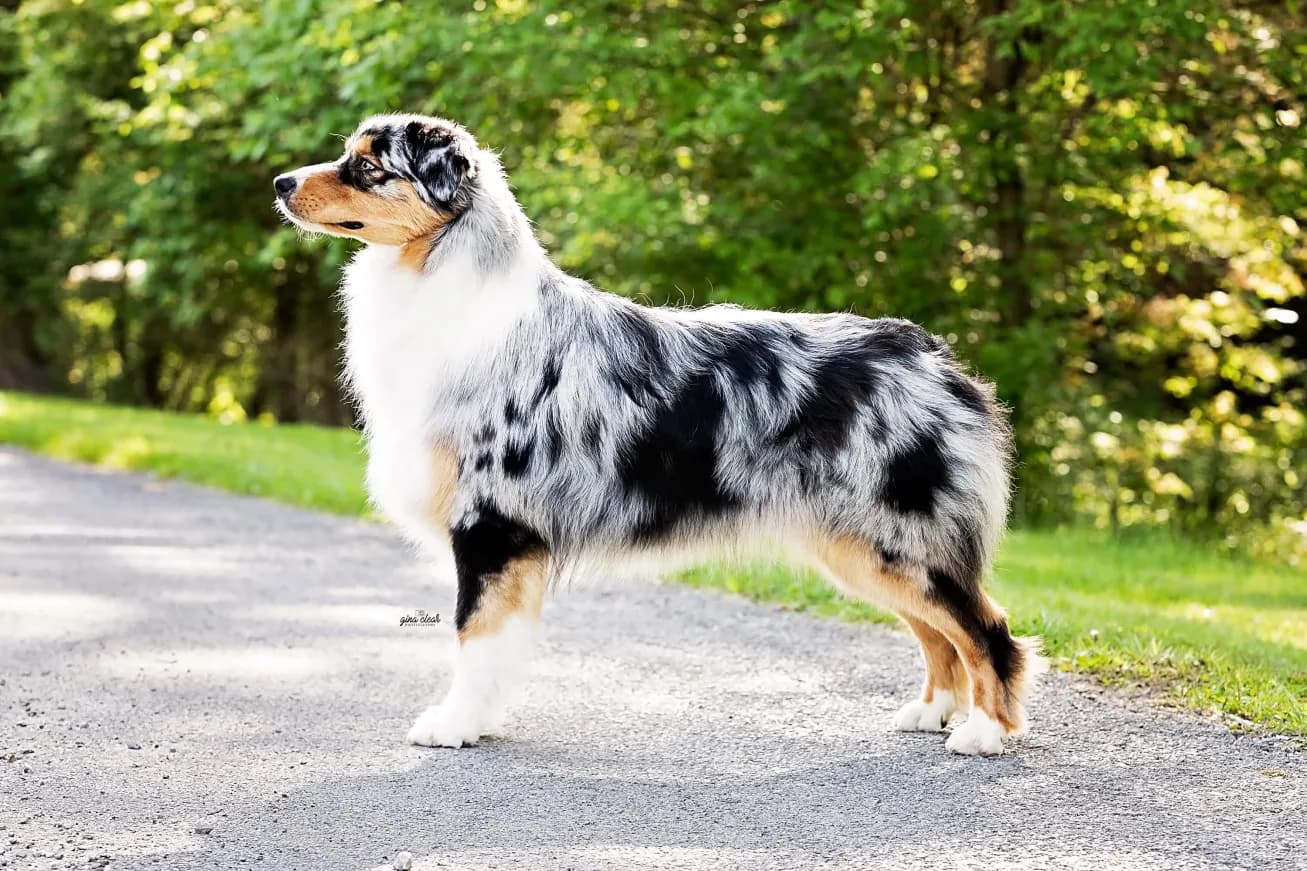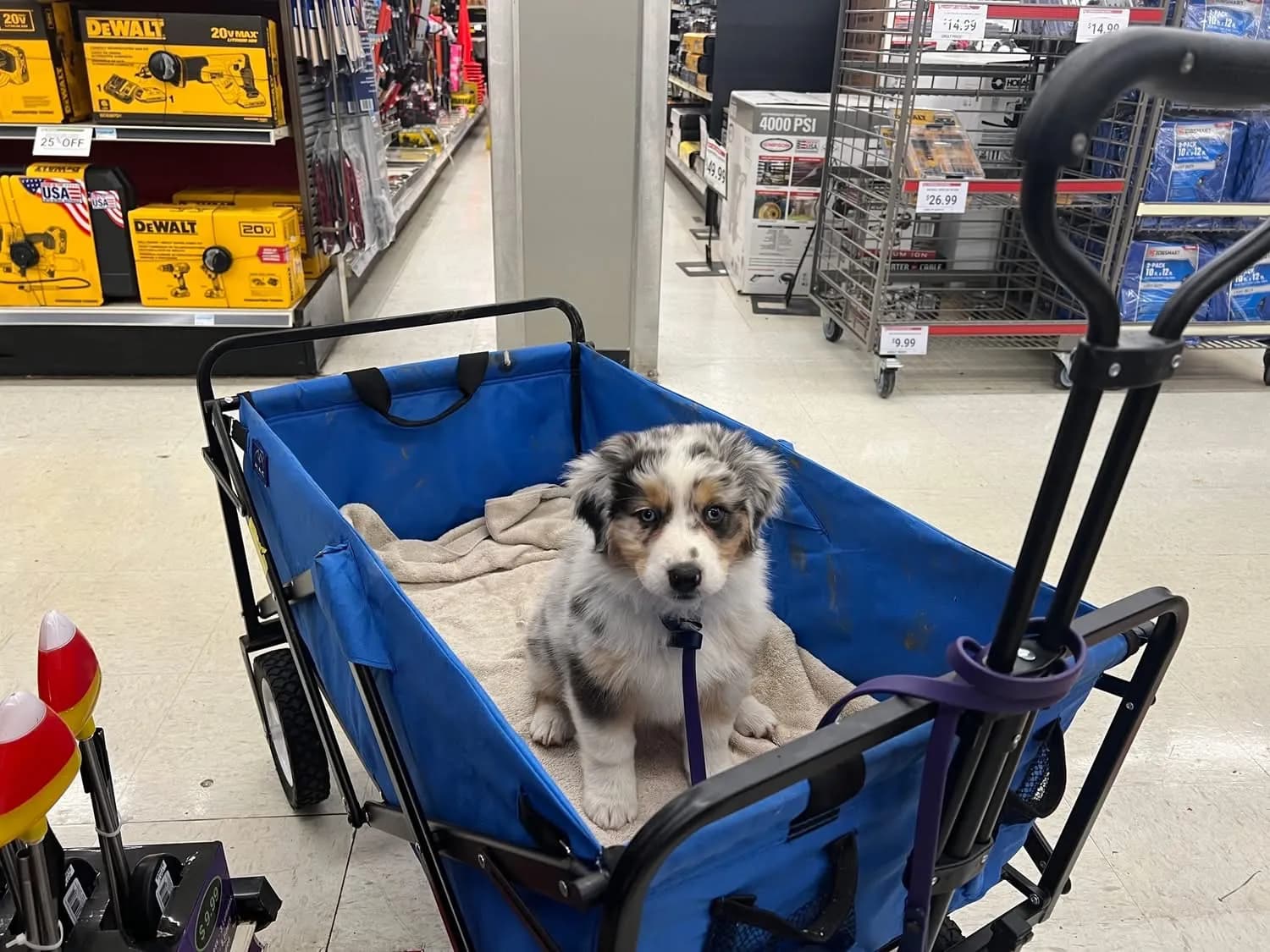
Every Australian Shepherd puppy born at Queen City Farm is raised right here in our home. Not in a kennel building. Not in a separate puppy room disconnected from daily life. Our puppies grow up surrounded by the sounds, smells, and rhythms of a real household — because that is exactly the environment we are preparing them to thrive in.
From the moment they are born to the day they go home with their families, every detail of how we raise our puppies is intentional. Here is what that looks like.
It Starts in the Whelping Box
Our whelping area is set up right in the heart of our home. Mom delivers her puppies in a quiet, comfortable space where we can monitor her around the clock. Those first days and nights are critical, and we are right there for every one of them — checking weights, making sure every puppy is nursing well, and supporting mom through the process.
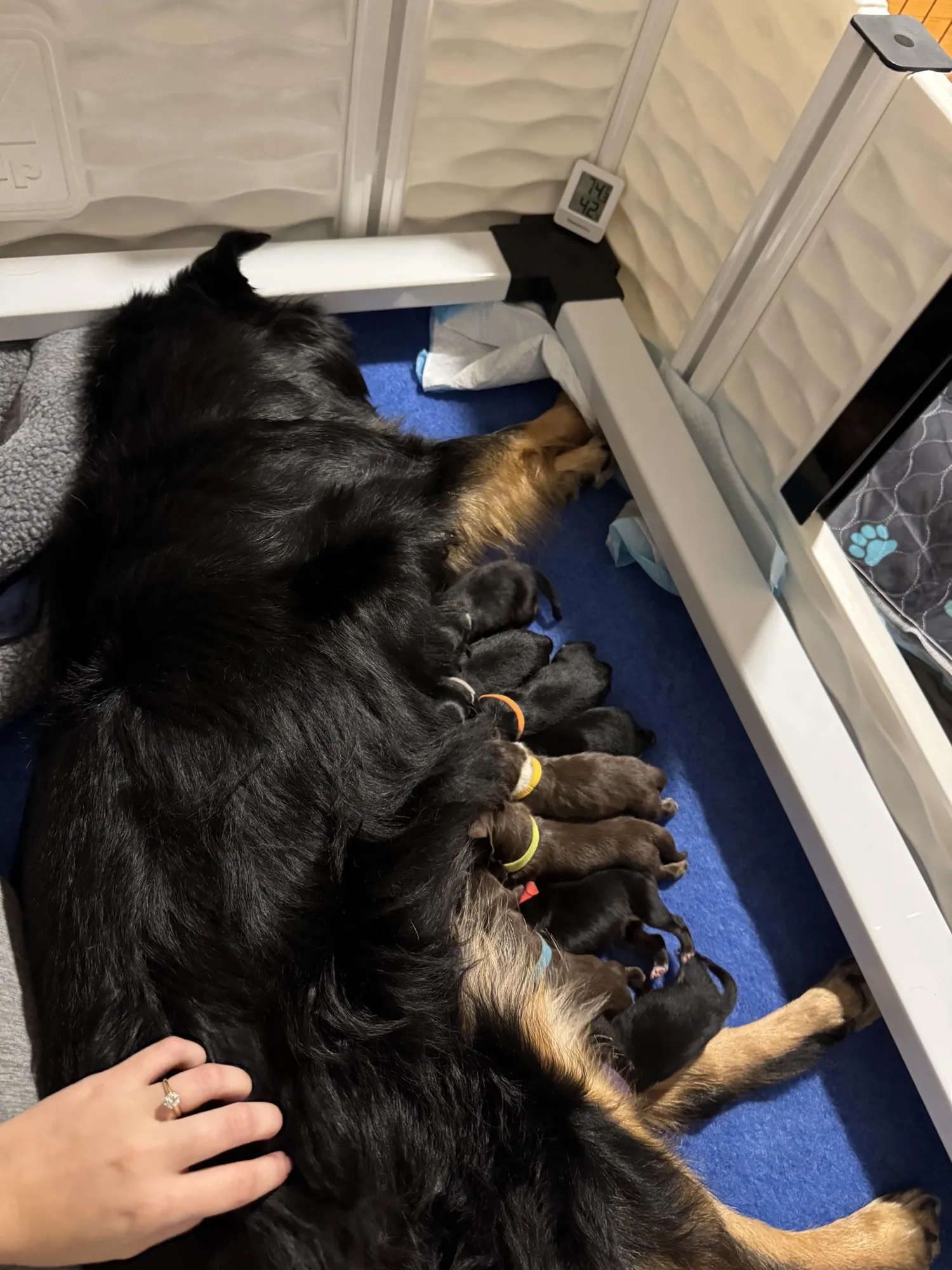
We keep detailed records from birth — individual weights, markings, and daily progress. This is not something we take lightly. A healthy start sets the tone for everything that follows.
Early Neurological Stimulation and Early Scent Introduction (Days 3-16)
Starting on day three, every puppy in our program goes through Early Neurological Stimulation and Early Scent Introduction. These are brief, gentle exercises performed once daily during a critical window of neurological development.
Early Neurological Stimulation involves five specific handling exercises — tactile stimulation, head held erect, head pointed down, supine position, and thermal stimulation. Research shows that puppies who go through the protocol develop stronger adrenal systems, greater tolerance to stress, and improved cardiovascular performance. These are not dramatic interventions. They are small, carefully timed inputs that make a measurable difference in how a puppy's nervous system develops.
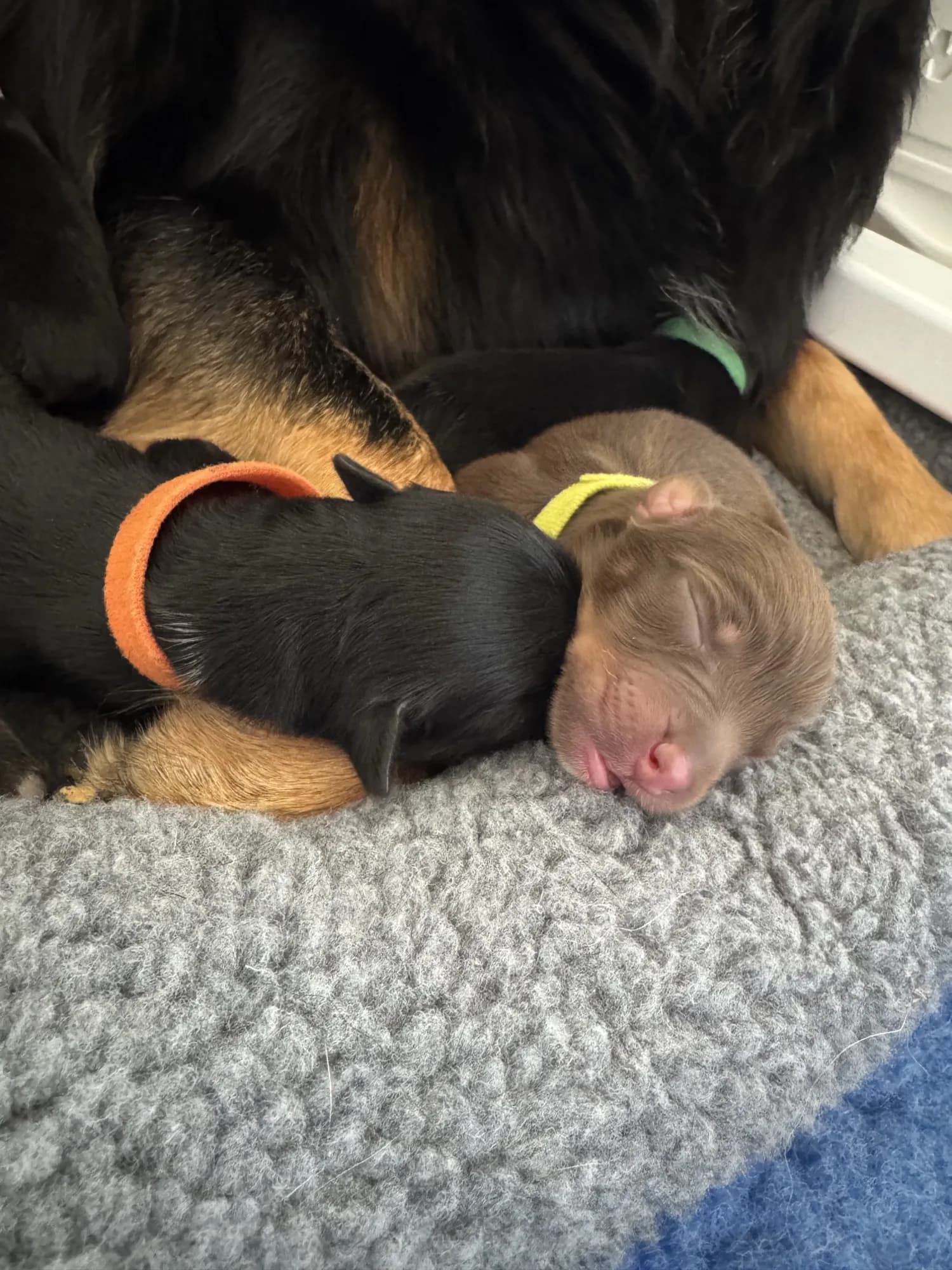
Early Scent Introduction exposes puppies to a new scent each day — herbs, spices, essential oils, natural materials. It stimulates the developing brain and begins the process of teaching puppies that new experiences are normal and safe, not something to fear.
Building Confidence Through Enrichment
As puppies grow and their eyes and ears open, the real work of socialization begins. We introduce new surfaces, sounds, textures, and objects on a carefully planned schedule. Puppies walk on tile, grass, gravel, rubber mats, and wobble boards. They hear household noises — the vacuum, the blender, the doorbell, music, and conversation.
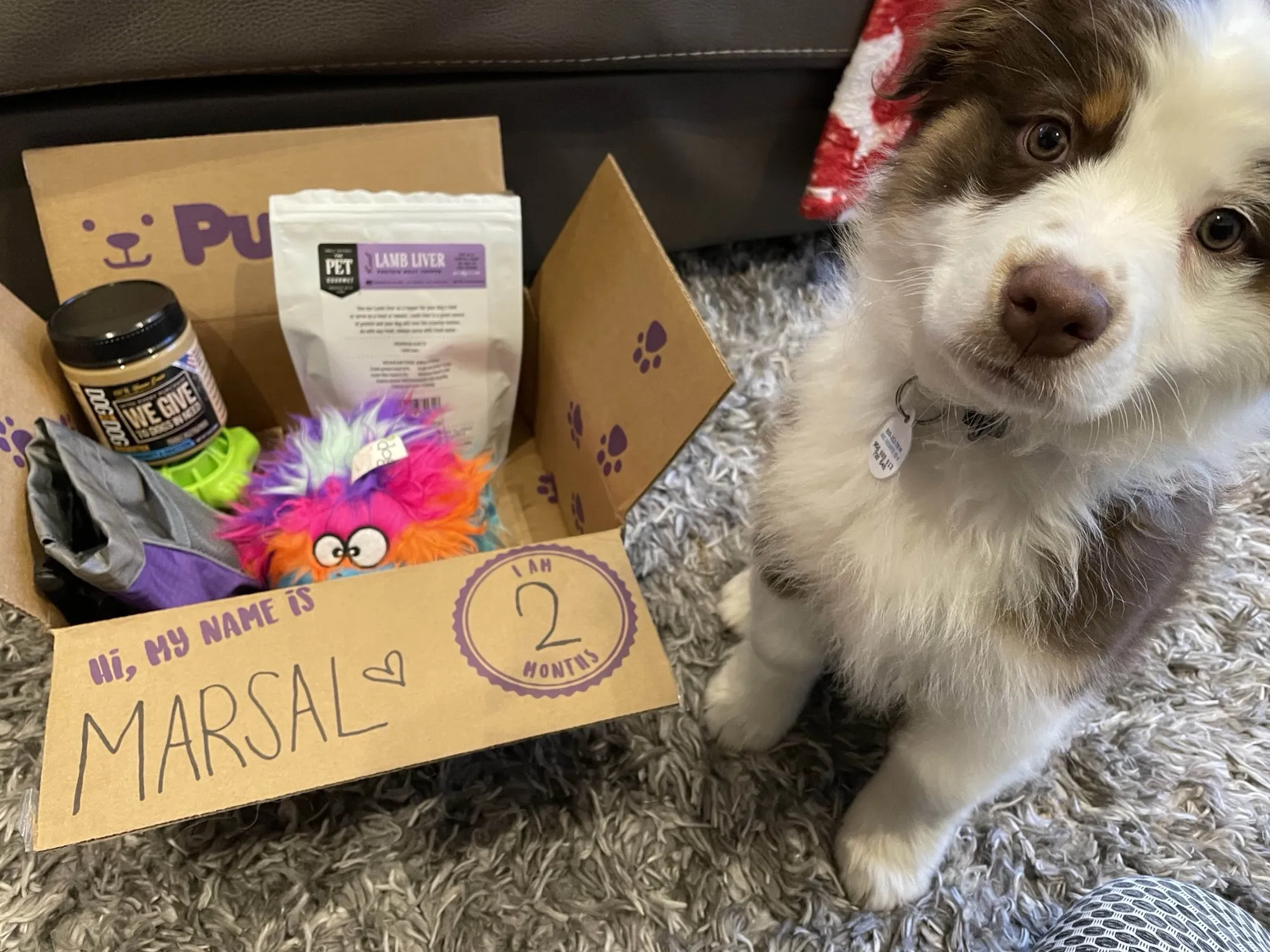
Every enrichment experience is designed to build confidence without overwhelming. We watch each puppy closely and adjust based on their individual responses. A puppy that hesitates at a new surface gets gentle encouragement and time. A puppy that charges ahead gets a new challenge. The goal is always the same — puppies that approach the world with curiosity rather than fear.
Purposeful Socialization
Socialization is not just about exposure. It is about creating positive associations with the people, animals, and environments that puppies will encounter throughout their lives. Our puppies meet people of different ages and appearances. They interact with other dogs in our household who model calm, appropriate behavior. They experience car rides, outdoor adventures, and gentle handling by new people.
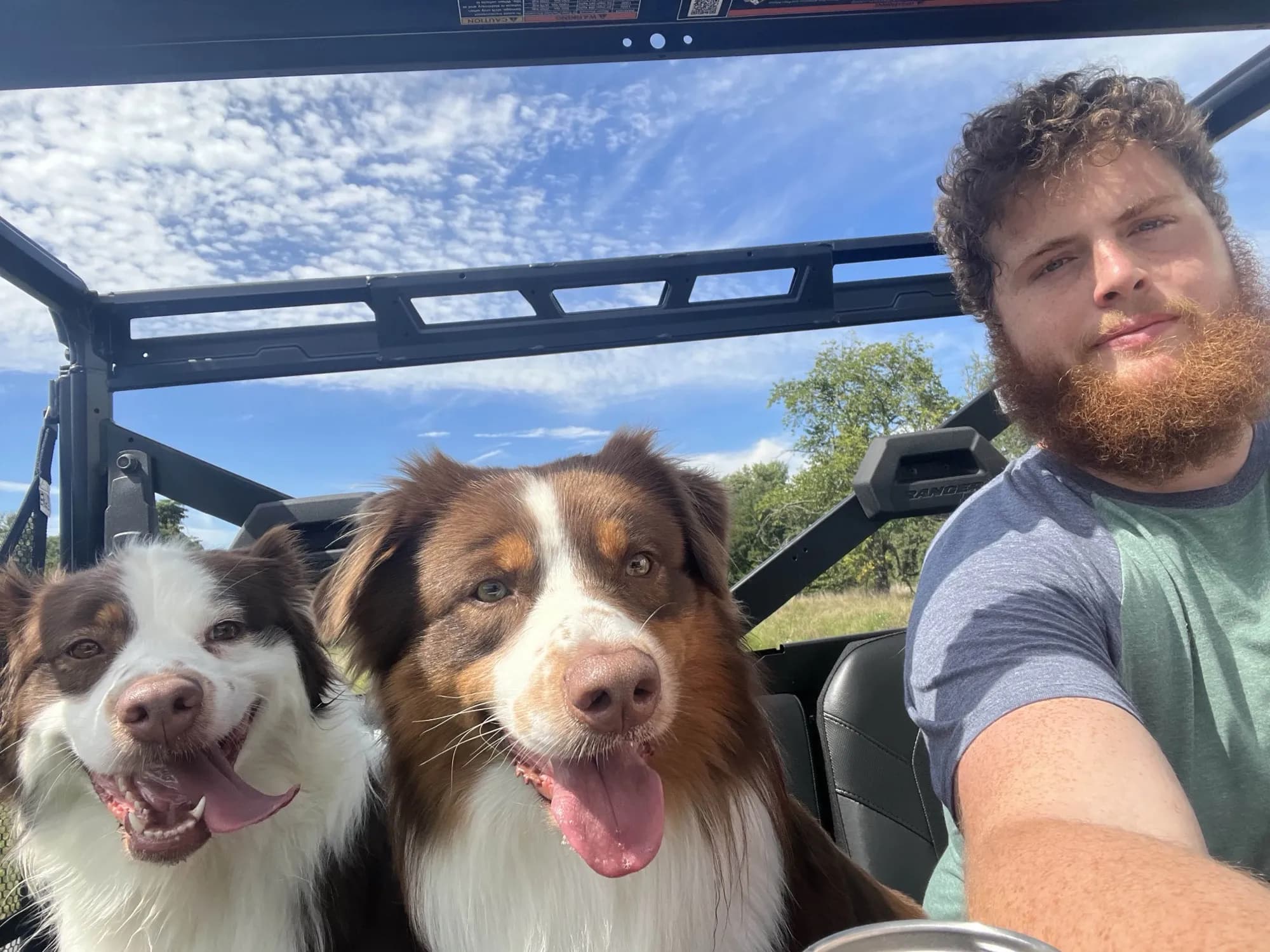
We are thoughtful about who interacts with our puppies and how. Every interaction is supervised, and we prioritize quality over quantity. A few excellent socialization experiences are worth far more than dozens of uncontrolled ones.
Early Training Foundations (Weeks 5-8)
By five weeks, our puppies are beginning the earliest foundations of training. This does not look like formal obedience — it looks like play with purpose. Puppies learn to orient toward people. They are introduced to a clicker or marker word. They begin to understand that engaging with humans produces good things.
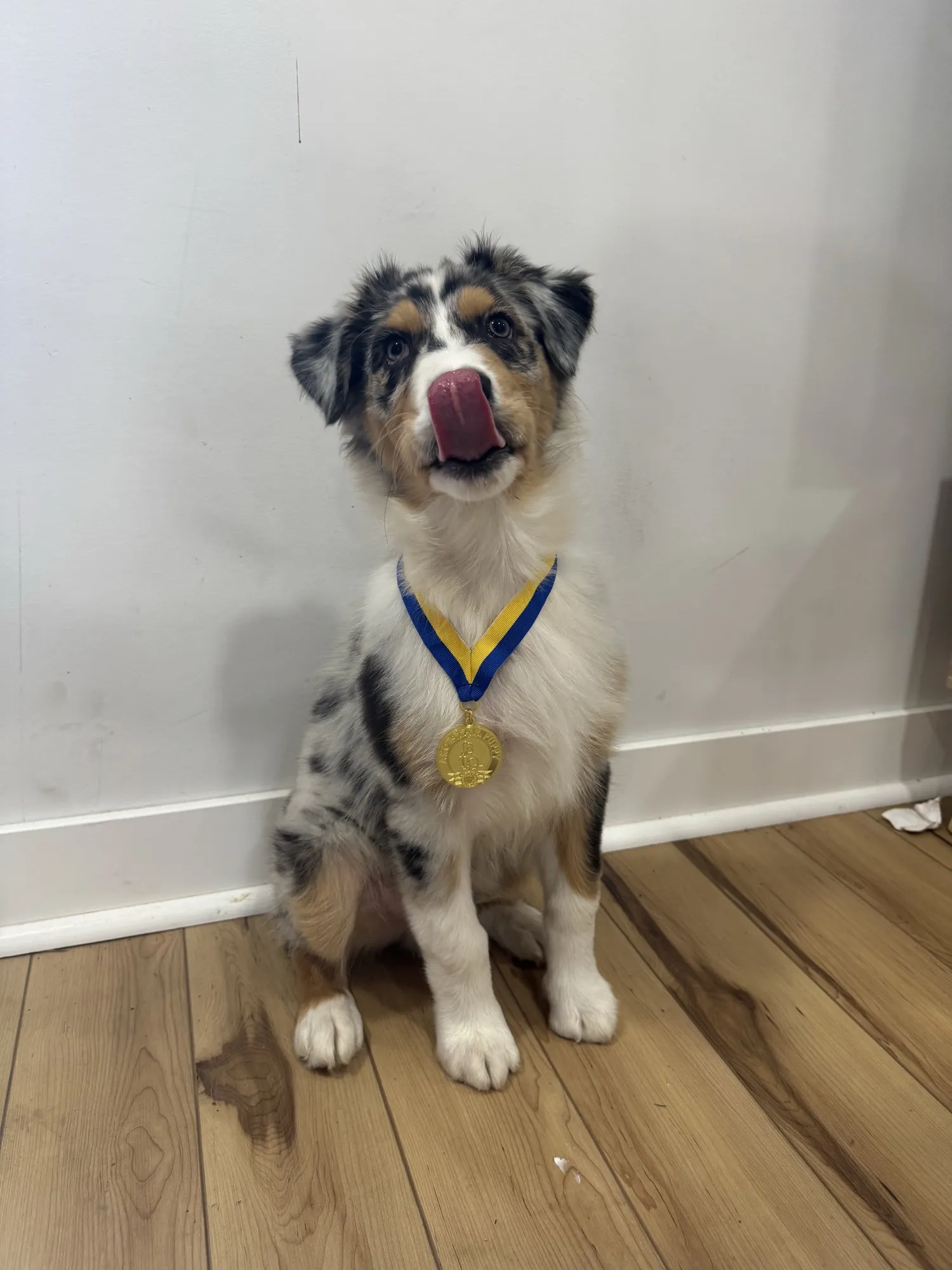
We start the very basics of crate conditioning, making the crate a place puppies choose to go because good things happen there. We begin potty training patterns by giving puppies access to outdoor surfaces after meals and naps. And we observe — constantly — how each puppy responds to new challenges, how they interact with their littermates, and where their individual strengths and tendencies lie.
These observations are what allow us to make excellent matches between puppies and families.
Farm-Raised Enrichment
One of the things that makes Queen City Farm unique is the environment our puppies grow up in. They are not just house dogs. They are farm dogs in the truest sense. Our puppies experience life on a working homestead — they see and hear chickens, they explore outdoor spaces, they wade through creek water, and they learn to navigate uneven terrain.
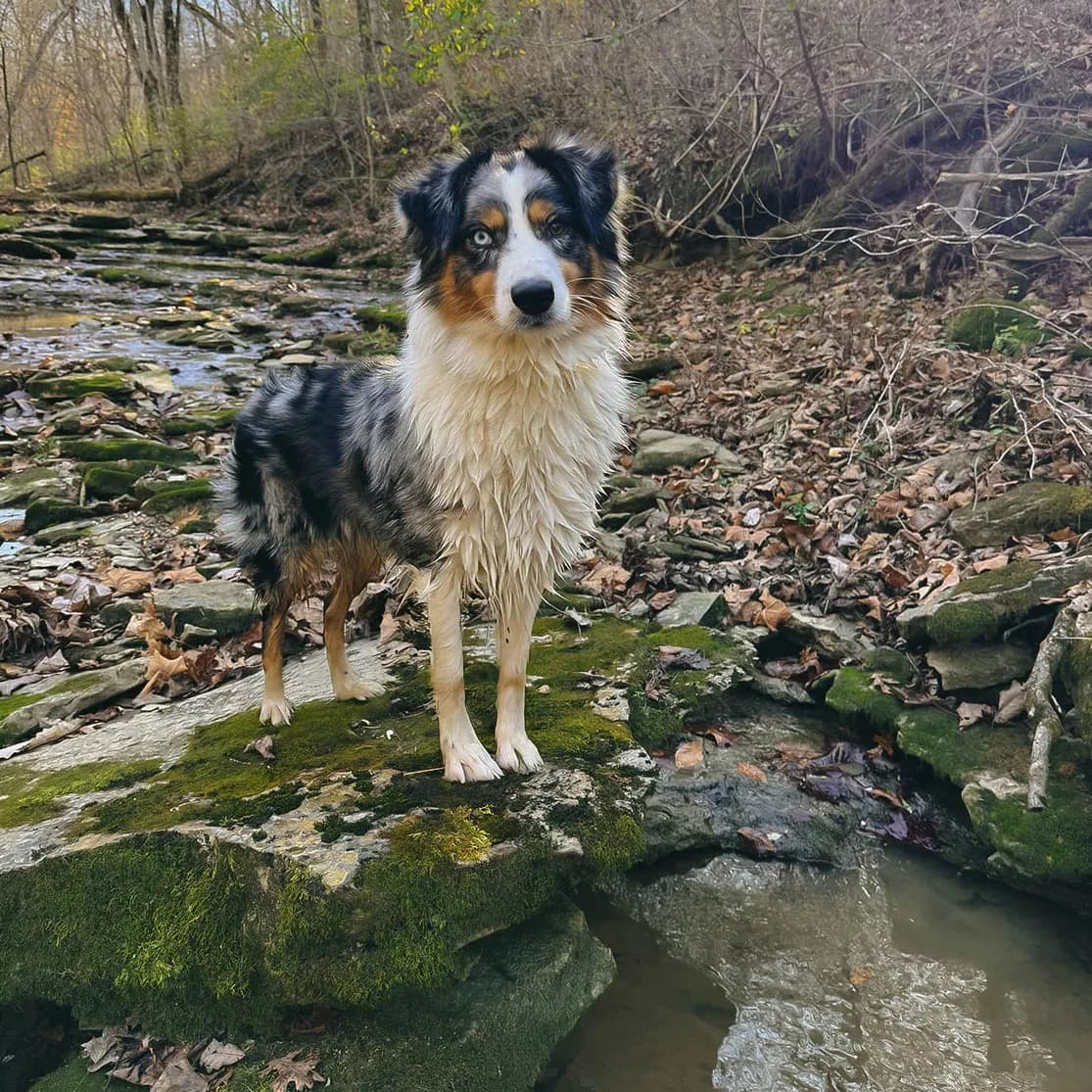
This kind of environmental enrichment produces dogs that are genuinely adaptable. Whether a puppy goes on to live in a city apartment or on acreage, the breadth of early experience they receive here gives them the confidence to handle whatever their new life looks like.
Health and Veterinary Care
Every puppy in our program receives a thorough veterinary examination, age-appropriate vaccinations, and deworming on a carefully scheduled protocol. We work closely with our veterinarian to ensure every puppy is healthy and developing well before they go to their new homes.
Puppies are also microchipped before they leave. Each puppy goes home with a complete health record, including vaccination history, deworming schedule, and any other relevant health information.
Making the Perfect Match
We do not let families choose their own puppy based on color or markings. Instead, we spend eight weeks getting to know each puppy as an individual — their energy level, confidence, sensitivity, independence, and drive. We match puppies to families based on lifestyle, experience, and what each family is looking for in a dog.
This process is not about control. It is about setting every puppy and every family up for success. A high-drive, bold puppy is a wonderful fit for an active family with dog experience. A softer, more handler-focused puppy may be ideal for a family looking for a therapy or service dog prospect. The right match makes all the difference.
A Lifetime Promise
Our commitment to our puppies does not end at eight weeks. Every puppy that leaves Queen City Farm is backed by a lifetime of support. We are here for training questions, health concerns, and everything in between. And if life circumstances change and a family can no longer keep their dog, that dog comes back to us. Always.
We raise our puppies this way because we believe it is the right way. Every protocol, every enrichment session, every hour spent observing and handling is an investment in the dogs our puppies will become. When you bring home a Queen City Farm puppy, you are bringing home a dog that was raised with intention from their very first breath.
Frequently Asked Questions
What is Early Neurological Stimulation and how does it help puppies?
Early Neurological Stimulation is a research-backed protocol consisting of five brief handling exercises — tactile stimulation between the toes, head held erect, head pointed down, supine position, and thermal stimulation on a cool cloth — performed once daily from day three through day sixteen of a puppy's life. The exercises were originally developed for the U.S. military's working-dog program, and follow-up research has shown that puppies who go through the protocol develop stronger adrenal response to stress, improved cardiovascular performance, and greater tolerance to novel situations as adults.
When do Queen City Farm puppies go home with their new families?
Puppies go home at eight weeks of age. By that point they have completed their early socialization protocols, received their first veterinary examination and vaccinations, been microchipped, and been individually evaluated for temperament. Eight weeks is the earliest age supported by both behavioral research and our state's regulations — and it is the age at which puppies have gained the most from their littermates while still being well within the prime window for bonding with a new family.
Why do you not let families pick their own puppy based on color?
Because color is the worst possible predictor of how well a puppy and family will fit together. We spend eight weeks observing each puppy as an individual — their confidence, drive, sensitivity, independence, and recovery from challenge — and we use that information to match each puppy with the family whose lifestyle and goals best fit that puppy's nature. A bold, drivey puppy thrives with an active dog-experienced family and would frustrate a quieter household; a softer puppy thrives in a calmer home and would be overwhelmed by an intense one. The match matters far more than the markings.
What does a Queen City Farm puppy come home with?
Every puppy goes home with a take-home packet that includes a written health guarantee, a copy of all parental health clearances, the puppy's vaccination and deworming records, a microchip registration, a sample of the food they have been weaned onto, a blanket carrying mom's scent, a starter toy, training resources, and a direct line to us for the life of the dog.
Are Queen City Farm puppies raised in the house or in a kennel?
Inside our home. Our whelping area is set up in the heart of the house, and as puppies grow they spend their days surrounded by the normal rhythms of a real household — conversation, appliances, doorbells, music, foot traffic, and the routines of life on a working farm. We do not raise puppies in outdoor kennels or in a separate puppy room cut off from family life. The environment a puppy is raised in is the environment they are prepared for.