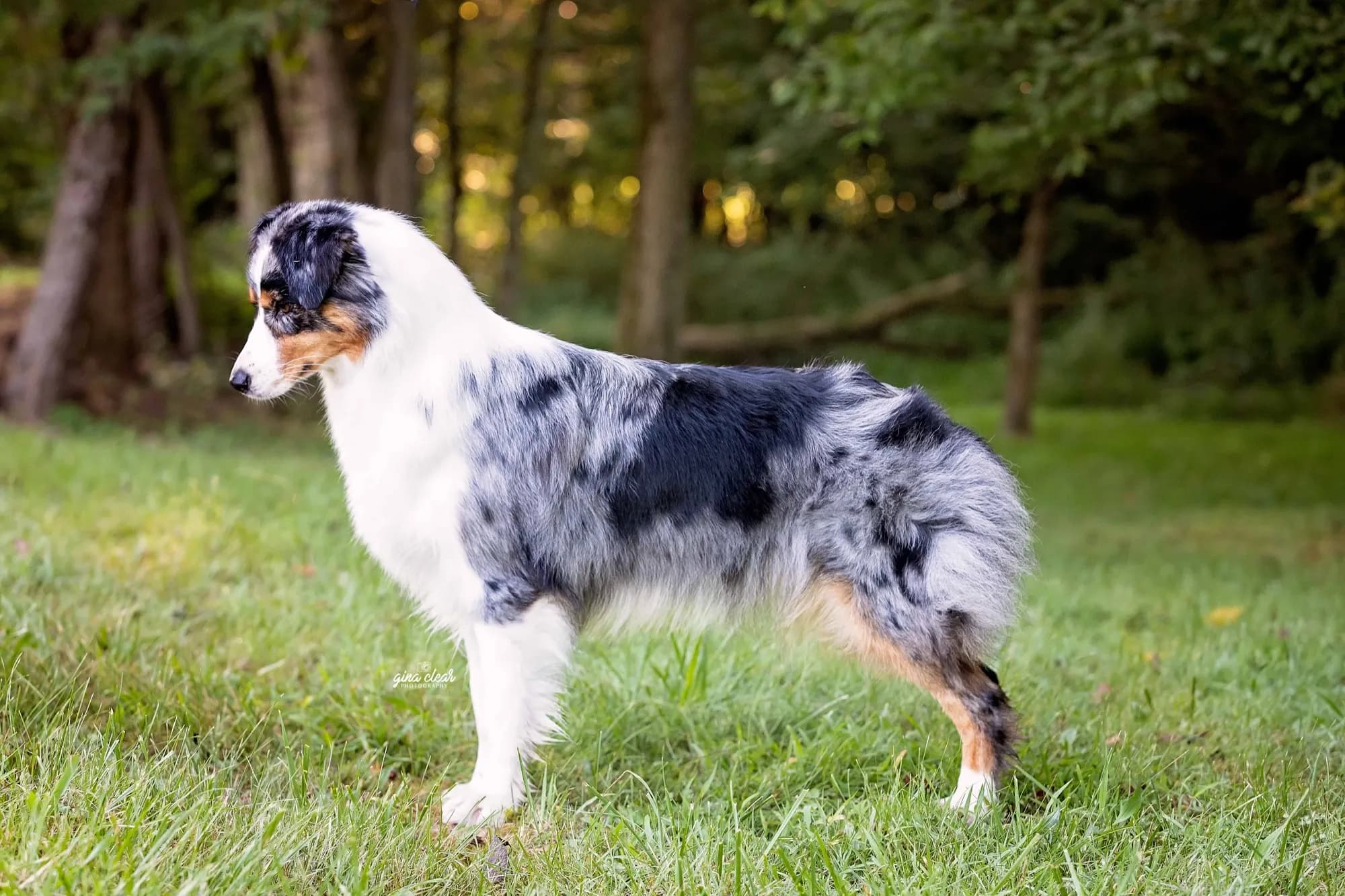
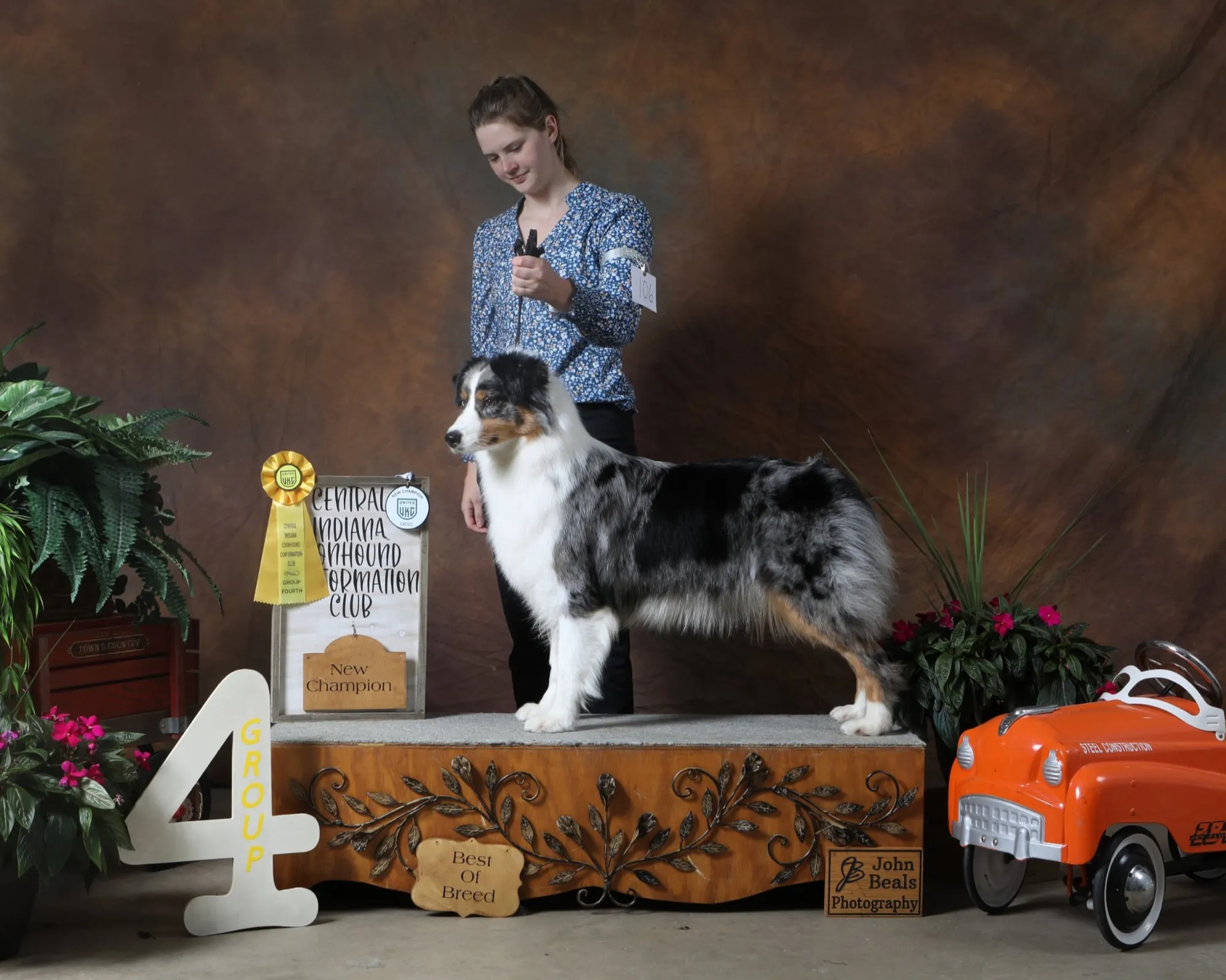
White markings are one of the things that make Australian Shepherds so visually striking. A crisp white blaze, a clean collar, white legs — these markings are expected and desirable in the breed. But when it comes to white on the head and body, there is a line between correct and concerning, and understanding where that line falls is important for anyone who loves Aussies.
What the Breed Standard Says About White
The AKC Australian Shepherd breed standard is specific about white markings. White is acceptable on the chest, legs, muzzle, and as a blaze on the head. However, the standard states that white on the body between the withers and the tail, on the sides between the elbows and the hindquarters, or on the ears and around the eyes should be considered a fault.

The standard specifically disqualifies dogs with white body splashes, meaning large patches of white on the body that go beyond the accepted markings. On the head, a full white collar that extends up over the ears or excessive white that encroaches on the eye area is a concern — not just cosmetically, but potentially for health reasons.
A Real-World Example: Marshal
Our own Marshal is a good example of how white markings can vary within the breed. Marshal has more white on his head than the breed standard prefers, including white that extends around his ears.

Does this make Marshal a bad dog? Absolutely not. He is healthy, his hearing and vision have been tested and are normal, and he has one of the best temperaments of any dog we have ever known. But his markings are one of the reasons he is a pet and not part of our breeding program. In a breed where excess white can be linked to health issues, responsible breeders take white patterning seriously when making breeding decisions.
Why Too Much White Can Be a Health Concern
The connection between white markings and health goes deeper than aesthetics. In Australian Shepherds, white markings are produced by genes that affect how pigment cells (melanocytes) migrate during embryonic development. When pigment cells fail to reach certain areas, those areas remain white.
The concern is that melanocytes do more than just produce coat color. They also play critical roles in the development of the inner ear and the eye. When pigment cells fail to reach the inner ear during development, it can result in congenital deafness. When they fail to reach the eye structures properly, it can affect vision.
This is why the breed standard penalizes excess white — it is not an arbitrary cosmetic preference. It is a safeguard that has been built into the standard to discourage breeding patterns that increase the risk of sensory deficits.
The Merle Factor and Double Merle Risk
The conversation about white markings in Aussies cannot happen without talking about the merle gene. Australian Shepherds come in four recognized colors: black, red, blue merle, and red merle. The merle gene creates the beautiful mottled pattern that many people associate with the breed.
However, when two merle dogs are bred together, each puppy has a 25 percent chance of inheriting two copies of the merle gene — becoming what is known as a "double merle" or "homozygous merle." Double merle dogs typically have excessive white markings and are at significantly increased risk of being deaf, blind, or both.
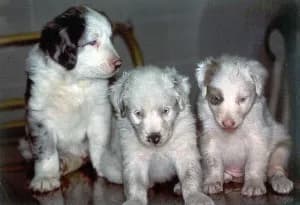
This is one of the most important reasons responsible breeders carefully plan their pairings and never breed merle to merle. The resulting puppies may look striking with their predominantly white coats, but the health risks are serious and well documented.
Is a White-Headed Aussie a Bad Dog?
No. A dog with more white than the breed standard prefers is not a bad dog, a sick dog, or a dog that deserves any less love. Many Aussies with excess white live perfectly healthy, happy, normal lives.

The distinction is between what makes a good pet and what makes a good breeding candidate. A dog can be a wonderful companion and still not be appropriate for a breeding program because of their markings, structure, or other traits that fall outside the breed standard. This is normal and expected — not every dog from even the best breeder is breeding quality, and that is perfectly fine.
What Queen City Farm Looks For
In our breeding program, we evaluate white markings as part of our overall assessment of each dog. We look for markings that fall within the breed standard — white that is balanced, does not encroach on the ears or eyes, and does not suggest underlying pigment distribution issues.
We also test hearing in all of our puppies using BAER testing and evaluate eye health through CAER examinations. These objective tests give us real data rather than guesses about whether a dog's white markings have affected their sensory development.
When we produce a puppy with more white than we would like to see in a breeding candidate, we are transparent about it. That puppy will go to a pet home on a spay/neuter contract. They will still be a health-tested, well-socialized, beautifully raised Queen City puppy — they just will not reproduce.
Understanding white markings helps all of us — breeders, owners, and breed enthusiasts — make informed decisions that prioritize the long-term health and integrity of the Australian Shepherd.