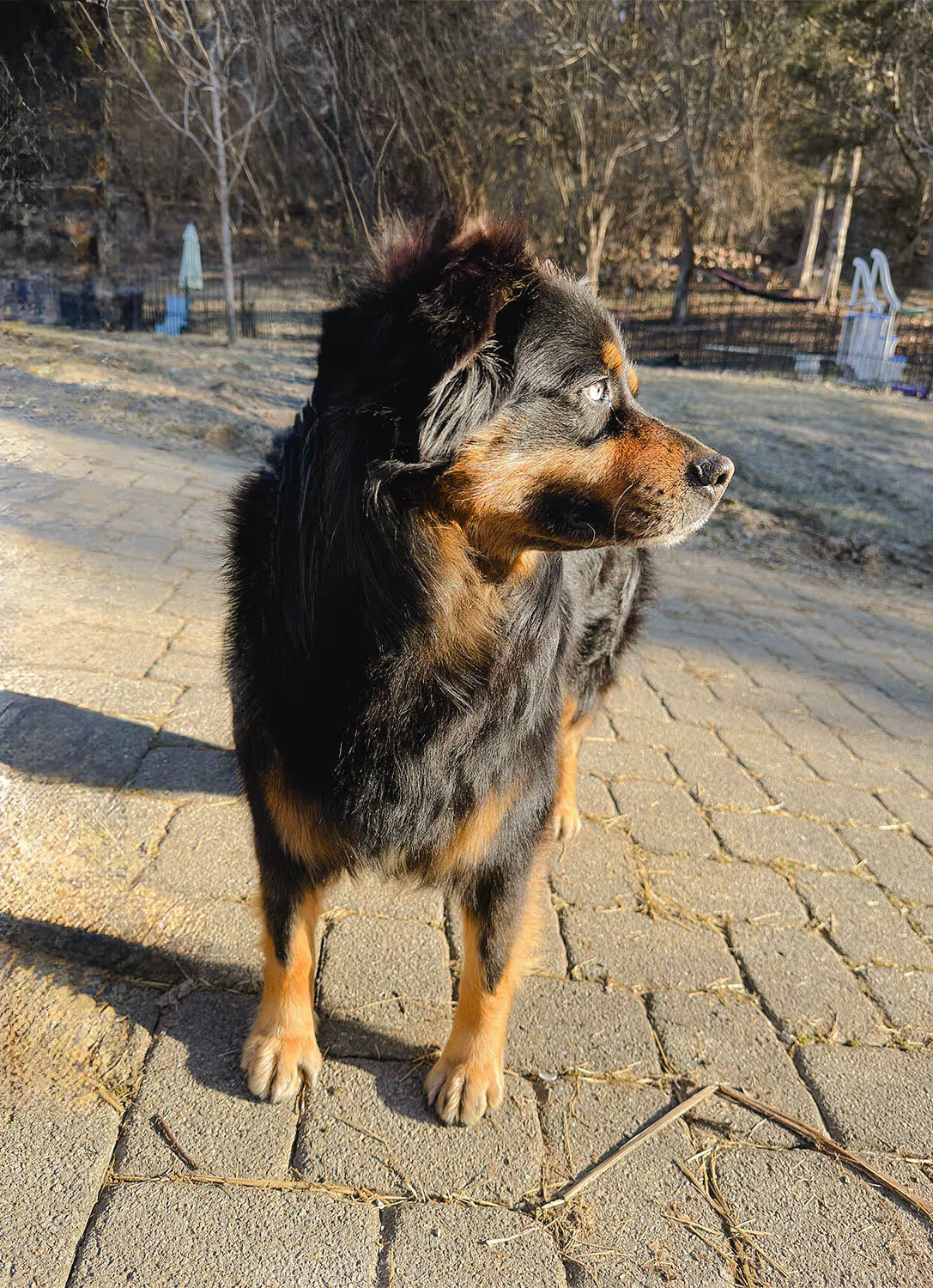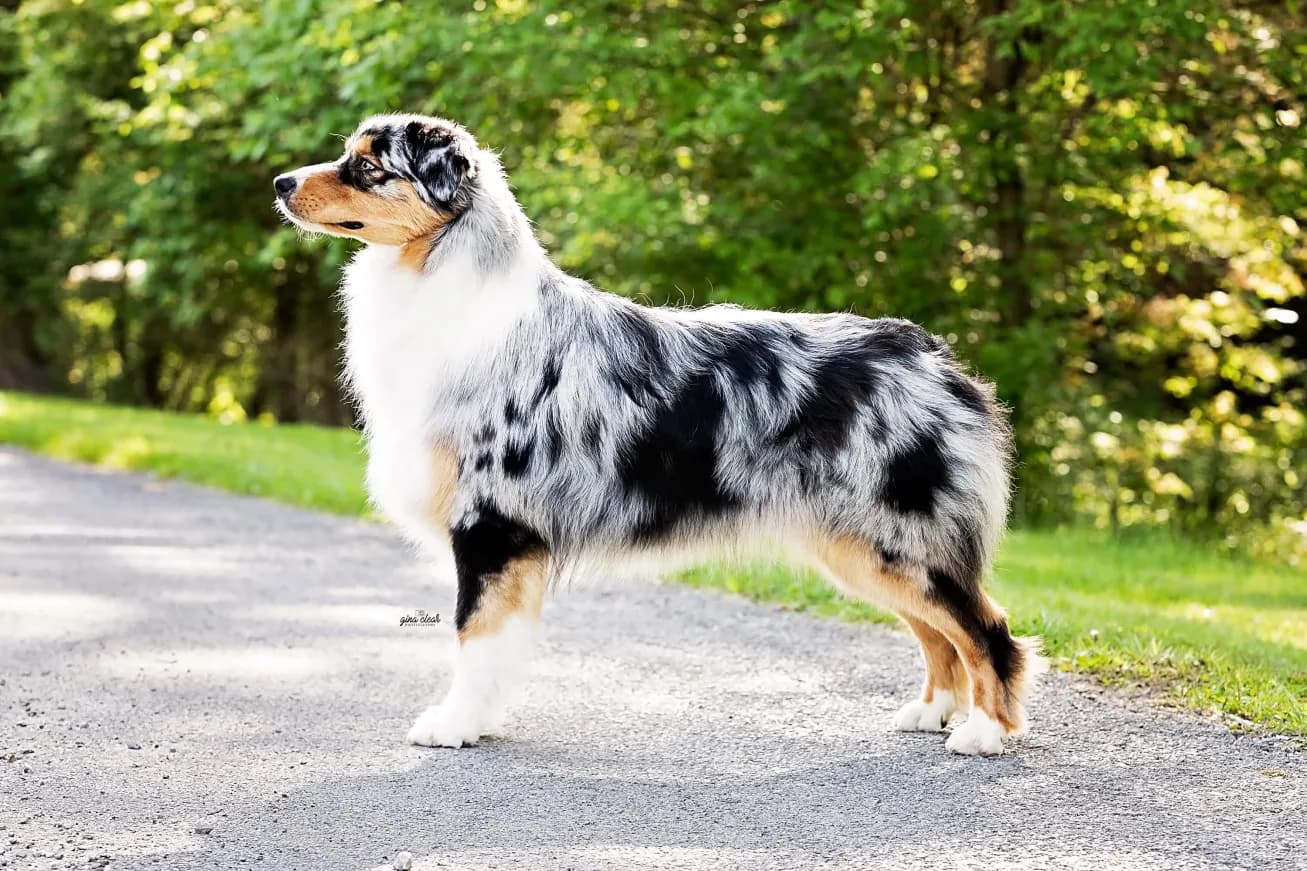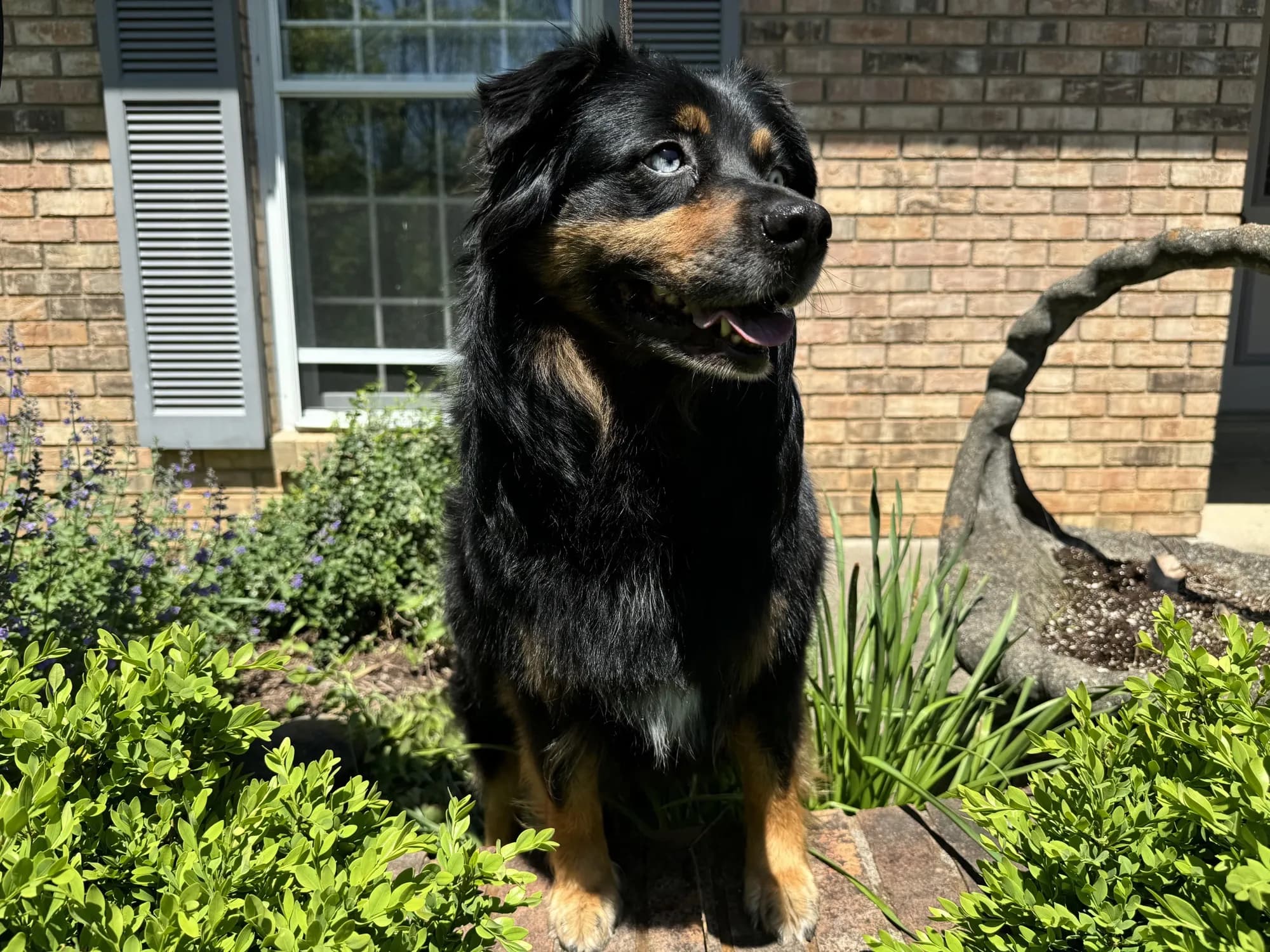
We get this question often, and it almost always comes from people who love their dog deeply. The conversation usually opens with some version of: Should I breed her once? She is such a good dog. I think she would be such a great mom. We would love to keep one of her puppies.
This post is for everyone who has ever thought that thought. We are going to walk through, honestly and without flattery, what the question really involves — what breeding actually demands, what the risks are, what dogs actually experience, and the much longer list of reasons that the answer for most pet dogs is no.
We are not writing this to gatekeep. We are writing it because the gap between "I think she would be a great mom" and "we are prepared to do this responsibly" is enormous, and the dogs and puppies pay the cost when that gap goes unexamined.
Dogs Don't Daydream About Puppies
The single most common reason people give us for wanting to breed their dog is some version of: I just want her to experience being a mom once.
We understand the sentiment. It is rooted in love. The owner imagines their dog feeling fulfilled, completed, somehow more whole for having had puppies. The trouble is that this is not how dogs work. Dogs do not have a concept of motherhood the way humans do. They do not look at puppies and feel longing. They do not measure their lives against an internal yardstick that says they have or have not had a litter.
A female dog who is never bred does not feel that she missed out. She does not grieve unconceived puppies. She does not, in any way behaviorists can detect, suffer from not having had a litter. Whatever fulfillment you imagine she would gain from being a mother is a projection of human experience onto an animal who is not having that experience.
Spayed females live healthy, full, happy lives. So do intact females who are never bred. There is no behavioral or psychological deficit produced by not having puppies. The only thing breeding accomplishes for the dog herself is exposing her to the medical risks of pregnancy and the physical demands of nursing.
If "she would be such a great mom" is the reason on the table, that reason does not survive contact with how dogs actually experience the world.
"My Dog Is Such a Good Dog"
This is the second most common reason, and it is the most emotionally honest one. She is so good with kids. She is so smart. She is so sweet. Everyone who meets her says she is the best dog they have ever met. Wouldn't more dogs like her be a good thing?
Here is the part that is hard to hear: every owner believes their dog is exceptional. That is one of the most consistent things about dog owners. We are biologically wired to see our own dog as remarkable. That is not a critique — it is what makes the human-dog bond so powerful — but it is a terrible foundation for a breeding decision.
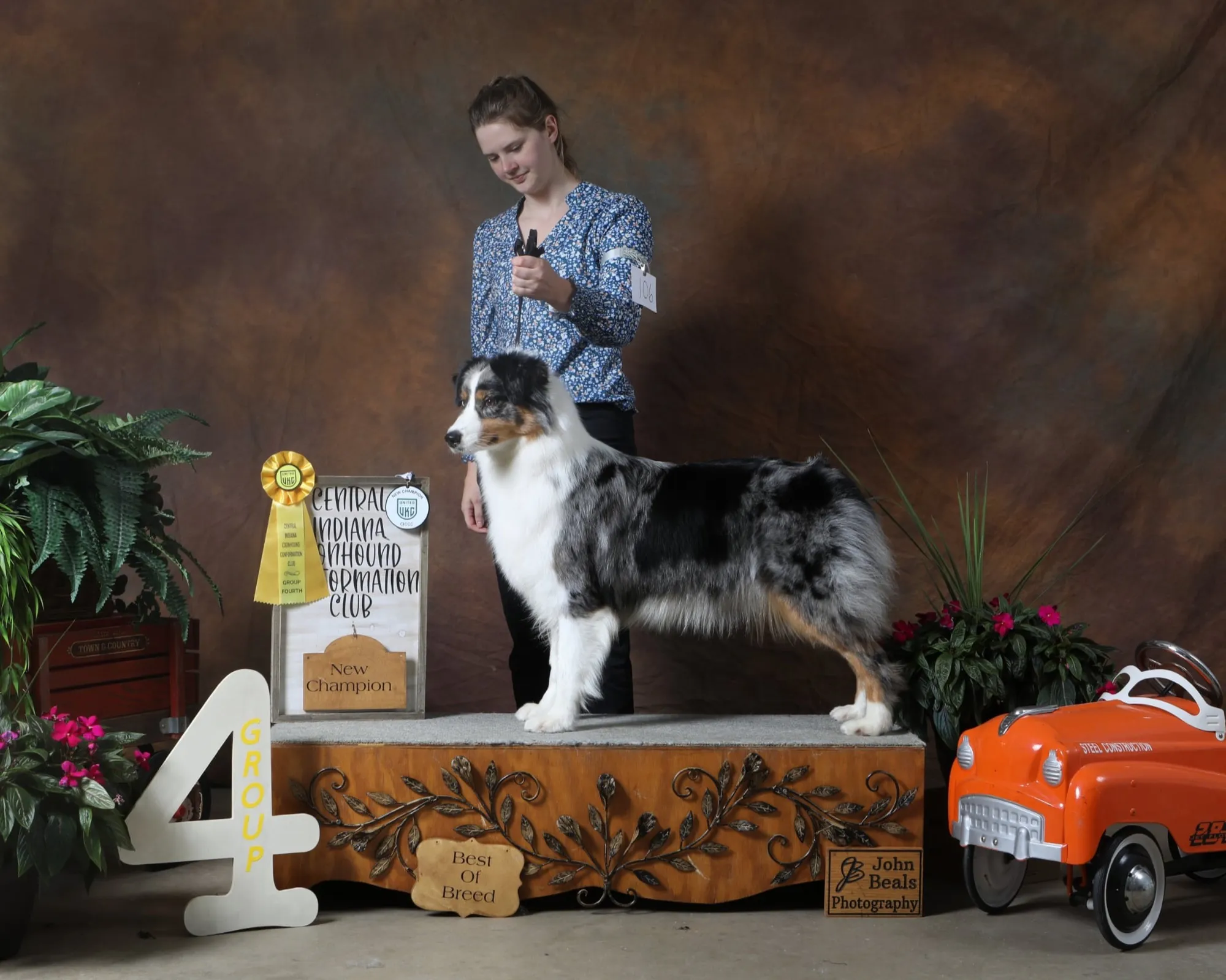
The whole reason responsible breeding involves third-party evaluation — conformation titles, performance titles, OFA health testing, formal structural assessments — is precisely because individual owners' assessments of their own dogs are not reliable. A judge who has never met your dog before, who does not love her, and whose only job is to compare her to the written breed standard tells you something about her quality that you, the person who has slept beside her every night for five years, cannot tell yourself.
When a dog has been objectively evaluated by people who are not biased toward her, and the evaluation comes back positive, and her health testing comes back clean, then — and only then — does she become a candidate for breeding. Until those things happen, "she is such a good dog" is a fact about your relationship with the dog, not a fact about her suitability for reproduction. They are different things.
"But She Has Papers"
Another version of this conversation comes from people whose dogs are registered with the AKC, UKC, or another registry. She has papers. She is purebred. Doesn't that mean she would produce good puppies?
Registration papers prove one thing only: that your dog's parents were also registered, and someone filled out the paperwork to register her. That is it. Registration does not require any health testing. It does not require any titles. It does not require any structural or temperament evaluation. There are registered dogs with severe hip dysplasia. There are registered dogs with documented temperament problems. There are registered dogs that should never reproduce, and the registration paperwork has nothing to say about it.
The breed registries themselves are clear about this. The American Kennel Club and United Kennel Club maintain registration as a record of pedigree. They are not health certifications. They are not quality assessments. They are family trees.
If "she has papers" is doing the work in the breeding argument, the argument is doing less work than the person making it realizes. Our companion post on what health tested actually means walks through what real verification looks like, and why registration alone is nowhere near the standard.
"It Would Be a Great Experience for the Kids"
This one comes up often enough that it deserves its own section. The vision is heartwarming — children watching puppies be born, raising them through their first weeks, learning about the miracle of life, being part of a family event they will remember forever.
The reality of whelping is something we would not, in good conscience, let our own children sit through unsupervised. Whelping is messy in the most literal sense. There is blood, there are fluids, there are placentas, and depending on how the labor goes, there is the possibility of stillborn puppies, of a puppy that needs to be resuscitated, of a mother who tears or who needs an emergency C-section in the middle of the night. There is no version of this that maps onto the picture-book "miracle of life" experience that the image in your head is selling.
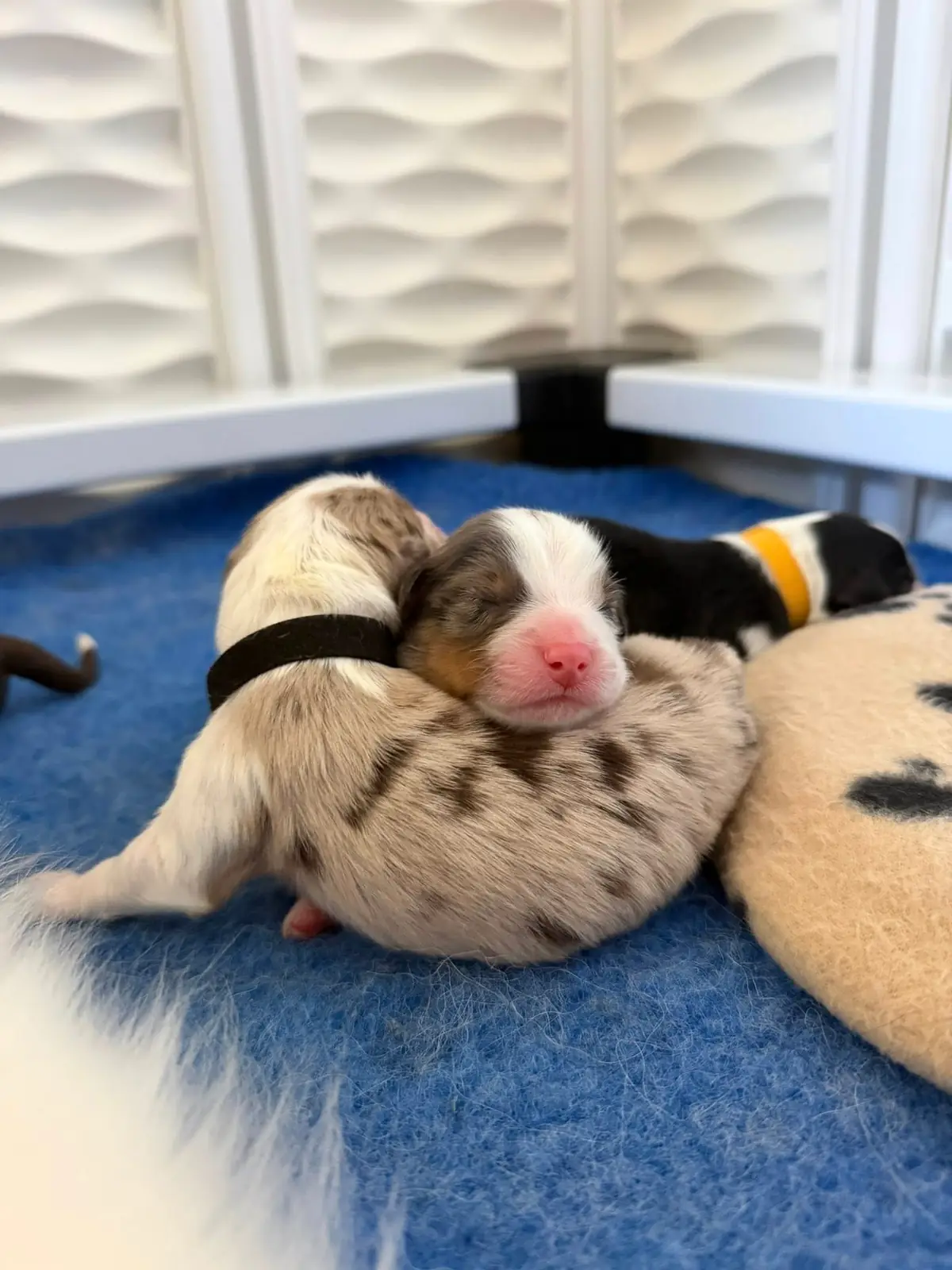
The eight weeks that follow are a full-time job. Puppies have to be fed, weighed, and monitored around the clock. The whelping area has to be cleaned multiple times a day. Puppies cannot be handled casually by children — bone is still developing, immune systems are immature, and the wrong drop or grab in week three has lifelong consequences. "A great experience for the kids" usually translates, in practice, to two months of an exhausted, sleep-deprived adult doing the actual work while the children's interest fades after week two.
If the goal is for the kids to experience puppies, a responsible breeder will, in many cases, welcome a respectful family visit during the litter's later weeks. That gives the children the experience without putting your dog through pregnancy or putting unprepared puppies into the world.
"I'll Make a Little Money on the Side"
Sometimes this is the unspoken reason. Sometimes it is openly the reason. Puppies sell for thousands of dollars. If I bred her once, even if I just sold the puppies for half what a breeder charges, that would be a few thousand dollars.
This argument never survives contact with the math. Our companion post on what it really costs to breed Australian Shepherds responsibly walks through the numbers in detail, but the short version is: across a single responsibly produced litter, the breeder's direct costs — health testing, pre-breeding workup, stud fee, possible C-section reserve, eight weeks of puppy care, veterinary visits, take-home packs — easily run between $5,000 and $15,000. That does not include the years of work raising the breeding female, titling her, and the financial loss on every breeding prospect who didn't make it to her final OFAs.
The people who do make money on breeding are, almost without exception, the people who skip every step of that list. They do no health testing. They do no titling. They use whatever male is available. They raise puppies in a garage or basement with no individual handling. They place puppies on a first-deposit-wins basis with no screening, no contract, and no return clause. They are operating a small business that produces a worse outcome for the breed and for the families who buy from them.
If "we would make a few thousand dollars" is the reason on the table, what is actually being proposed is to cut corners on every safeguard responsible breeders maintain — and to do it once, on the dog you love most. That math gets dark fast.
The Health Risks Nobody Mentions
The conversation about breeding rarely includes what pregnancy actually puts a dog through. It is worth knowing.
Pregnancy in dogs lasts about 63 days and ends with the female delivering — on a good day — six to ten puppies. That delivery process is physiologically demanding even when everything goes well. When it does not go well, the complications are serious:
- Dystocia (difficult or obstructed labor), often requiring emergency veterinary intervention
- Emergency C-section, a real abdominal surgery with anesthesia risk, a $3,000 to $6,000 bill, and a recovery period of weeks
- Eclampsia (low blood calcium during nursing), which can be life-threatening if not caught early
- Mastitis (infection of the mammary glands), painful and sometimes requiring surgery
- Retained placenta or uterine infection, which can be fatal
- Pyometra in subsequent cycles in some intact females, also potentially fatal
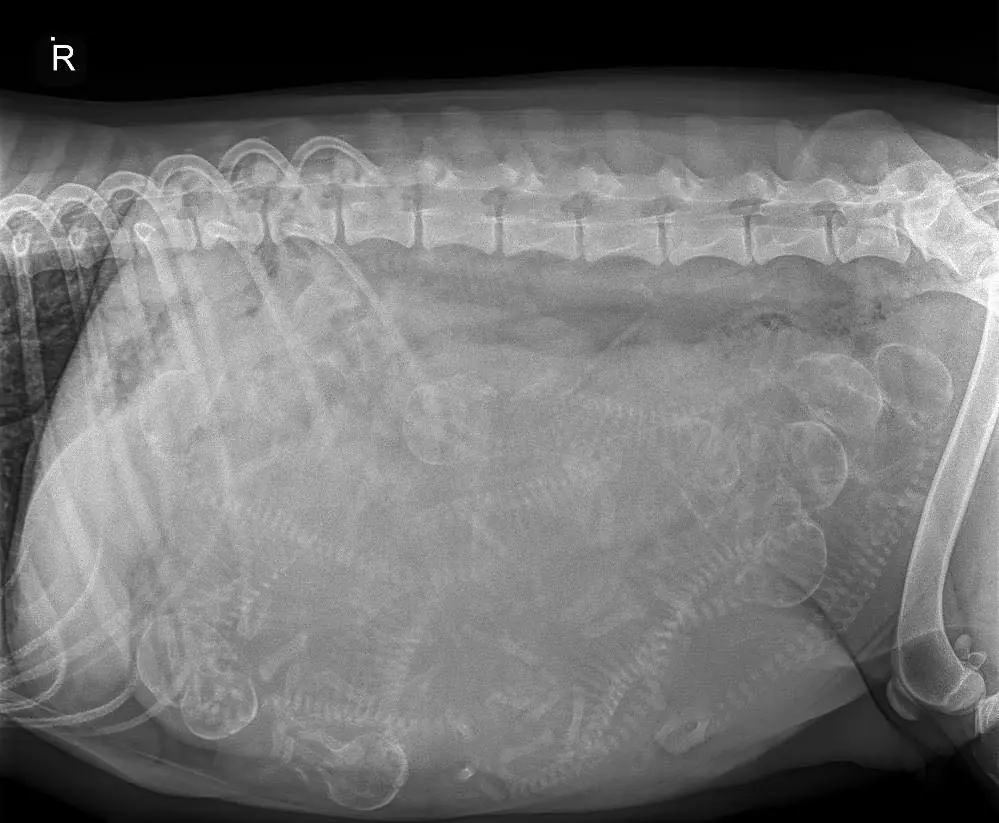
These are not exotic outcomes. They are well-documented risks of canine reproduction that responsible breeders plan and budget for on every single litter. Most dogs come through pregnancy and whelping fine. Some do not. A pet home breeding a dog once, without the experience to recognize early warning signs and without the financial reserves to handle a $5,000 emergency at 2 a.m., is taking on risks that responsible breeders have learned to manage only through years of experience and infrastructure.
Your dog cannot consent to this. The least you can do, if you are seriously considering it, is be honest about what you are asking her to take on.
What Actually Qualifies a Dog to Be Bred
If after all of that you are still asking the question seriously, here is the checklist of what actually needs to be true before a dog should be bred. None of these are optional, and "she is sweet" is not on the list.
- Full registration or breeding rights. Most well-bred dogs are sold on a limited registration or spay/neuter contract, which legally prohibits the dog from being bred — and prevents any resulting puppies from being registered. Before breeding is even on the table, the dog has to have been purchased on full registration with breeding rights from the original breeder. If the contract you signed says "pet only" or "limited registration," that is a binding answer.
- Full health testing complete. OFA hip and elbow evaluations (finals at 24 months, not prelims), at least one CAER eye exam by a board-certified veterinary ophthalmologist, comprehensive breeder-grade genetic panel through Embark for Breeders or UC Davis VGL, and a CHIC number on file with the OFA.
- A pedigree of health-tested ancestors. The dog herself clearing her health tests is the floor, not the ceiling. Responsibly bred dogs come from generations of health-tested stock — parents, grandparents, and ideally further back, all with OFA results and genetic panels on file. A dog who clears her own testing but whose pedigree is full of unhealth-tested ancestors is producing puppies whose risk profile is mostly unknown. Look up the parents and grandparents on ofa.org before you assume the lines are sound.
- Independent evaluation. A conformation title, a performance title, or a documented structural evaluation by someone who does not love the dog — confirming that she actually matches the breed standard or excels at a job.
- Temperament evidence. Not just "she is sweet at home" but documented confidence and stability across novel environments, with people of varied ages and appearances, around other dogs, and in unfamiliar settings.
- A planned, complementary stud. Not the neighbor's intact male. A stud who has also completed full health testing, who is titled or evaluated, and whose pedigree and traits complement your female in ways that have been thought through with a mentor.
- A mentor. An established breeder who knows your dog and who is willing to walk you through breeding decisions, whelping, neonatal care, and puppy placement. Almost no first-time breeders are equipped to do this alone, and the dogs and puppies pay when they try.
- Financial readiness. Ability to absorb a $5,000 to $10,000+ emergency, plus the routine $5,000 to $15,000 cost of producing the litter, with no expectation of breaking even.
- A plan for every puppy. A screening process for buyers, a written contract, a return clause for the life of every dog produced, and a real plan for what happens if a puppy is not placed by ten weeks. "Friends and family will take them" is not a plan.
If you cannot tick every one of those boxes, your dog is not ready to be bred, no matter how wonderful she is.
You Don't Have to Be the One Who Breeds Her Line
Here is the gentlest landing this conversation has. If you genuinely love your dog and love the idea of more dogs like her in the world, there is a path that does not require you to take on any of this yourself.
Reach out to the breeder you bought her from. Tell them you love your dog and you would love another from a future litter out of her lines. Most responsible breeders are thrilled to hear this. They have other dogs related to yours — siblings, half-siblings, cousins, parents — already in their program. They are the ones positioned to do the breeding properly, with the full health workup, the right pairings, and the right placements.
You get more of what you love about your dog without putting your dog through pregnancy. The breeder gets to maintain the line they have been investing in for years. The puppies enter the world from a program that has the infrastructure to raise them well. Everyone wins, and your dog stays your dog.
If you did not buy your dog from a breeder you are in touch with, you can still find the breed and the lines you love through reputable breed clubs, performance communities, or our own puppy application. There are responsibly bred Australian Shepherds being produced thoughtfully. You do not have to be the one who produces them.
So Should You Breed Your Dog?
For the overwhelming majority of pet owners reading this honestly, no.
That is not a comment on your dog. It is a comment on what breeding actually requires — the health testing, the titling, the mentorship, the financial reserves, the medical risks, the eight weeks of intensive labor, the contractual commitment to every puppy for the life of every dog. It is a comment on the gap between "I think she would be a great mom" and "we are equipped to do this responsibly."
The best thing you can do for your dog, if you love her, is love her. Train her. Exercise her. Take her on adventures. Keep her healthy. Be the home she deserves. None of that requires putting her through a pregnancy.
If you are sincerely considering breeding and have not been able to dismiss the idea after reading this far, the next step is not to schedule a breeding. It is to reach out to a responsible breeder in your breed and have an honest conversation about what a breeding program looks like, what it would take to build one, and what the realistic timeline is. Most of the time, that conversation reveals that the answer is no — and the dog and the prospective owner both end up better off.
If you want to see how our own program is built, our meet the breeder and Queen City difference pages walk through how we evaluate dogs at every stage. If you are looking for a well-bred Australian Shepherd from a program that has done the work, you can submit a puppy application or reach out directly.
Frequently Asked Questions
Does my dog need to have at least one litter for health reasons?
No. This is one of the most persistent breeding myths, and there is no veterinary evidence behind it. Spaying a female dog does not produce a deficiency that breeding corrects. Intact females who are never bred live healthy, full lives. If anything, spaying before the first or second heat cycle meaningfully reduces the lifetime risk of mammary cancer. There is no medical reason a dog needs to have a litter.
Will my dog be sad if I never let her have puppies?
No. Dogs do not have a concept of motherhood the way humans do and do not grieve unconceived puppies. There is no behavioral or psychological deficit produced in a female dog who is never bred. The image of a dog "wanting" to be a mom is a projection of human emotion onto an animal who is not having that experience.
Can my dog still be bred if she has not had health testing?
She can technically be physically bred — biology will do its work — but she should not be. Breeding a dog without complete OFA hip and elbow evaluations, a CAER eye exam, and a comprehensive genetic panel means producing puppies whose risk of inherited disease is unknown and uncontrolled. The puppies and their families pay that cost for the next 12 to 15 years. Our companion post on what health tested actually means walks through what real health testing looks like.
What if I want another puppy exactly like my dog?
The best path is to contact the breeder you bought your dog from and ask about a puppy from a future litter out of her lines. Most responsible breeders are happy to hear this and have related dogs — siblings, half-siblings, cousins — already producing in their program. You get more of what you love about your dog without putting your dog through pregnancy.
How much does it really cost to breed a litter?
Across a single responsibly produced litter, direct costs run between $5,000 and $15,000 — health testing, pre-breeding workup, stud fee, possible C-section reserve, eight weeks of puppy care, veterinary visits, and take-home packs — and that does not include the years of investment in raising and titling the breeding female. Our post on what it really costs to breed Australian Shepherds responsibly breaks down the full math.
Is it ever appropriate to breed a pet dog?
When a dog has completed full health testing, has been independently evaluated and either titled or formally assessed against the breed standard, has documented temperament across varied environments, and is being bred with mentorship from an established breeder to a complementary, equally evaluated stud — then she is no longer just a pet dog. She is a breeding candidate. The distinction is not whether the dog lives in your home; it is whether the breeding decision has been made with the kind of objective evidence and infrastructure that responsible breeding requires.
My friends and family keep asking when I am going to breed her. How do I respond?
The well-meaning "when are you going to breed her?" question is incredibly common, and it is one of the main reasons we wrote this post. The honest answer is that breeding is not a casual decision a loving owner makes for their dog's benefit — it is a multi-year, multi-thousand-dollar commitment that requires health testing, evaluation, mentorship, and infrastructure most pet homes are not set up for. A short version of the response: "We love her, but breeding her well takes more than just a great dog — it takes health testing, titling, and a real program behind it. We would rather be the home she retires into than the home that takes that on."