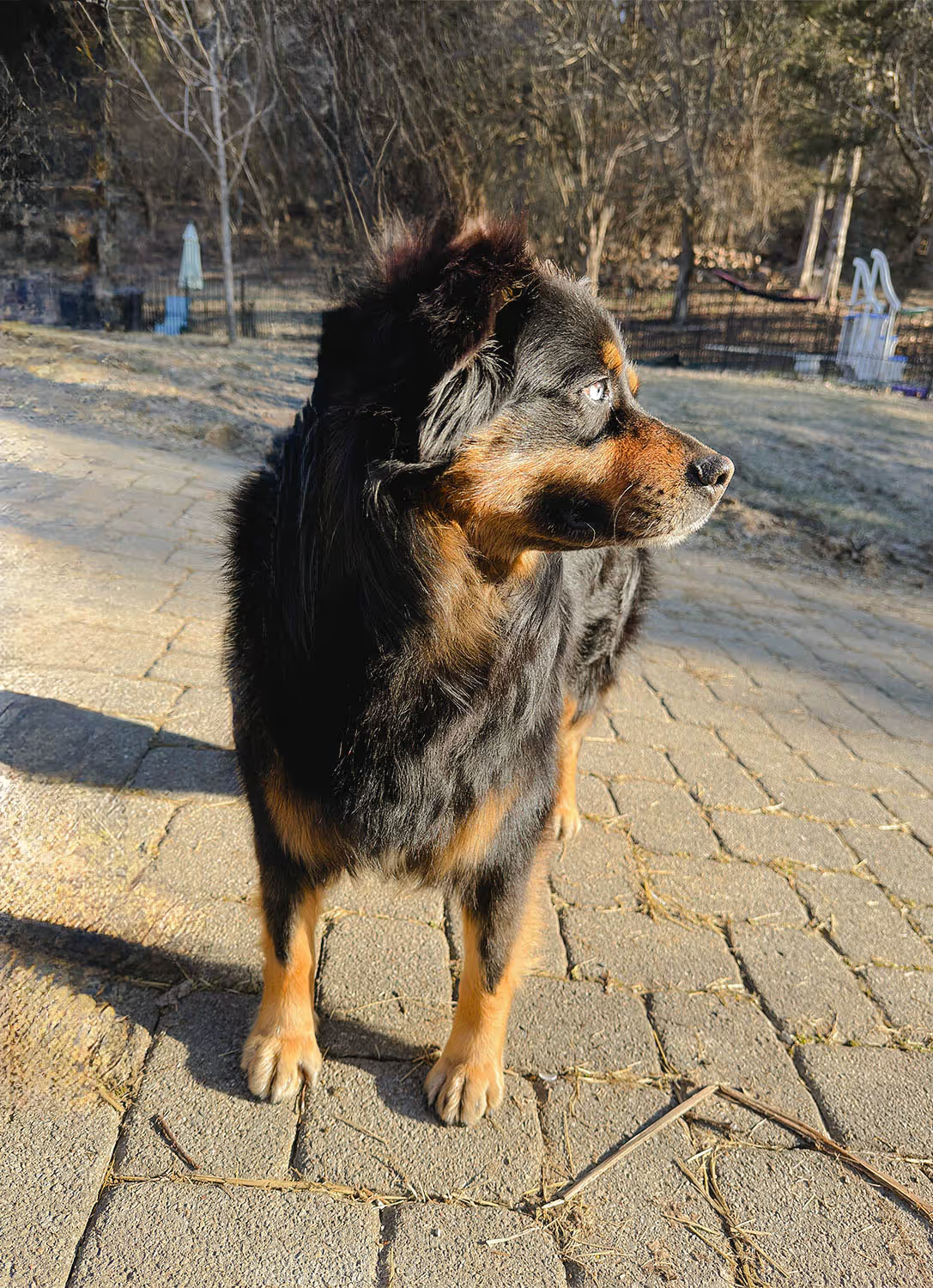
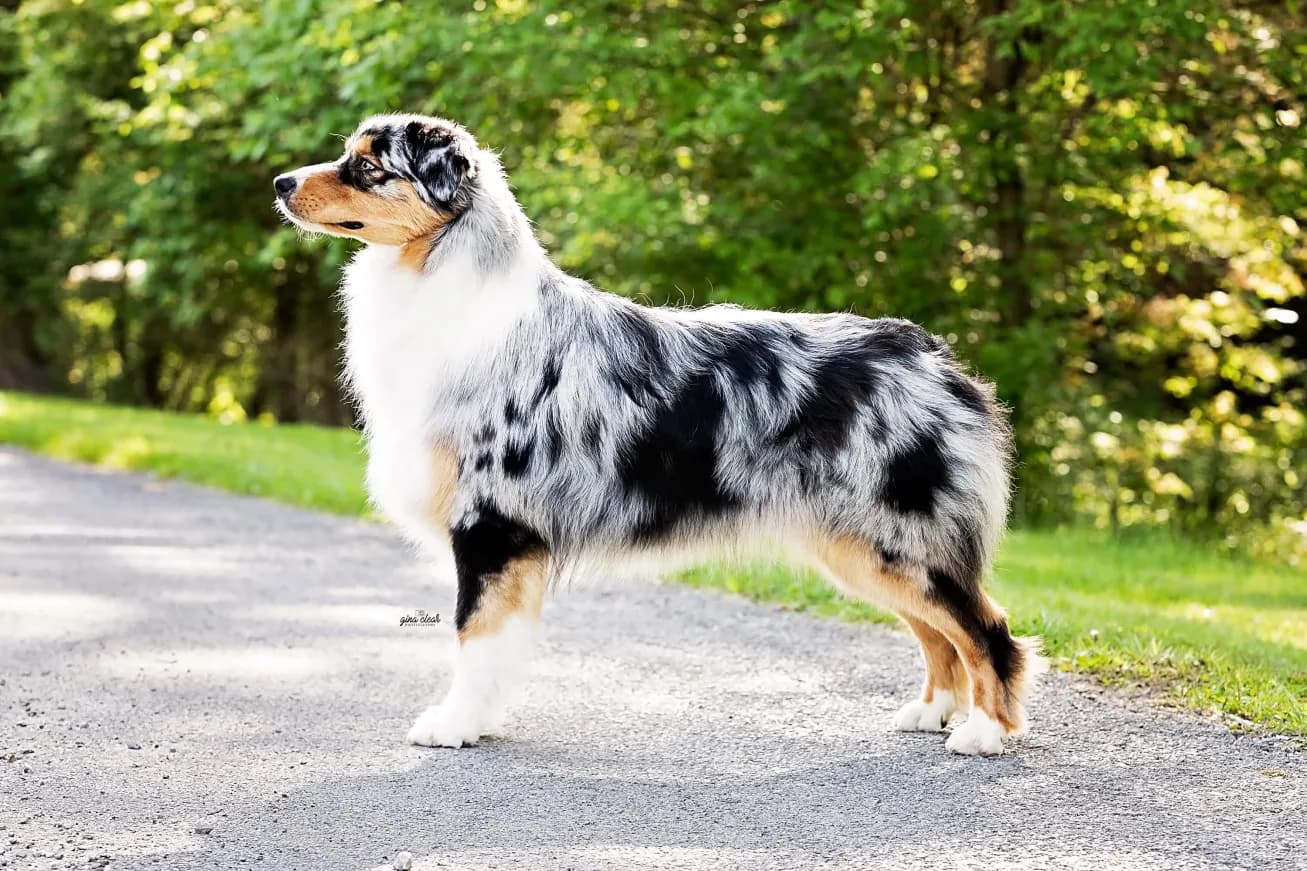
Every so often someone leaves a comment on one of our litter posts that reads something like, "$3,000 for a puppy? You must be rolling in it." We laugh, because anyone who has actually done this work knows the truth — responsible breeding is, almost without exception, a money-losing endeavor for years before it ever begins to break even. And it can still end in a single phone call from the radiologist that erases the entire investment.
We get the question often enough that it deserves an honest answer. So here is what it actually costs — in dollars, in years, and in heartache — to bring a single litter of well-bred Australian Shepherd puppies into the world.
It Starts Years Before the First Litter
People imagine breeding starts when a male and a female are put together. It doesn't. Breeding starts the day you choose your foundation dog — and that decision is often made years before that dog ever produces a single puppy.
There are two paths into a breeding program. You either buy a puppy from another responsible breeder with the long-term hope of breeding her, or you keep a puppy back from a litter you produced. Either way, you are making a decision based on an eight-week-old puppy about a dog you will not actually breed for another two to three years.
A well-bred Australian Shepherd puppy from a titled, fully health-tested program runs $3,000 to $5,000+ on a breeding-rights contract. That is the cost of admission — and you are betting that the puppy you just brought home will grow up to clear every health test, develop sound structure, and have the temperament worth reproducing. Most don't. Many breeders go through two or three "breeding prospects" before they keep one that actually goes on to be bred.
If you want to know what we look for in our own foundation girls and boys, our meet the breeder and Queen City difference pages walk through how we evaluate dogs at every stage.
Raising a Breeding Prospect for Two to Three Years
A breeding prospect is not a dog you tuck in a kennel and wait on. She is a member of the household, a working dog, and an athlete being prepared for the most physically demanding job a female dog will ever do. From eight weeks to two years, you are paying for:
- Premium nutrition — quality kibble or fresh-fed diets for a 40-pound active dog run $80 to $150 per month
- Routine veterinary care — annual exams, vaccinations, preventatives, dental cleanings
- Training classes — puppy class, basic obedience, conformation handling, performance foundations
- Conditioning — structured exercise, body awareness work, and fitness conditioning to prepare for whelping
Across two years, the day-to-day cost of keeping a breeding prospect easily totals $5,000 to $8,000 per dog — and that's before you have entered a single show or done a single health test.
Titling: Proof That a Dog Is Worth Breeding
This is where most "backyard breeders" diverge from responsible breeders. A title is not a vanity decoration. It is an independent, objective evaluation of a dog by people who are not the breeder — a judge, a course, a trial. It is the answer to the question, Do experts who do not love this dog the way I do agree she is worth reproducing?
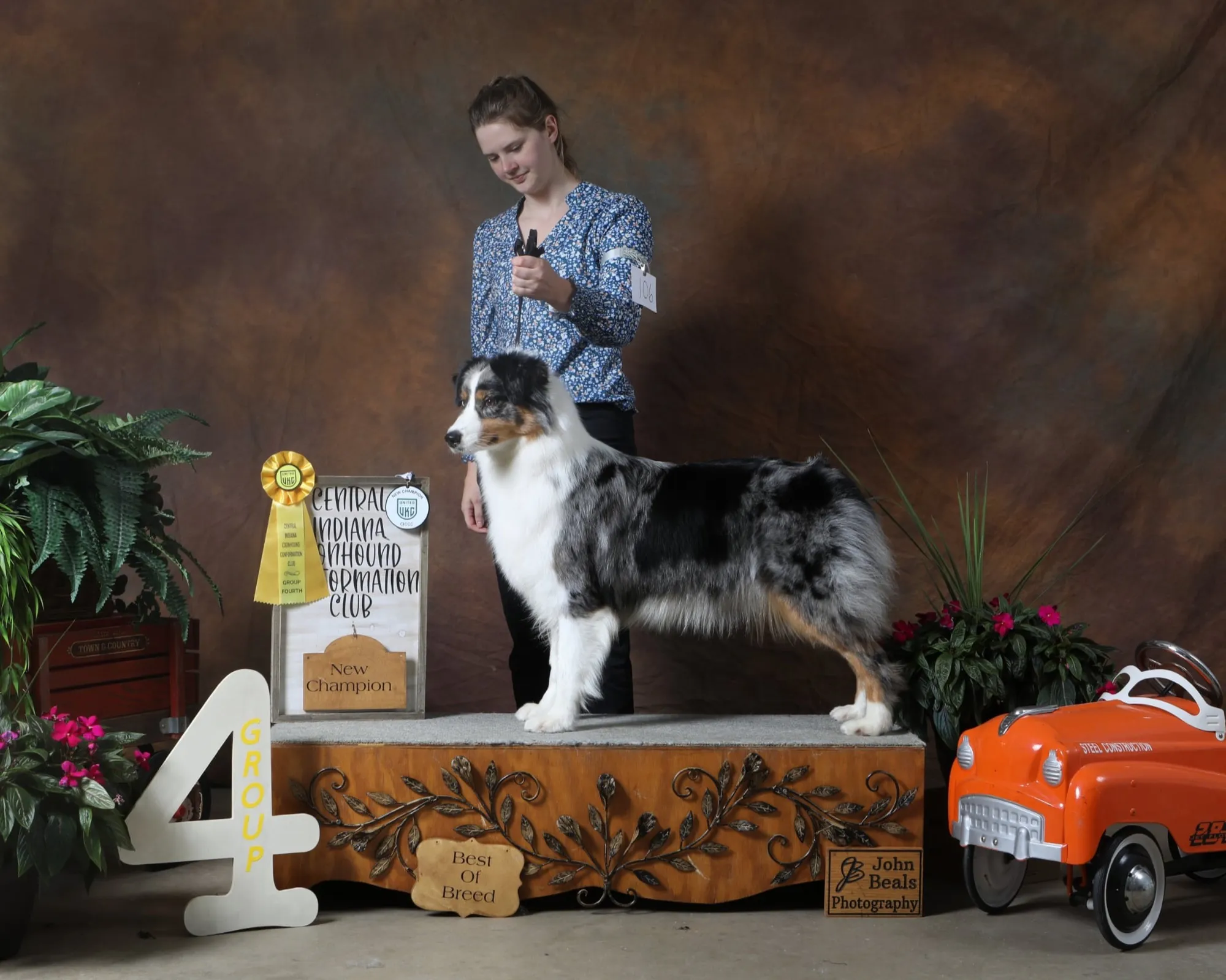
Titling is expensive. Conformation entries run $30 to $40 per show, plus handling fees of $75 to $125 per class if you use a professional handler, plus travel, hotel rooms, gas, and entry into specialty shows. Performance titles — FastCAT, agility, herding, dock diving, scent work, trick titles — each have their own entry fees, training costs, and travel.
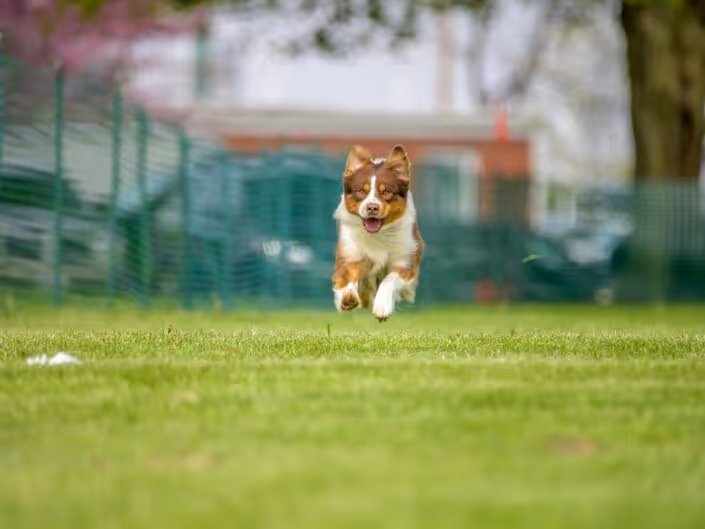
For a single dog to finish a conformation championship and earn a handful of performance titles, you are easily looking at $3,000 to $8,000 across one to two years of campaigning — and that assumes the dog actually finishes. Some dogs are wonderful in the home and never gel under a judge. Some dogs go lame mid-campaign and never finish. The expenses are sunk regardless.
Health Testing: The Real Money Pit
Now we get to the part of breeding that the public almost never sees.
Every dog in our program is tested through the Orthopedic Foundation for Animals for hips and elbows, eye-certified by a board-certified veterinary ophthalmologist (CAER), and run through a full genetic panel via Embark and UC Davis VGL for breed-relevant conditions. Here is roughly what that costs per dog:
- OFA hip and elbow radiographs — $300 to $600 (sedation, films, OFA submission)
- CAER eye exam — $50 to $80, performed by a board-certified veterinary ophthalmologist
- Full genetic panel (Embark + UC Davis) — $200 to $300 per dog, one-time
- Brucellosis testing — $50 to $100, repeated before every breeding
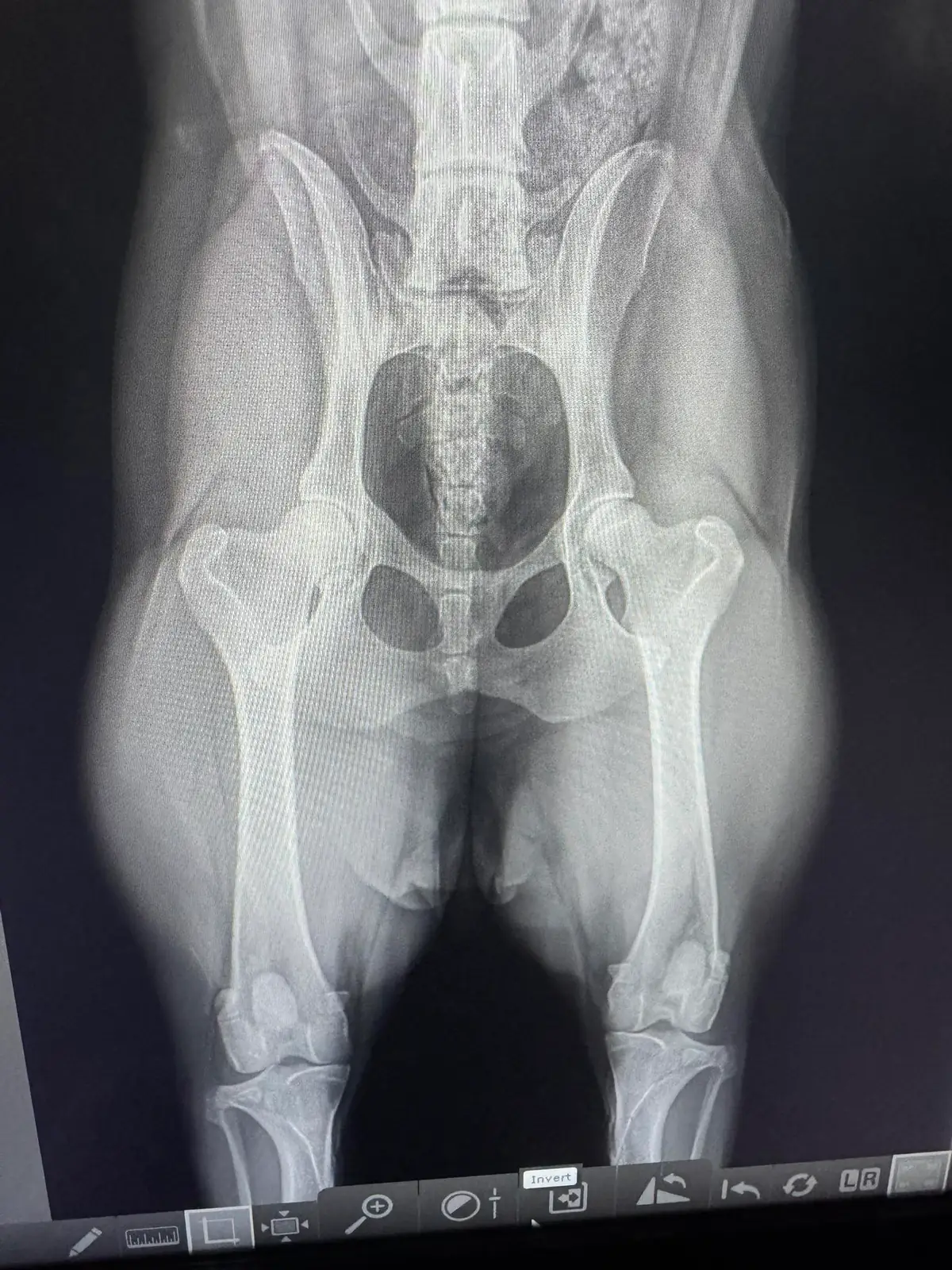
A single dog, fully health tested at the minimum standard for a responsible Australian Shepherd breeding program, costs between $600 and $1,200 up front — plus the brucellosis tests that have to be repeated before every breeding.
And that is just the routine, planned testing. The real wild card is the unplanned veterinary workup — the moment a vet hears something during a routine exam and recommends an extended cardiac evaluation, or a dog needs imaging for something that didn't quite look right. Those are not line items you can budget for. They simply show up.
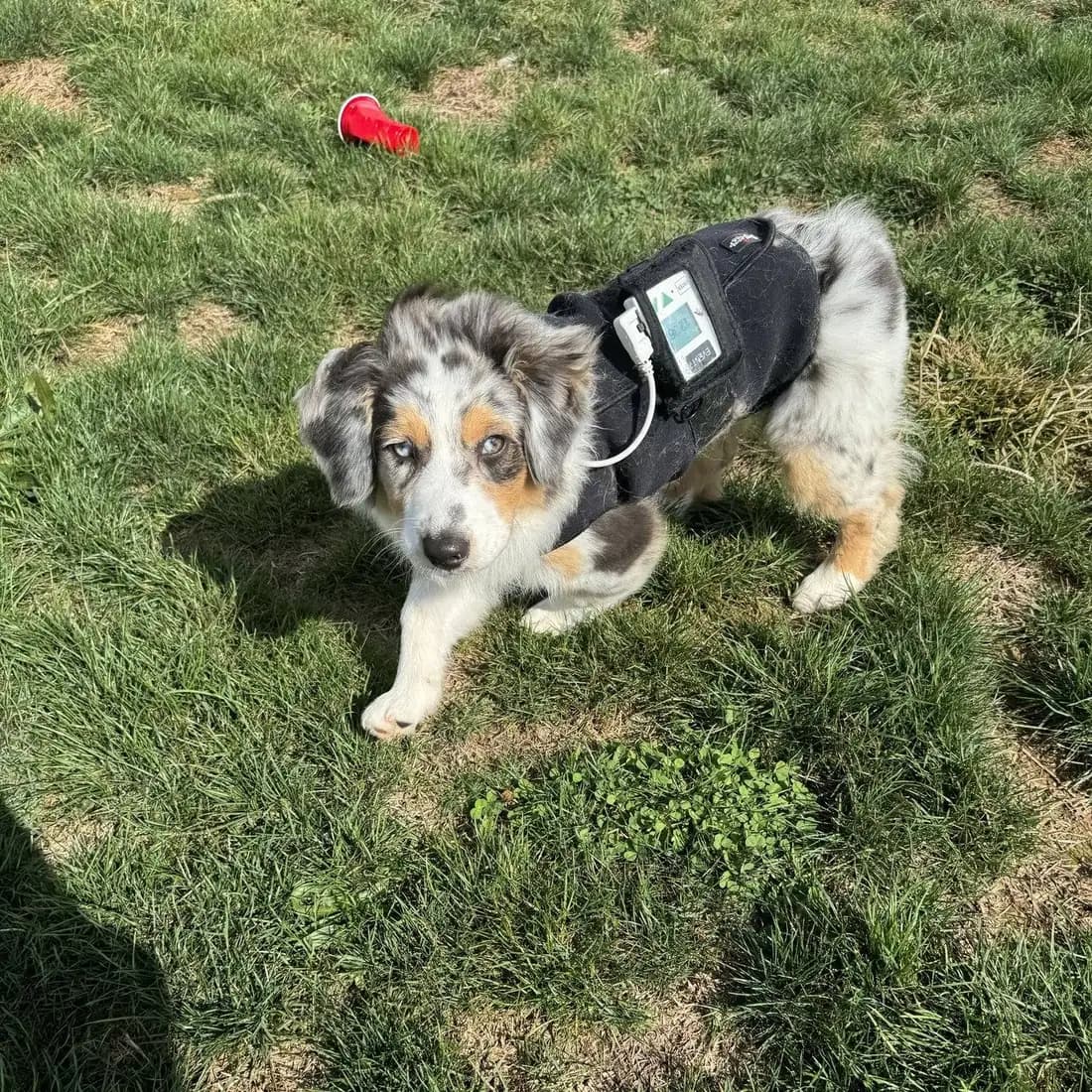
Multiply the routine testing across every dog in the program — the females, the males, the up-and-coming prospects who haven't yet earned a place in the rotation — and the health testing bill alone runs into thousands of dollars. We do not breed a dog until we know exactly what they carry, exactly how their joints look, and exactly what their eyes are doing. There is no shortcut.
If you want to see what a fully tested set of results looks like, every dog on our girls page and boys page has her or his complete health profile published in full.
The Pre-Breeding Workup
Once a female is cleared to breed and we have selected the right pairing, the pre-breeding workup begins. This is the phase the public does not see at all.
- Progesterone testing — multiple draws to time ovulation precisely, $100 to $200 per draw, four to seven draws per cycle
- Stud fees — $1,500 to $5,000+ for a quality outside stud, often more for proven producers
- Semen collection, evaluation, and shipping — $300 to $800 if using chilled or frozen semen
- Artificial insemination procedure — $400 to $1,500 per insemination if performed by a reproductive specialist
- Pre-breeding bloodwork and cultures — $200 to $400
If a breeder uses an outside stud and ships semen, a single breeding cycle easily runs $3,000 to $8,000 before pregnancy is even confirmed — and that's if the female takes on the first try. Many do not.
Pregnancy, Whelping, and the C-Section That Might Cost $5,000
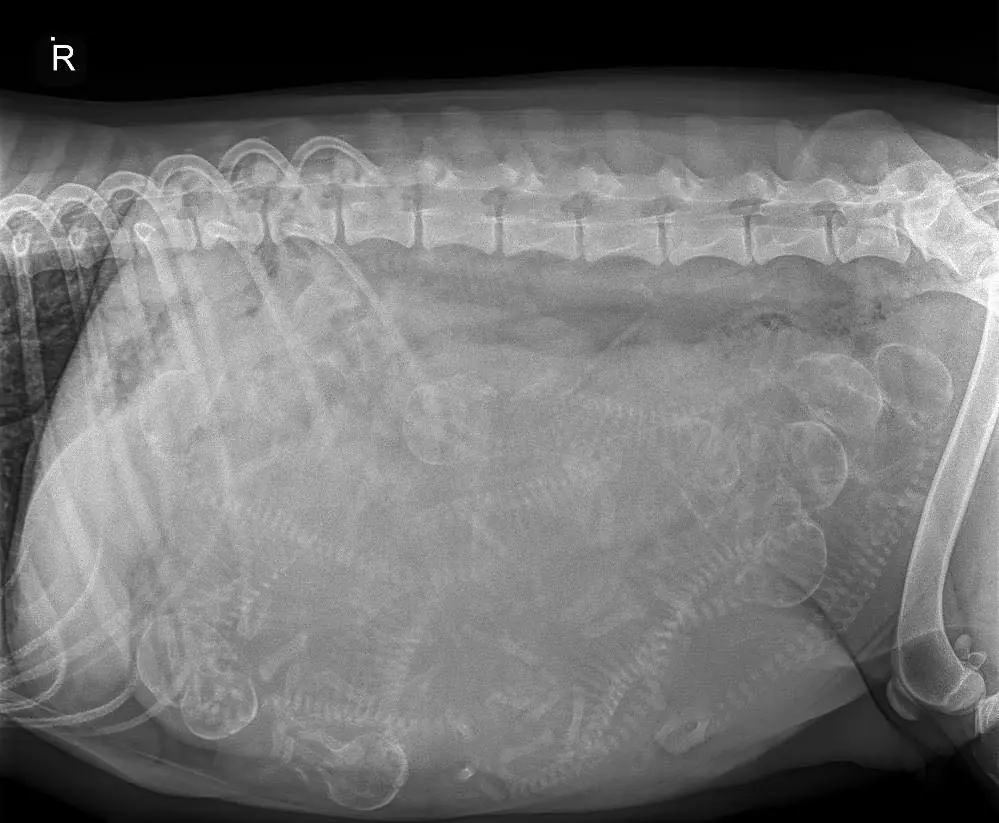
After breeding, pregnancy is monitored carefully. Ultrasound at around day 28 confirms pregnancy. Radiographs at day 55 to 58 give us a head count so we know how many puppies to expect during whelping.
Pregnant females need higher-calorie food, calcium and supplement monitoring, and a steadily growing pile of whelping supplies — a high-quality whelping box, heating pads, scales, suction bulbs, hemostats, sterile sutures, dewormers, and a complete neonatal first-aid kit. Routine pregnancy care alone adds another $500 to $1,000.
And then there's whelping itself. If everything goes smoothly, the breeder loses a week of sleep and the only cost is exhaustion. If it doesn't — if a puppy presents incorrectly, if labor stalls, if the female needs an emergency C-section at 2 a.m. on a Sunday — you are looking at a $3,000 to $6,000 veterinary bill that absolutely has to be paid right then.
Responsible breeders budget for the possibility of an emergency C-section on every single litter. It is not a "maybe" we get to ignore. We have walked into the emergency vet at 1 a.m. on a holiday weekend and signed a $5,000 estimate without flinching because the alternative was losing the female and her entire litter.
The Eight Weeks Between Whelping and Going Home
Once puppies are on the ground, the real labor begins. Eight weeks of round-the-clock work — and a steady cash outflow for:
- Premium puppy food as the litter is weaned — $300 to $600 across the litter
- Veterinary care — vet checks, first vaccinations, deworming protocols, microchips — easily $150 to $250 per puppy
- Enrichment supplies — surfaces, toys, agility-style puppy obstacles, scent kits for Early Neurological Stimulation and Early Scent Imprinting
- Whelping room laundry, cleaning supplies, and bedding — replaced almost daily for two months
- Take-home puppy packs — collars, toys, blankets carrying mom's scent, food samples, training resources
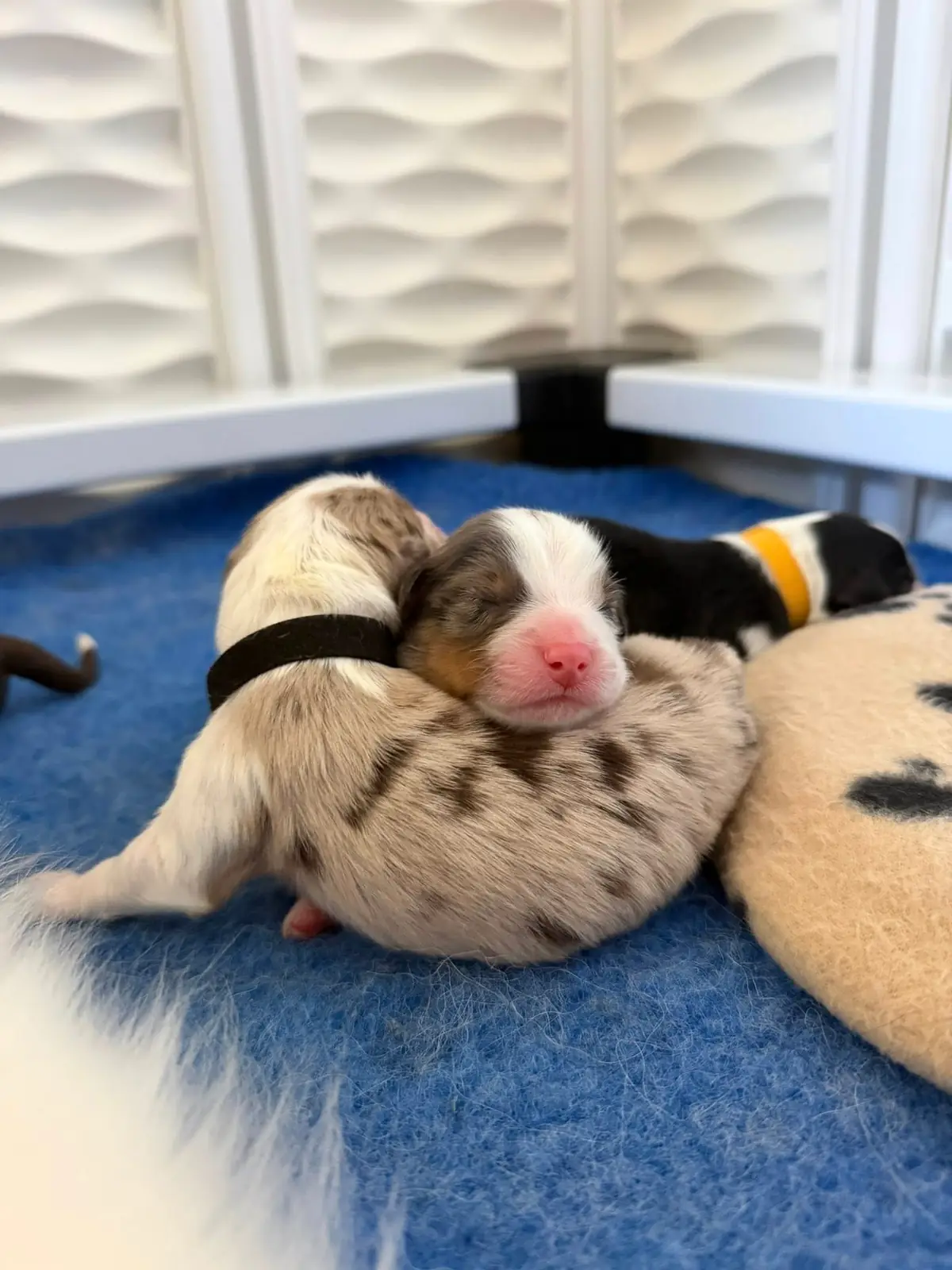
For a litter of eight puppies, the direct supply and veterinary cost of raising the litter for those eight weeks usually lands between $3,000 and $5,000 — and that does not begin to account for the hundreds of hours of labor that go into individual handling, weight tracking, photography, applications, vet visits, and home-by-home placement work.
If you want a fuller picture of what those eight weeks actually look like day-to-day, we've written a complete walkthrough of how we raise our puppies at Queen City Farm.
And Then There Are the Returns
A responsible breeder's contract requires that every puppy come back to the breeder if the family can no longer keep it. That commitment is for the life of the dog. We have taken back dogs at six months, at three years, at eight years. Each one has come back to us. Each one has been re-evaluated, brought back into the home, and rehomed thoughtfully.
That is not a cost we ever quote to a buyer. But it is built into how we plan our program — financially and emotionally.
The Caveat Nobody Talks About: She Can Fail OFAs at Two
Here is the part of responsible breeding that breaks people's hearts and that nobody outside the breeding community ever sees.
You can do everything right. You can buy the perfect breeding prospect from a reputable mentor. You can spend two years raising her on the right food, the right exercise, the right enrichment. You can finish her UKC championship. You can earn her performance titles. You can run her preliminary OFA hip and elbow films at 18 months and have them come back clean. You can spend $10,000+ getting her to her second birthday with everything looking perfect.
And then you submit her final OFA radiographs at 24 months — the official films that determine whether she can be bred — and they come back dysplastic. Or mildly dysplastic. Or with elbow changes that did not show on her prelims. Or with eye findings on her CAER exam that disqualify her from breeding.
That is it. That dog will not be bred. Ever. The two years, the titles, the health work, the conditioning, the dreams of carrying her line forward — all of it ends with that one phone call from the radiologist.
She still has a home. She is still loved. She still lives out her life as a beloved member of the household, sometimes earning more performance titles or going on to other careers. But the breeding investment is gone, and the next prospect has to be acquired, raised, and proven from scratch. Another two to three years. Another $10,000+.
This is why responsible breeders cannot operate on volume and cannot price puppies at "rescue prices." Every successful breeding female represents thousands of dollars in failed prospects who came before her. Every clear set of OFA films represents real risk that could have gone the other way.
So What Does It Actually Cost to Produce One Litter?
Adding up the conservative numbers across a single, responsibly produced Australian Shepherd litter — averaged across the failures and the wins — looks something like this:
- Foundation dog acquisition and two years of raising: $10,000+
- Conformation and performance titling: $3,000 to $8,000
- Full health testing across the breeding career: $2,000 to $5,000
- One breeding cycle (progesterone, stud fee, insemination, ultrasound, x-ray): $3,000 to $8,000
- Whelping, possible C-section reserve, eight weeks of puppy care: $3,000 to $11,000
At Queen City Farm, our puppies are priced at $2,500 as of May 2026. Spread across a litter of eight puppies, that $20,000 in revenue has to cover the per-litter veterinary and supply costs, allocate a share of the upfront investment in the breeding female, fund the next round of health testing on the rest of the program, and absorb the financial loss of every breeding prospect who didn't make it to her final OFAs. There is no profit hiding in that number — there is reinvestment.
And then we have the privilege of placing those puppies into homes for the next twelve to fifteen years, standing behind every single one of them for life.
Why We Still Do It
Reading this back, it almost sounds like an argument against being a responsible breeder. It isn't. We do this because the alternative — Australian Shepherds being produced by people who do none of this — is a worse outcome for the breed, for the puppies, and for the families who bring them home.
A poorly bred Australian Shepherd doesn't save anyone money. A dog with hip dysplasia, MDR1 sensitivity, hereditary cataracts, or an unstable temperament costs his family multiples of a well-bred puppy's price over the dog's lifetime — in vet bills, in medication, in training, in heartbreak. The dollars we spend on the front end of a litter are a fraction of what an irresponsibly bred dog costs his family over fifteen years.
If you are weighing whether a responsibly bred puppy is "worth it," we'd encourage you to read our companion posts on why buying from a responsible breeder matters even if you just want a pet dog and how to choose a responsible Australian Shepherd breeder. We are completely transparent about how our program runs, what we test for, and what your puppy's price actually covers.
If you are looking for an Australian Shepherd from a program where every dollar in is a dollar invested in the dogs, take a look at our available puppies or submit a puppy application. We would love to talk.
Frequently Asked Questions
How much does a responsibly bred Australian Shepherd puppy cost in 2026?
A well-bred Australian Shepherd from a fully health-tested, titled program in the United States typically runs $2,500 to $4,500 for a pet-home puppy on a spay or neuter contract. At Queen City Farm, our puppies are priced at $2,500 as of May 2026. Breeding-rights or show-prospect puppies are priced higher, often $4,500 to $6,500+, reflecting the additional risk the breeder is accepting in placing a dog who may go on to reproduce.
Why are responsibly bred puppies more expensive than puppies from a backyard breeder?
The price reflects what went into the puppy before they were ever born — years of health testing, titling, quality nutrition, and veterinary care for the breeding dogs, plus the eight weeks of intensive, individual puppy raising that happens before the puppy goes home. A backyard breeder skips all of those steps. The price difference between a well-bred puppy and a poorly bred puppy is dwarfed by the difference in long-term veterinary and training costs.
Do breeders make money on puppy sales?
A responsible breeder operating at a small scale does not turn a profit on puppy sales. The economics only begin to work in their favor if a breeder is producing volume, skipping health testing, skipping titling, and treating breeding as a business rather than a stewardship. Most reputable Australian Shepherd breeders are net-negative on a per-litter basis once the full cost of their program is accounted for.
What happens to dogs who fail their final OFA health tests?
They stay in their families. At Queen City Farm, our breeding prospects are first and foremost members of our household. If a dog does not pass her final health screenings, she is not bred — full stop — but she stays here for the rest of her life, often going on to earn performance titles or simply enjoy being a beloved companion. We then begin the process of evaluating the next prospect.
How can I verify a breeder is actually doing the health testing they advertise?
Every OFA result is publicly searchable at ofa.org — you can look up any dog by registered name and see their hips, elbows, eyes, and any other OFA-recorded evaluations on file. Genetic panels through Embark and UC Davis VGL produce shareable reports that a breeder can send you directly. A responsible breeder will not just answer these questions — they will be glad you asked.