
Our Philosophy
How We Raise Them
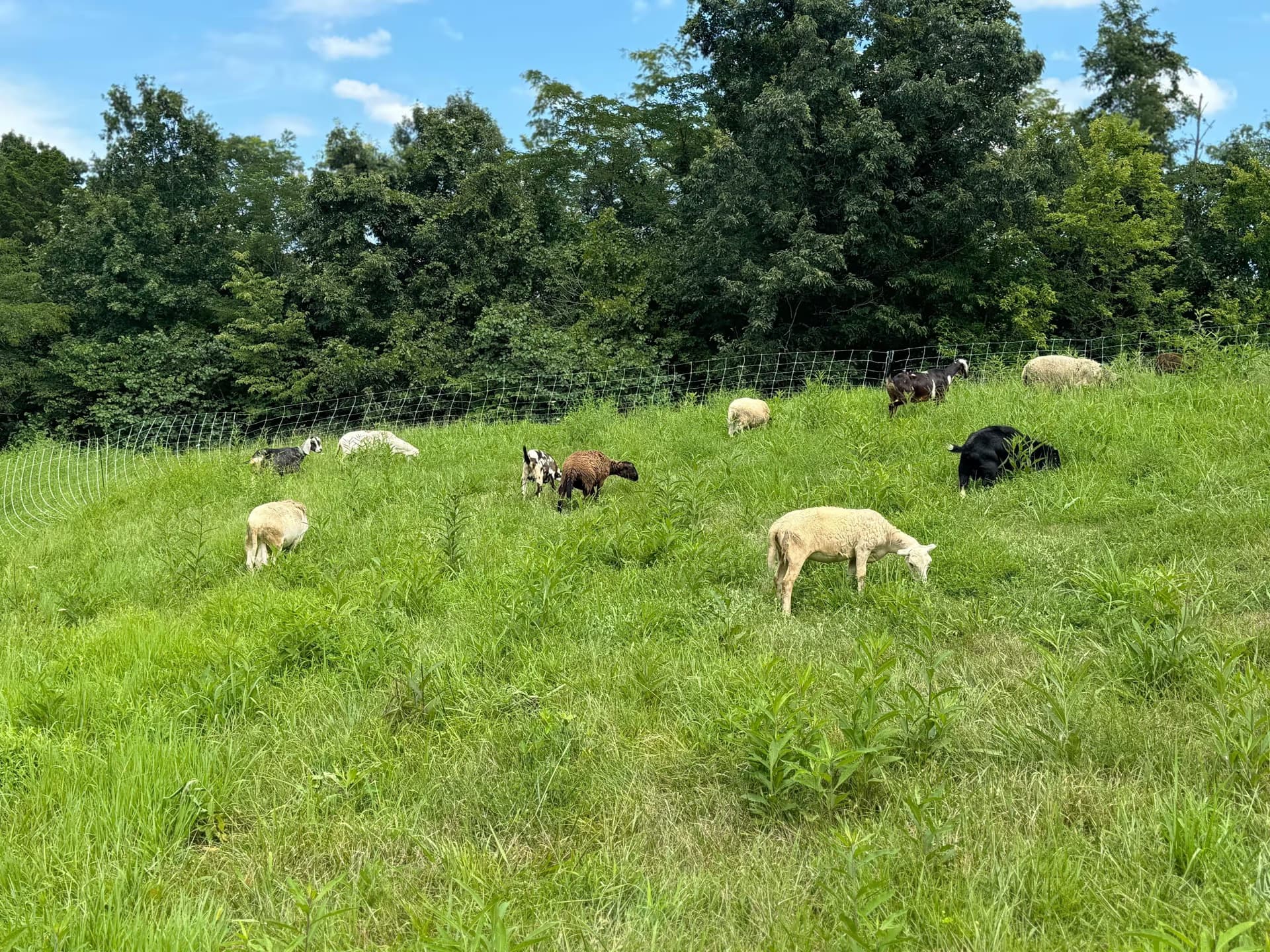
Pasture-based and regenerative, from the ground up. We farm the soil first, raise our animals in the open, and let the land get better every year because of how we work it.
Why We Farm This Way
Good Food Starts in the Soil
"Pasture-raised" gets printed on a lot of labels, and it doesn't always mean much. At Queen City Farm it means something specific: our animals live their whole lives outdoors, on grass and in the woods, on a 50-acre farm in Falmouth, Kentucky. We don't raise animals on a feedlot and call it farming. We manage a living system — soil, forage, and livestock together — where each part feeds the next.
That's what regenerative farming means to us. The goal isn't just to avoid doing harm; it's to leave the land healthier than we found it, one season at a time. Better soil grows better forage, better forage raises better animals, and better animals make better food. It all comes back to the ground under our feet.
Regenerative Grazing
We Manage Grass, Not Just Animals
The heart of how we farm is rotational grazing. Instead of letting animals graze the same ground until it's bare, we move them across the farm in paddocks, giving each piece of pasture a long rest before it's grazed again.
That rest is everything. It lets the grass recover its roots, builds organic matter and structure in the soil, and pulls carbon down out of the air and into the ground. It also breaks the parasite cycle naturally — by the time the flock returns to a paddock, the rest period has done the work a dewormer otherwise would.
The proof is in the pasture itself: the ground holds more water, grows more forage, and looks better every year. We're not mining the land to raise animals on it — we're building it.
What We Stand On
The Principles We Farm By
Everything we do comes back to a handful of commitments we won't compromise on.
The land comes first
We farm the soil before we farm the animals. Healthy ground grows healthy forage, and healthy forage raises healthy livestock. Every decision we make starts with whether it leaves the pasture better than we found it.
Animals live where they belong
Sheep on open pasture, hogs in wooded paddocks, chickens on fresh grass. Our animals spend their lives outdoors in the environment they evolved for — rooting, grazing, foraging, and moving. No crates, no concrete, no confinement.
Movement, not medicine
Instead of leaning on routine antibiotics to keep animals healthy in crowded conditions, we keep them healthy by moving them. Fresh ground means clean ground, and clean ground means animals that rarely get sick in the first place.
Raised here, start to finish
Every animal we sell was born, raised, and finished on our farm — no feedlots, no sale-barn middlemen, no mystery. If you want to know how your food was raised, you can come out and see it for yourself.
Low stress, every stage
Calm animals are healthy animals, and calm handling makes better meat. Our animals know us, they're moved quietly, and they're processed at a small local facility to keep stress low from the first day to the last.
Nothing to hide
We'll tell you exactly what we feed, how we move them, and where they're processed. Every package can be traced back to the pasture and the season it came from. Ask us anything — transparency is the whole point.
Animal by Animal
How We Raise Each One
Different animals need different things. Here's exactly how each one lives on our farm.
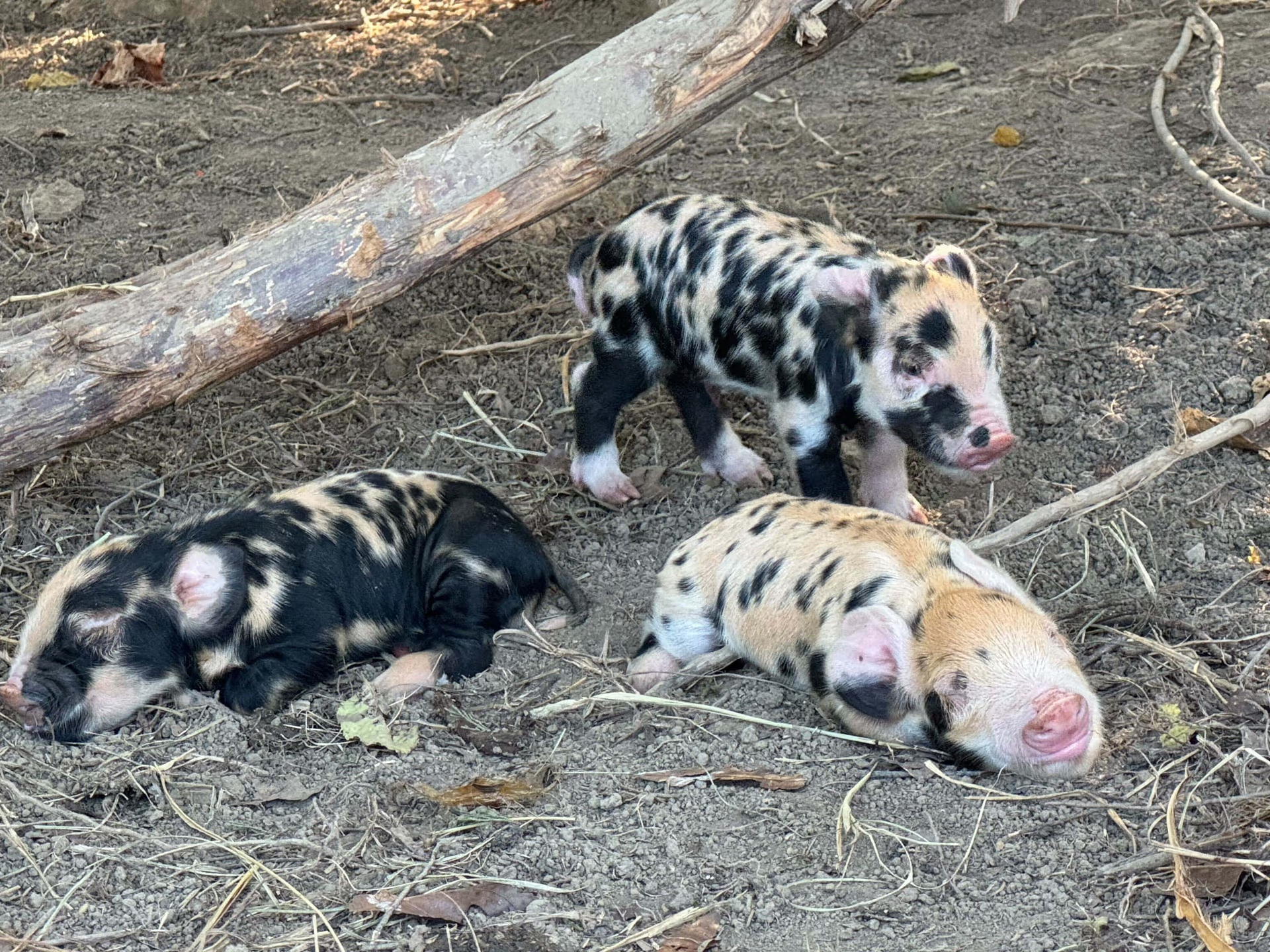
Rooted, rotated, never confined.
Our Pigs
Pigs are foragers by nature, so we raise ours the way the woods intended — in wooded paddocks where they root, dig, wallow, and turn over the soil all day long. That natural rooting behavior is part of how we manage the land; the pigs aerate the ground and clear undergrowth while they forage.
Because pigs are omnivores, pasture and forest alone aren't a complete diet, so we supplement with non-GMO grain. What they never get is sub-therapeutic antibiotics, growth hormones, crates, or concrete. The result is deeply marbled, rich-flavored pork you can trace back to the tree line it came from.
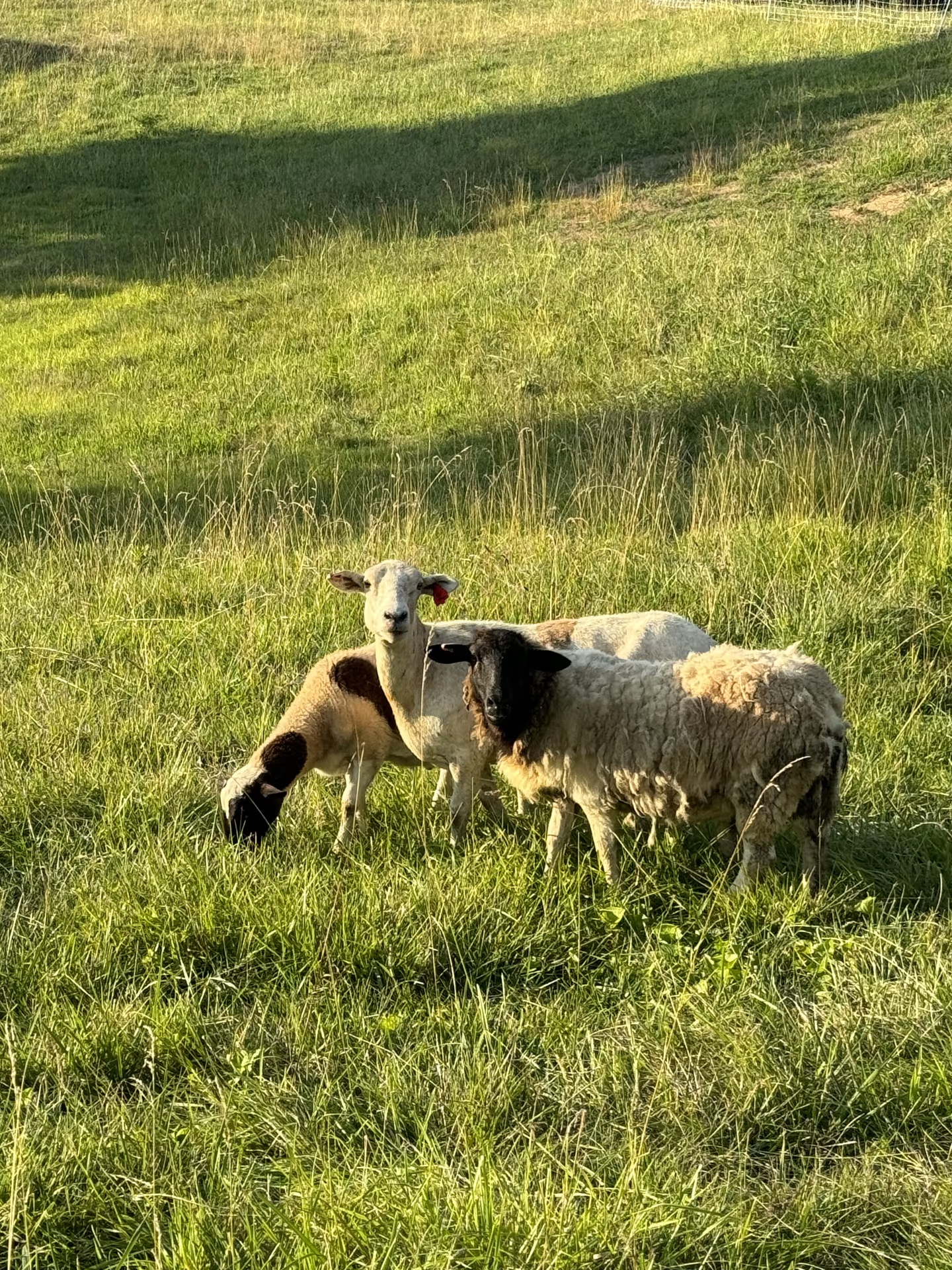
95% grass-finished, rotationally grazed.
Our Sheep
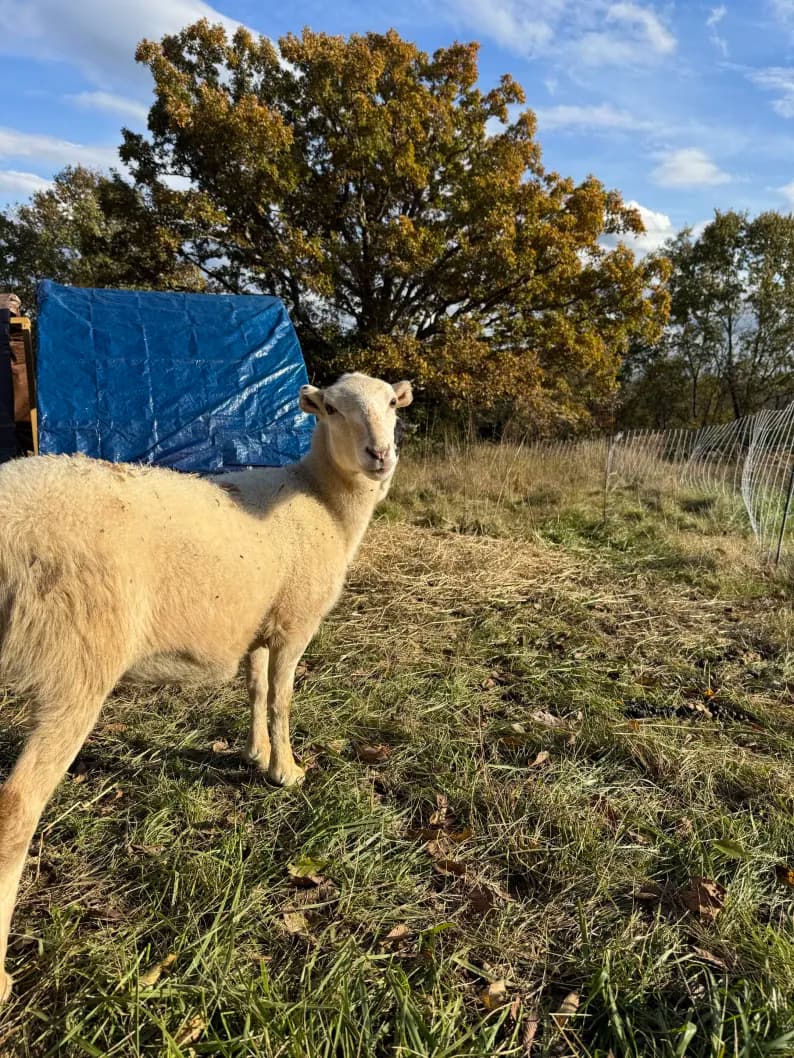
Our flock lives on pasture and moves across fresh Kentucky grass on a rotational grazing system. Lambs are raised on mother's milk and forage and are about 95% grass-finished — they get a small amount of grain every few days as a boost, never as the main event.
Constant movement onto clean ground is also our best parasite control: by the time the flock would re-graze a paddock, it's had weeks to rest and recover. It's better for the sheep and better for the soil — and it gives the lamb its mild, clean, tender flavor.
On grass, in the open, every day.
Our Chickens
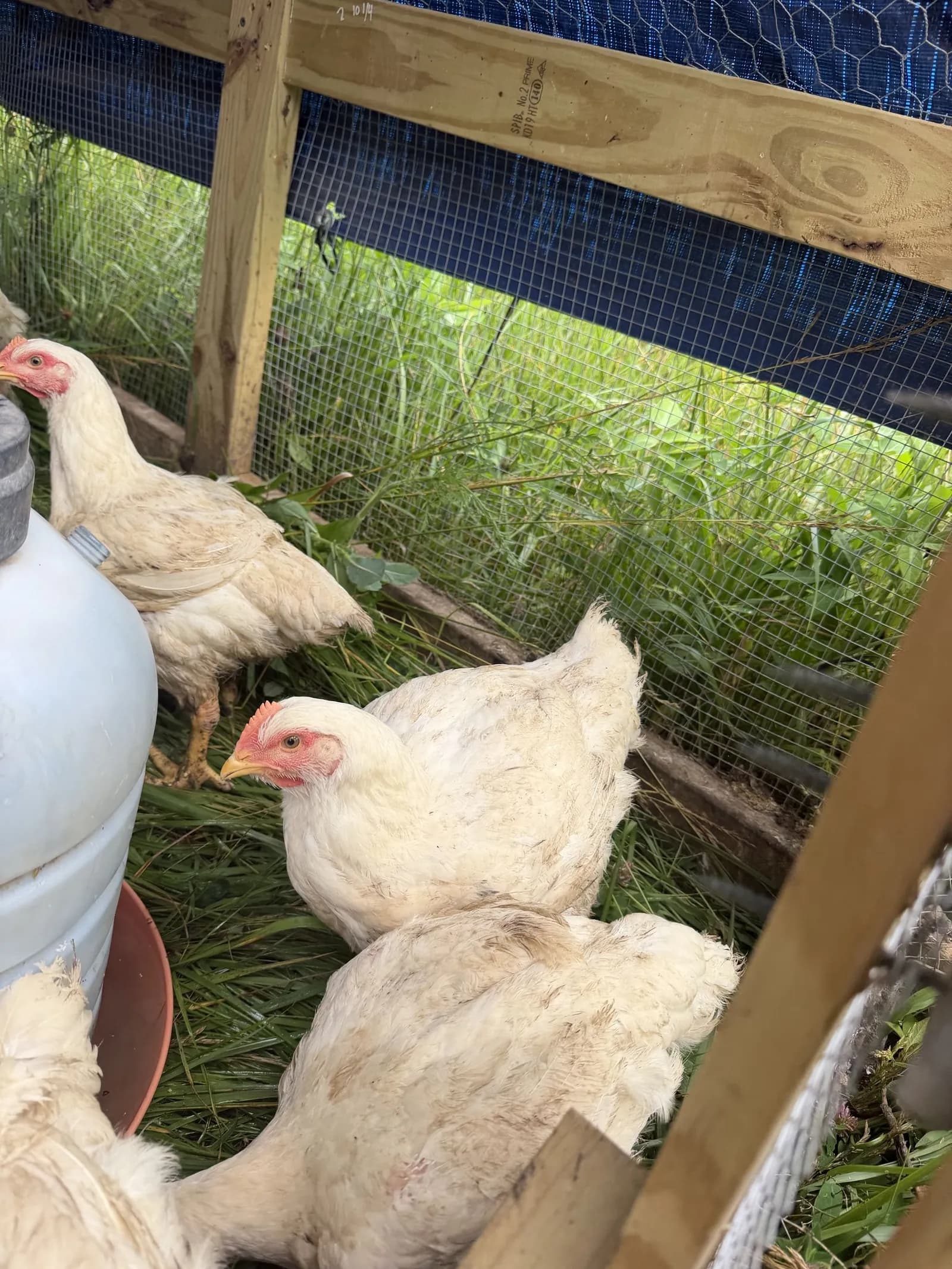
Our birds rotate across the pasture in mobile shelters that we move to fresh grass daily. That means sunlight, room to move, and a steady supply of forage and bugs — the diet chickens are built for.
Moving them every day keeps the birds on clean ground and spreads their fertility evenly across the pasture, feeding the soil as they go. No confinement, no routine antibiotics. The result is firm-textured, deep-flavored chicken that tastes like chicken used to.
Pasture to Package
Low-Stress, Local, and Traceable
How an animal spends its last day matters as much as how it spends the rest of its life — for the animal and for the meat. Our animals are handled calmly by people they know and processed at a small, family-run, USDA-inspected facility about 45 minutes from the farm.
Every retail cut we sell at market is USDA-inspected and properly labeled, and every package can be traced back to the pasture, the paddock, and the week it came from. There's no long supply chain to lose track of — it's our farm to your table, and we're happy to walk you through every step.
Come See for Yourself
The best way to understand how we farm is to taste it. Find us at the farmers market, or reach out with any questions about how we raise our animals — we love talking about it.