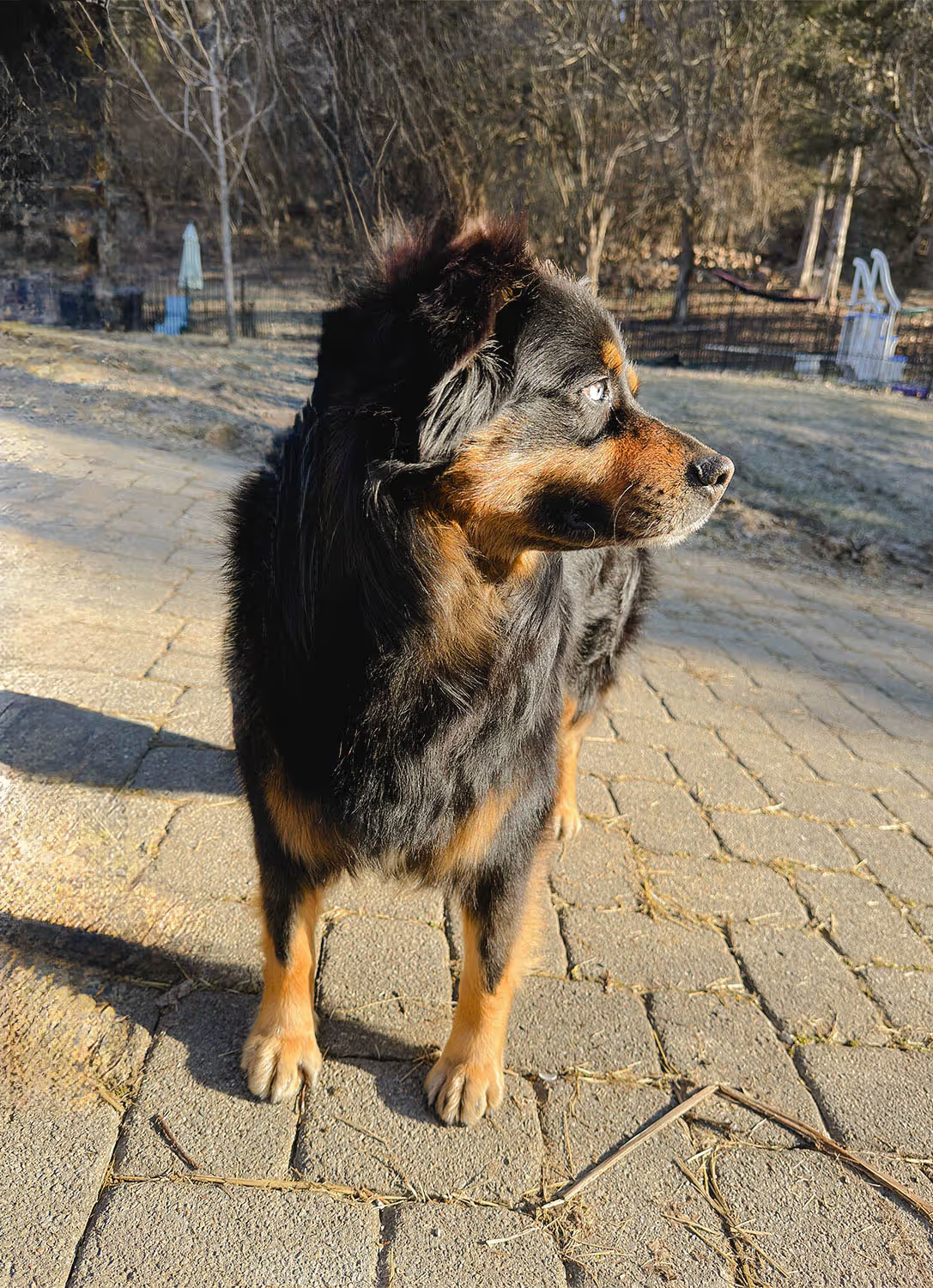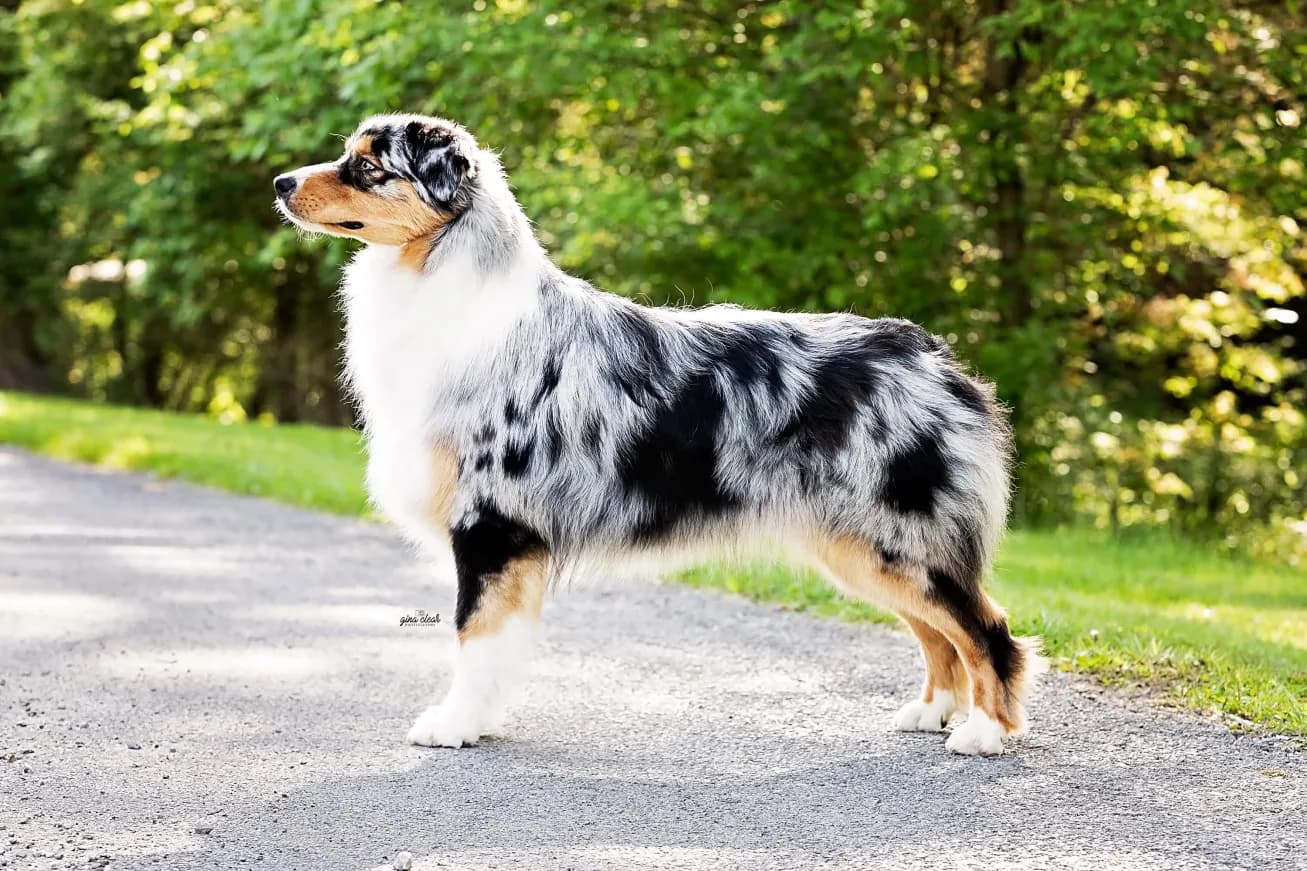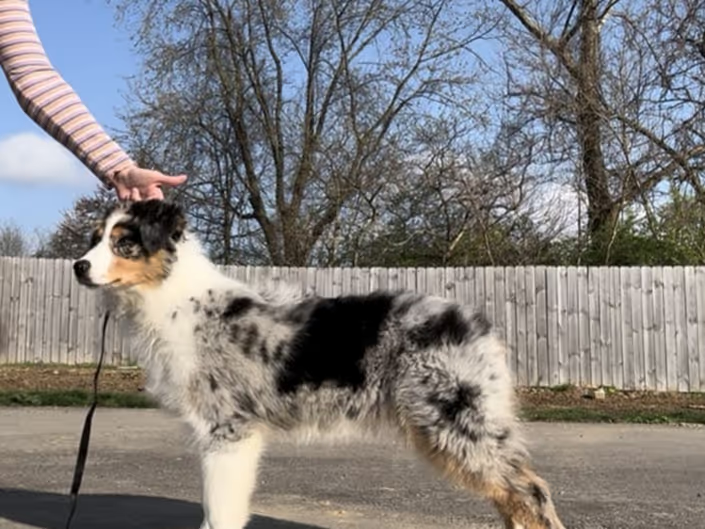
If you have searched for a "Mini Australian Shepherd" or a "Toy Australian Shepherd," you have probably noticed something confusing — different breeders use those terms to mean very different dogs, the size ranges are all over the place, and the registrations vary wildly from one listing to the next.
There is a reason for that. Neither the "Mini Australian Shepherd" nor the "Toy Australian Shepherd" is a recognized breed. Not in the American Kennel Club. Not in the United Kennel Club. Not in the Australian Shepherd Club of America. The real breed that most people are thinking of when they say "Mini Aussie" is the Miniature American Shepherd — and it has a real history, a real standard, and a real reason for being a separate breed from the Australian Shepherd.
This post is the honest answer we wish more buyers got before they started shopping.
The Quick Answer
- Australian Shepherd — A real, recognized breed. Recognized by AKC, UKC, ASCA, and every major registry. Standard size: 18 to 23 inches at the shoulder.
- Miniature American Shepherd — A real, recognized breed. Fully AKC-recognized since 2015. Standard size: 13 to 18 inches at the shoulder.
- Mini Australian Shepherd — Not a real breed. The label is a marketing term, not a recognized breed name. People using it are usually trying to describe a Miniature American Shepherd, or they are reselling an undersized Australian Shepherd under a label that sounds more intentional than it is.
- Toy Australian Shepherd — Not a recognized breed by any major registry. There is no breed standard, no parent club, and no health-testing infrastructure behind the label.
If you want a small herding dog that looks like an Aussie, the breed you actually want has a name — and it is not "Mini" or "Toy" anything.
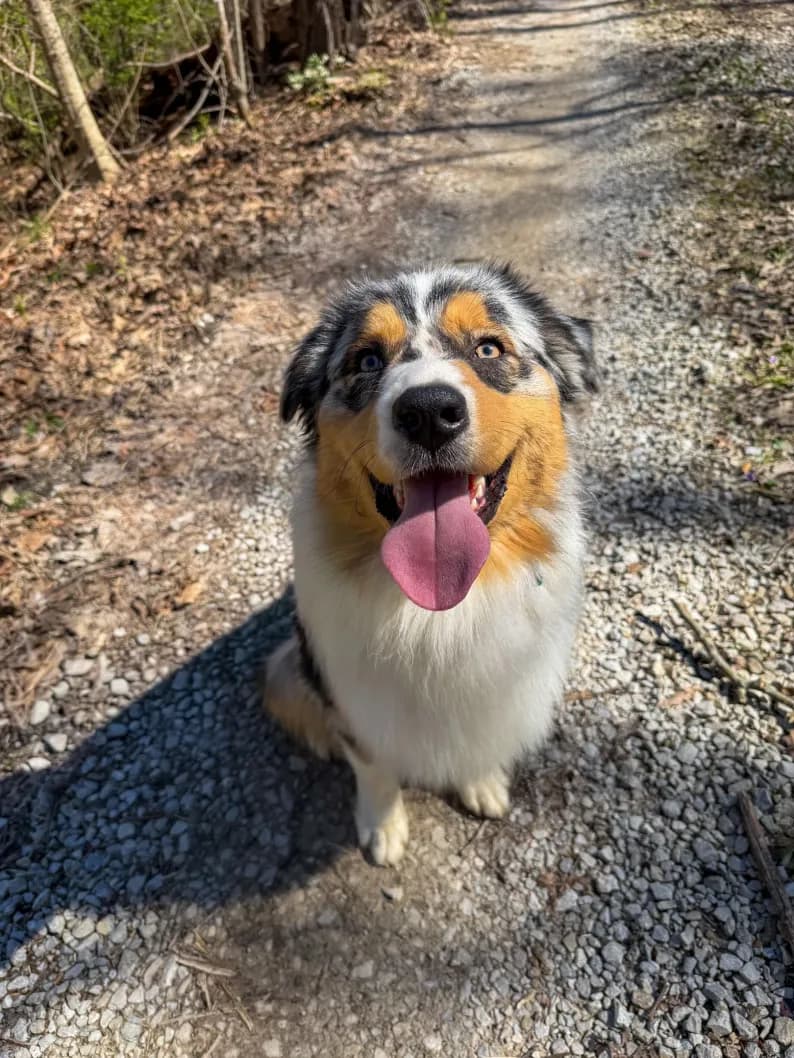
What Is a Miniature American Shepherd?
The Miniature American Shepherd is a real breed with a real, traceable history. It started in Norco, California in the late 1960s, when a breeder named Doris Cordova began selectively breeding the smallest Australian Shepherds she could find. The original goal was to produce a smaller version of the Aussie that retained the herding drive, intelligence, and temperament — but at a more compact size that fit a different lifestyle.
These early dogs were called Miniature Australian Shepherds, and for decades that was the working name. But as the program grew, two things happened. First, the dogs began to diverge from the Australian Shepherd both in size and in their breeding goals. Second, the Australian Shepherd Club of America made clear that the parent breed was a working ranch dog and would not include a smaller variant in its registry.
So in 2011, the American Kennel Club moved the breed into its Foundation Stock Service under a new name: the Miniature American Shepherd. In 2015, the breed was granted full AKC recognition in the Herding Group. It is now a distinct breed with its own standard, its own parent club (the Miniature American Shepherd Club of the USA), and its own gene pool that is increasingly separate from the Australian Shepherd.
So when somebody is selling you a "Mini Aussie" with AKC papers, those papers most likely say Miniature American Shepherd, not Australian Shepherd. The two are related but they are not the same breed anymore — and they are not interchangeable.
So Where Do the "Mini Aussie" and "Toy Aussie" Labels Actually Come From?
The labels are marketing, plain and simple. There is no "Mini Australian Shepherd" breed and no "Toy Australian Shepherd" breed — there is just a category of listings that uses those words.
When somebody is advertising a dog as a "Mini Aussie" or a "Toy Aussie," what they are actually selling tends to fall into one of a few patterns:
- A Miniature American Shepherd that the seller is rebranding as a "Mini Aussie" because that is what buyers are searching for, even though the breed has a real name.
- An undersized Australian Shepherd from a poorly planned litter, marketed as a "Mini" to justify the price tag.
- A dog produced by repeatedly breeding undersized dogs to other undersized dogs to chase a smaller size — which is how dwarfism, structural unsoundness, and orthopedic problems get introduced into lines that were never supposed to be that small.
- A crossbred dog where other small breeds have been worked into the program with no breed standard, no parent club, and no oversight.
The same is true for "Toy Aussies," only more so. Push the size goal further, and you push the structural problems further with it. There is no breed standard for a Toy Australian Shepherd to be measured against, no parent organization holding breeders accountable, and no health-testing infrastructure built around the term. When somebody pays a premium for a "Toy Aussie," they are paying for a marketing label, not a breed.
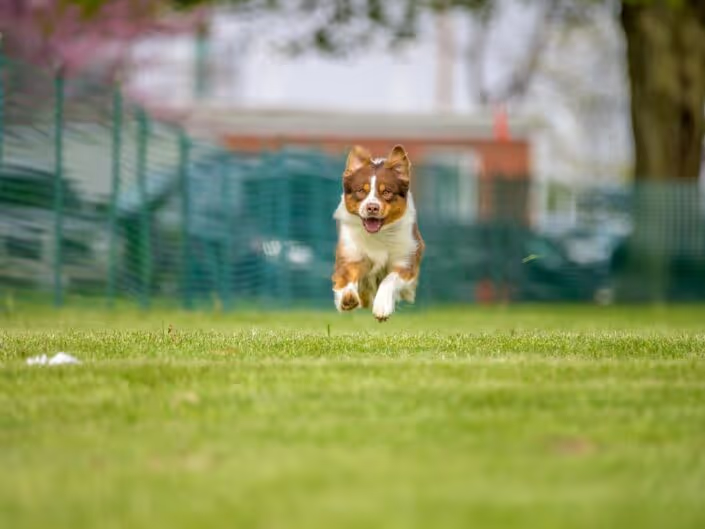
The Real Australian Shepherd: A Quick History
It is worth knowing where the Australian Shepherd actually comes from, because the name is one of the most misleading in dog breeding.
Despite the name, the Australian Shepherd was not developed in Australia. The breed was developed in the western United States — primarily on California ranches — during the 1800s. The leading theory traces the breed back to Basque shepherds who emigrated to the United States, sometimes by way of Australia, bringing their herding dogs with them. American ranchers crossed those dogs with other herding breeds and selected for the qualities they needed in a working partner on cattle and sheep operations.
The Australian Shepherd Club of America was formed in 1957 and remained the dominant registry for decades. The American Kennel Club did not recognize the breed until 1991 — relatively late in the AKC's history — and the breed's working roots remain a defining part of its identity. A correctly bred Australian Shepherd should be built for a full day of work, structurally sound, athletically capable, and mentally engaged. The breed standard reflects that.
That working purpose is the reason the Australian Shepherd parent clubs have resisted folding a smaller variant into the breed. A 14-inch dog cannot do the work the breed was developed to do.
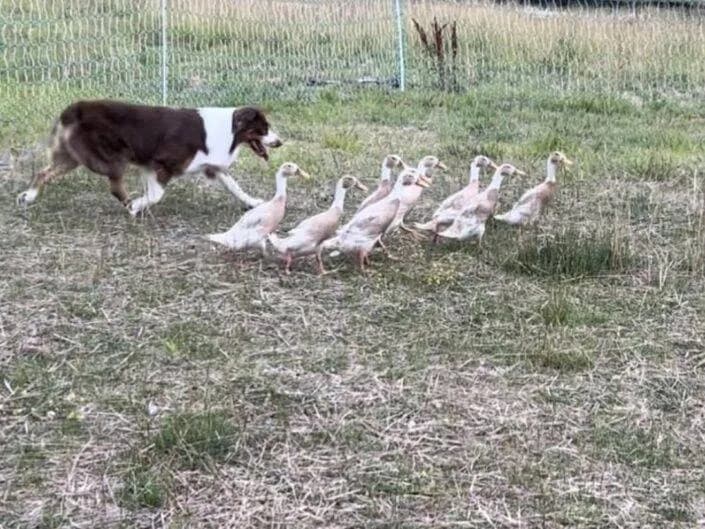
Why It Matters What You Call a Breed
This might sound like semantics, but it matters in three concrete ways.
First, predictability. Registered breeds have written standards that describe size, structure, coat, temperament, and movement. When a breeder selects to that standard generation after generation, you get predictability — the puppy you bring home is much more likely to grow into the dog you signed up for. When a breed name has no standard behind it, anything goes. Two "Mini Aussies" from two different programs can be wildly different dogs.
Second, health. Established breeds have parent clubs that recommend specific health screenings. Australian Shepherd breeders test hips and elbows through OFA, eyes through a board-certified veterinary ophthalmologist, and a genetic panel through services like Embark and UC Davis. Miniature American Shepherd breeders follow the same parent-club guidance. When somebody is breeding "Toy Aussies" outside of any recognized breed structure, that health-testing infrastructure usually does not follow.
Third, accountability. Breeders working within a recognized breed answer to a parent club, a registry, and a community that cares about the long-term health of the gene pool. Breeders selling dogs under invented names answer to none of those things. There is no breed club to pull a registration. There is no shared standard to push back on bad practices. There is no community of breeders evaluating one another's dogs.
Side-by-Side: Australian Shepherd vs. Miniature American Shepherd vs. "Mini" or "Toy Aussie"
Here is the simple comparison most buyers are looking for.
Australian Shepherd
- Recognized by AKC (1991), UKC, and ASCA
- Standard size: 18 to 23 inches, 40 to 65 pounds
- Parent club: Australian Shepherd Club of America
- Written breed standard, established health testing protocols, large gene pool
Miniature American Shepherd
- Recognized by AKC (2015)
- Standard size: 13 to 18 inches, roughly 20 to 40 pounds
- Parent club: Miniature American Shepherd Club of the USA
- Written breed standard, established health testing protocols, smaller but growing gene pool
"Mini Australian Shepherd"
- Not a real breed. Not recognized by AKC, UKC, or ASCA.
- A marketing label, not a breed name.
- Dogs sold under it are usually Miniature American Shepherds being rebranded, or undersized Australian Shepherds being upsold.
"Toy Australian Shepherd"
- Not a real breed. Not recognized by any major kennel club.
- A marketing label, not a breed name.
- No parent club, no enforced standard, and no health-testing infrastructure exists for it. Dwarfism and orthopedic issues are common when undersized dogs are bred together across generations to chase the label.
What to Look For If You Want a Miniature American Shepherd
If you genuinely want a smaller herding dog with Aussie-like qualities, the Miniature American Shepherd is the real breed to look at. Here is how to tell whether the program you are looking at is a credible one.
- Ask what the breed actually is on paper. A reputable breeder will tell you their dogs are AKC-registered Miniature American Shepherds. If a breeder is calling their dogs "Mini Aussies" and cannot point to an AKC-recognized breed name behind that label, that is a meaningful red flag.
- Look for parent-club-aligned health testing. Hips and elbows through OFA. Eyes evaluated by a board-certified veterinary ophthalmologist at least once. A genetic panel through Embark, UC Davis, or a comparable service. The list of tests should be available before you ask.
- Avoid any program advertising "Teacup," "Toy," "Pocket," or "Mini Toy" sizes. Those labels signal a breeder optimizing for marketability over structural soundness. Healthy herding dogs are not built that small.
- Ask about the parents. A good breeder will tell you the size of the parents and grandparents, will show you their titles and health clearances, and will not be defensive about questions.
If the breeder cannot answer those questions plainly, the safer call is to keep looking — regardless of what they are calling the dog.
At Queen City Farm, We Breed Australian Shepherds
We get asked about Mini Aussies and Toy Aussies often enough that we wanted to put a clear answer somewhere people could actually find it. Our own program breeds AKC-registered Australian Shepherds — the breed as it was developed to work. Our dogs are hip and elbow tested through OFA, eye-certified by a board-certified veterinary ophthalmologist, and genetically paneled through Embark and UC Davis. They earn AKC and UKC conformation titles, FastCAT credentials, and trick dog certifications. They are sized, structured, and temperamentally aligned with the breed standard.
If you are looking for the smaller variant, what you almost certainly want is a Miniature American Shepherd from a breeder who is doing things the right way. If you want the full breed — the one with the long history, the working roots, and the broad gene pool — that is the Australian Shepherd. We would be glad to talk with you about whether one is a fit for your family.
For more on what a responsible breeder actually looks like, see our guide on how to choose a responsible Australian Shepherd breeder. And if you are still in the earlier "is this even the right breed for me" stage, our Is an Australian Shepherd right for your family? decision guide is a good place to start.
Frequently Asked Questions
Is a Mini Australian Shepherd the same as a Miniature American Shepherd?
A "Mini Australian Shepherd" is not a real breed — it is a marketing label. The breed that people are usually describing when they search for a Mini Australian Shepherd is the Miniature American Shepherd, which has been fully recognized by the American Kennel Club since 2015 and is the only AKC-recognized smaller breed in the Aussie family. If a seller is using "Mini Aussie" as a breed name on a listing, that is a hint that the dog may not be what the buyer assumes it is.
Are Toy Australian Shepherds a real breed?
No. The Toy Australian Shepherd is not recognized by the American Kennel Club, the United Kennel Club, the Australian Shepherd Club of America, or any other major registry. There is no written breed standard, no parent club, and no health-testing infrastructure built around the term. Dogs sold as Toy Australian Shepherds are typically bred down from already-undersized lines, which can introduce dwarfism and orthopedic problems.
Why isn't there a "Mini Australian Shepherd" in the AKC?
Because there is no such breed. The Australian Shepherd was developed as a working ranch dog with a specific job, and the breed parent club has historically held that a 13 to 18 inch dog cannot fulfill that job. When a smaller herding dog with Aussie ancestry became established enough to merit recognition, the American Kennel Club created a separate breed — the Miniature American Shepherd — rather than altering the Australian Shepherd standard. The two breeds are related by history but are now distinct, with separate parent clubs and increasingly separate gene pools. There was never a "Mini Australian Shepherd" breed in between them.
Where did the Australian Shepherd actually come from?
Despite the name, the Australian Shepherd was developed in the western United States during the 1800s, primarily on California ranches. The leading theory traces the breed to Basque shepherds who emigrated to the United States, sometimes by way of Australia, bringing their herding dogs along. American ranchers selected and refined the dogs to suit their work on cattle and sheep, and the breed was formalized by the Australian Shepherd Club of America in 1957. The American Kennel Club did not recognize the breed until 1991.
Are "Mini Aussies" healthier than Australian Shepherds?
There is no evidence that smaller Aussies or Miniature American Shepherds are inherently healthier than Australian Shepherds. In fact, breeding programs that prioritize a smaller size without rigorous health testing — especially those producing Toy or Teacup-labeled dogs — often introduce orthopedic and structural problems. The health of any individual dog depends on whether the breeder follows parent-club health-testing protocols, not on the size of the dog.
Should I get a Miniature American Shepherd or an Australian Shepherd?
If your priority is a smaller dog that fits a more compact lifestyle and you can find a Miniature American Shepherd breeder who follows the parent club's health-testing protocols, the Miniature American Shepherd is an excellent choice. If you want the full working breed with its broader gene pool, longer recorded history, and standard size, the Australian Shepherd is the right call. Both are intense, intelligent, high-drive herding dogs that need work, training, and engagement — neither is a low-maintenance breed despite the size difference.