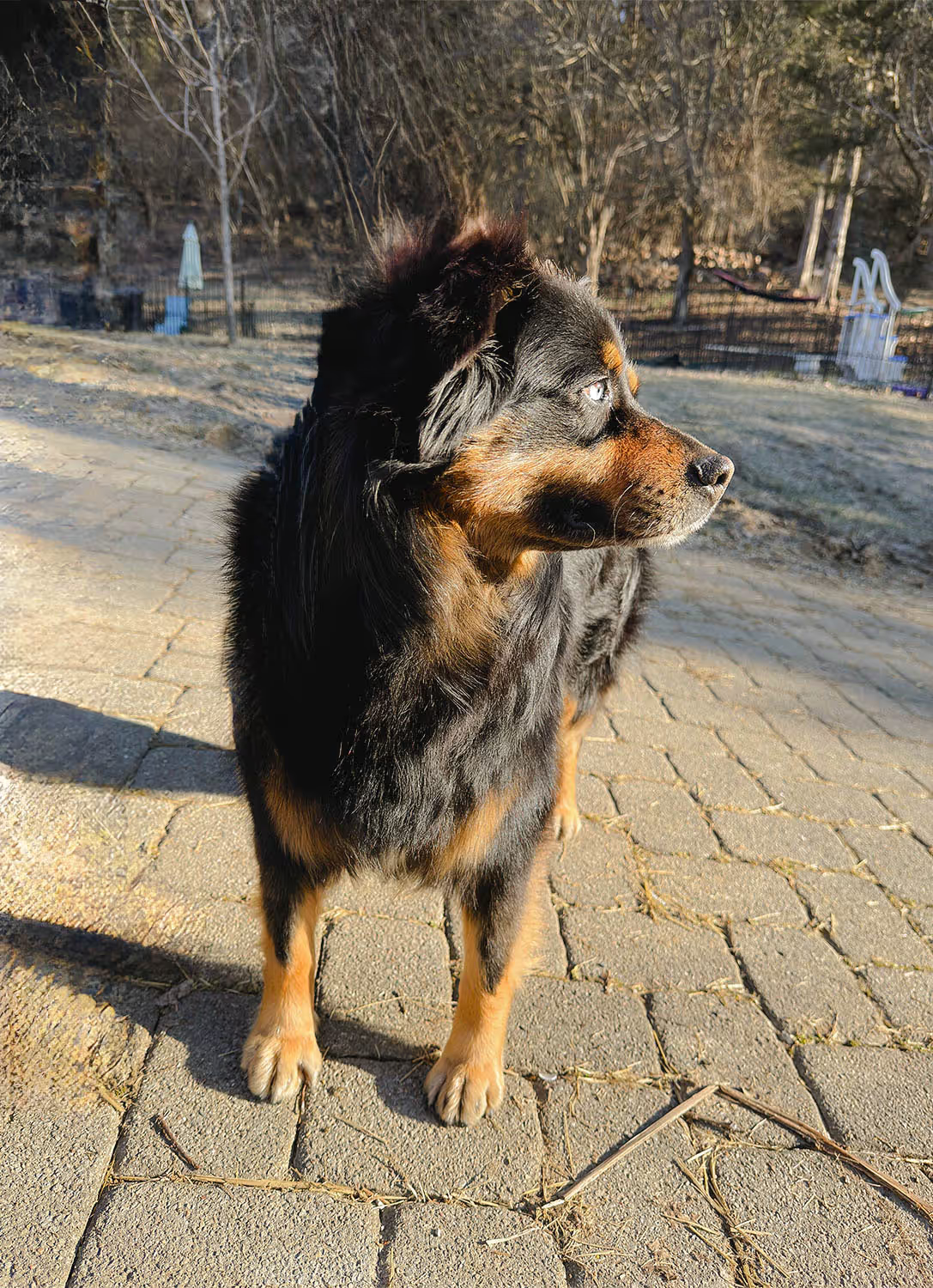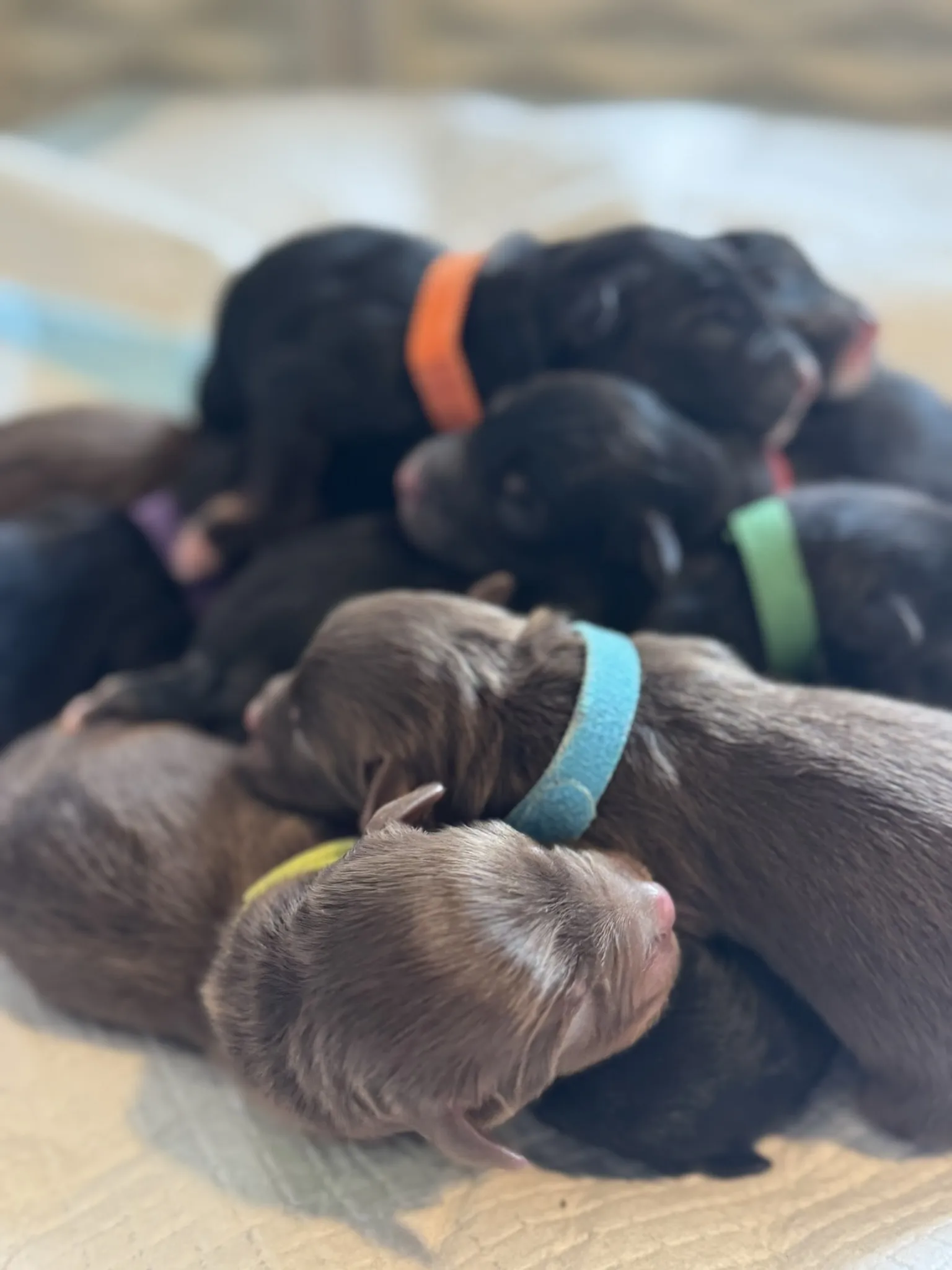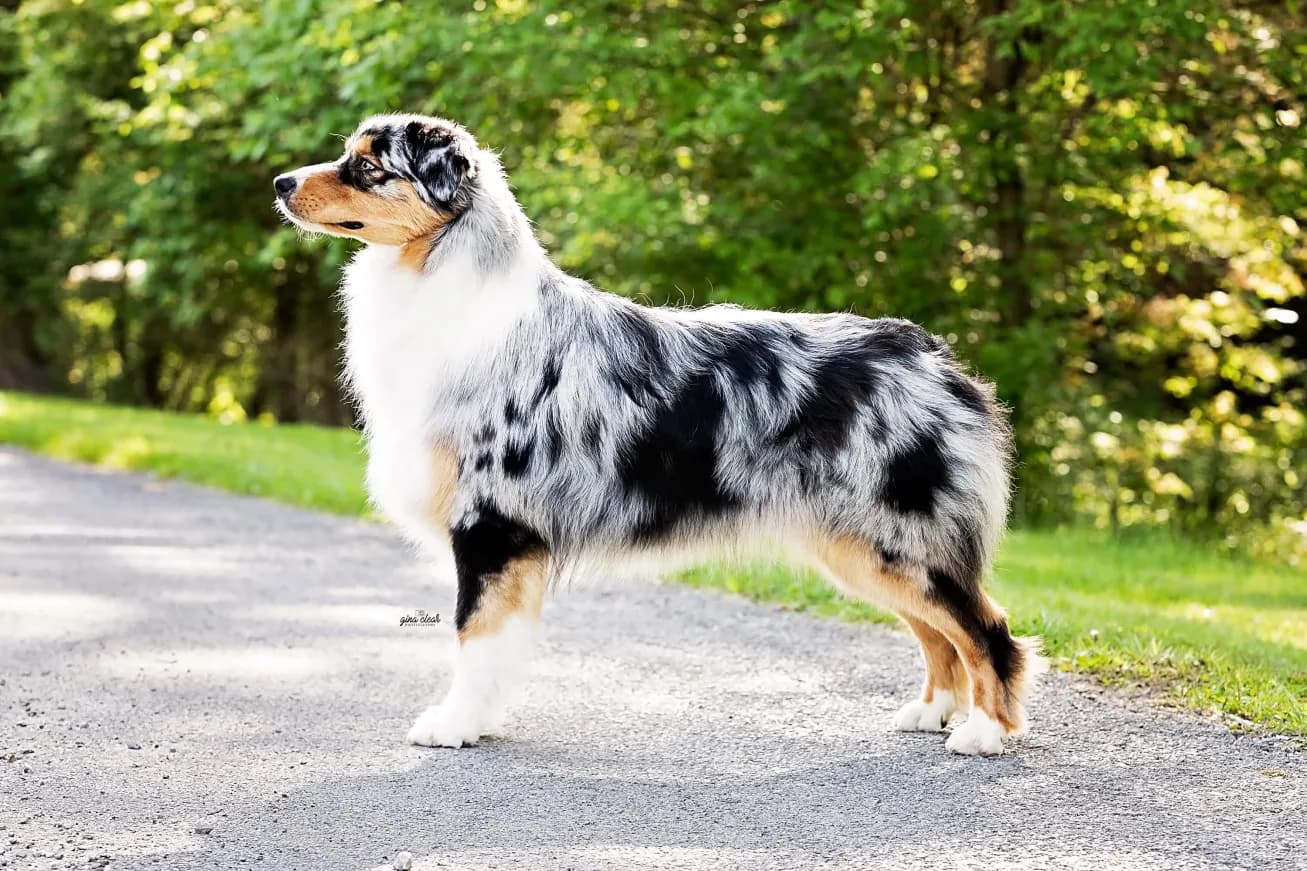
It is one of the first questions people ask us: are Australian Shepherds good farm dogs? It makes sense. The breed practically looks the part — the thick coat, the intense eyes, the reputation as a ranch hand of the American West. And because Queen City Farm is an actual working farm, raising Australian Shepherds right alongside our pasture-raised hogs, lambs, and poultry, we get to answer this one from daily experience rather than a breed encyclopedia.
The honest answer is yes — Australian Shepherds can be exceptional farm dogs. But there is a caveat, and it is the same one that makes them either the best dog you have ever owned or the most frustrating: they were bred to work, and they will find a job whether or not you give them one.
The Short Answer: Yes, If You Give Them a Purpose
Australian Shepherds were developed as all-purpose stock dogs — versatile, biddable, and tireless. That heritage is still very much alive in the dogs we raise today. A farm with real rhythm to it — moving stock, walking fence lines, riding along on chores — can be a wonderful fit for the breed.
But "farm dog" is not a setting you can switch on. It is the product of genetics, training, and a great deal of engagement. An Aussie who is given a purpose is steady, focused, and a genuine partner. An Aussie who is left to fill the empty hours on their own will invent work — and you may not like the work they choose.
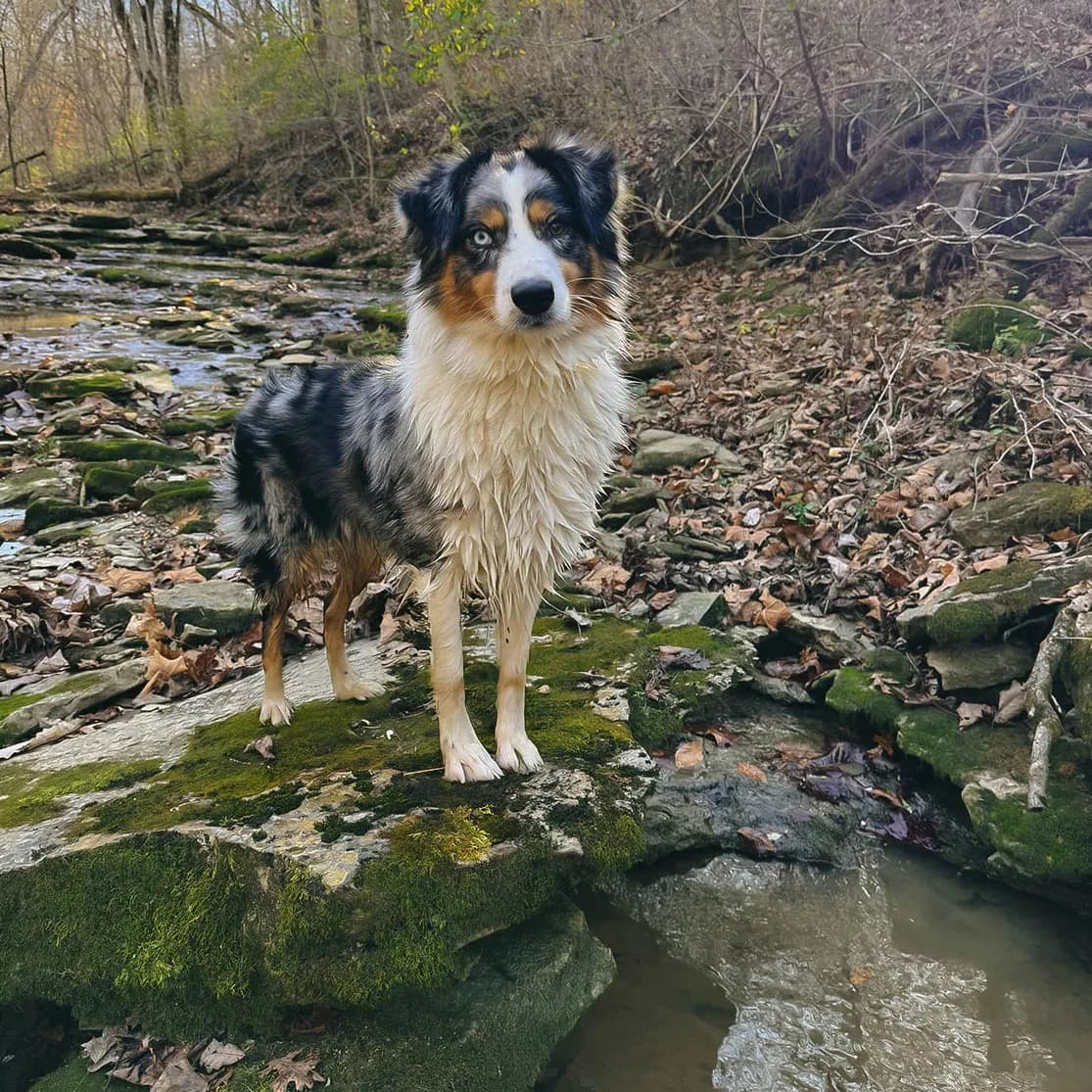
Bred to Work, Not to Idle
The single most important thing to understand about this breed is that intelligence and drive are not optional extras — they are the whole package. Australian Shepherds need both physical exercise and mental work, every day. A tired body is not enough; the mind has to be tired too.
But drive is not the same as frantic, and this is the part the "crazy Aussie" reputation gets wrong. A well-bred, well-exercised Australian Shepherd is calm and easy in the house, with a genuine off-switch — they switch on for work and switch back off for rest. The wired, never-settle dog people picture is almost always one who is under-exercised, under-trained, or poorly bred. It is not the breed at its best, and it is not what a thoughtful program produces.
A bored Aussie is a creative Aussie. That energy goes somewhere, and on a farm it often turns into chasing livestock, patrolling and barking at every sound, digging, or fixating on a job nobody asked them to do. None of that is the dog being "bad." It is a working animal doing what it was built to do, pointed in the wrong direction.
What About the Herding Instinct?
Australian Shepherds carry real herding heritage, and you will hear no shortage of stories about Aussies gathering the chickens or nipping at heels. The instinct is genuinely part of the breed. But it is a myth that every Aussie is destined to become a compulsive chaser the moment it spots a chicken or a running child.
Whether that instinct ever becomes a problem has far more to do with temperament and breeding than with the breed label. A dog with a stable, biddable temperament notices movement — but it can take direction, settle, and leave things alone when asked. The dogs that truly fixate, chase obsessively, and cannot be called off are very often nervy, high-arousal dogs that should never have been bred. That is a temperament failure, not an inevitability of the breed.
This is exactly why the breeder matters so much. When you support an ethical, responsible breeder who prioritizes temperament above everything else — above color, above markings, above a fast sale — you stack the odds heavily in your favor. A sound, level-headed Australian Shepherd is far easier to teach good manners around livestock, children, and traffic, because the off-switch and the willingness to listen are already built in. With a little guidance, that heritage becomes an asset — a dog who can genuinely help move stock — rather than a nuisance.
They Need a Real Outlet
Whether or not you have stock to move, an Australian Shepherd needs a genuine outlet for body and mind. That can be structured exercise, training sessions, a dog sport, or real farm work — but it cannot be nothing. This is the breed's defining requirement, and it is where most mismatches happen.
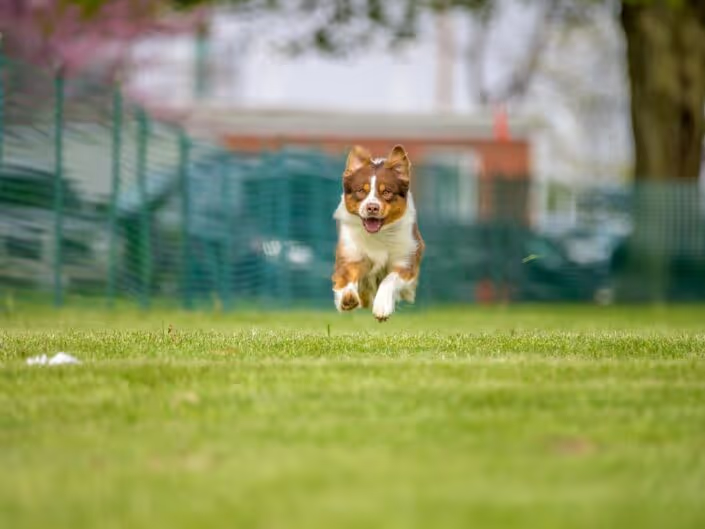
A few good sessions of training and a real chance to run will do more for an Aussie's behavior than acres of open space ever will. Space alone does not satisfy this breed. Engagement does.
Are They Good Around Other Farm Animals?
Raised thoughtfully and supervised, yes. Our puppies grow up around our pasture-raised poultry, hogs, and sheep, and they learn early that livestock are simply part of normal life. That calm familiarity is one of the real advantages of a farm-raised puppy.
A couple of honest notes, though. An Australian Shepherd is a herding dog, not a livestock guardian — they are bred to move stock, not to live among it and protect it, which is a completely different job and a different kind of dog. And even with a stable temperament, a young dog is still developing impulse control, so we do not leave a young Aussie unsupervised with animals they could chase until they have the training and maturity to be trusted. That is simply good practice with any young herding dog.
You Do Not Need a Farm to Own One
This is the part we most want families to hear, because it is the most misunderstood: a job is not the same thing as a farm. Some of the happiest, best-adjusted Australian Shepherds we have placed live in town with no livestock at all. What they have instead is owners who give them training, exercise, and a sense of purpose.
If you are weighing whether the breed fits your life, our is an Australian Shepherd right for your family guide walks through what daily life with one actually looks like. The farm is not the requirement. The commitment is.
How We Breed and Raise Ours
A sound Australian Shepherd is not a high-strung dog — and that is not luck. A stable temperament is bred for and raised for, and it is the trait we care about most. The steadiness, the off-switch, the ability to be a genuine member of the family: that all starts with the parents.
We choose our breeding dogs for temperament every bit as much as for structure and health. We want confident, level-headed dogs that recover quickly from new experiences, take the world in stride, and truly enjoy people. Our dogs are health-tested — hips, elbows, eyes, and a full genetic panel — and proven in the ring and in sport, but a beautiful, healthy dog with a nervous or frantic temperament is not one we will breed. Stable minds come first. You are welcome to meet our girls and our boys and look over their health testing and titles for yourself.
From there, every litter is raised right on the farm — creek water and uneven ground, the sounds of poultry and machinery, weather and open space — with structured, positive socialization that builds confident, adaptable dogs instead of reactive ones. You can read the full process in how we raise our puppies. And because we spend eight weeks getting to know each puppy as an individual, we match them to families by temperament and energy — so a family looking for an active but easygoing companion gets exactly that.
The dog we are working toward is consistent: smart and capable enough to do whatever you ask, and stable and even-tempered enough to be a wonderful active family companion when the work is done — just as happy on a trail, at the kids' ball game, or asleep at your feet.
So, are Australian Shepherds good farm dogs? Yes — and the well-bred, well-raised ones are more than that. They are steady, devoted family dogs who happen to be ready for anything.
If you are weighing the breed, it is worth understanding why buying from a responsible breeder matters and what sets our program apart. When the time is right, you can apply for a puppy.
Frequently Asked Questions
Are Australian Shepherds good farm dogs?
Yes. Australian Shepherds were developed as versatile stock dogs, and that working heritage makes them a strong fit for farm life — provided they are given training, exercise, and a real sense of purpose. They thrive when they have a job and struggle when left to fill empty hours on their own, so the right owner matters as much as the right setting.
Do Australian Shepherds need a farm or livestock to be happy?
No. A job is not the same as a farm. Many Australian Shepherds live happily in town or in the suburbs as long as their owners provide daily physical exercise, mental work such as training, and engagement. Open space alone does not satisfy the breed — purpose and interaction do. Plenty of farm dogs are under-stimulated, and plenty of city dogs are perfectly content.
Will my Australian Shepherd try to herd my chickens or livestock?
Not necessarily — and it is a myth that every Aussie will. The breed does carry herding heritage, so some dogs notice and want to move animals, but whether it becomes a real problem depends far more on temperament and breeding than on the breed label. A sound, well-bred dog with good impulse control can be taught to settle and leave stock alone. The dogs that fixate and chase obsessively are usually nervy, poorly bred dogs — which is exactly why choosing a breeder who prioritizes temperament matters so much. As with any young herding dog, supervise around livestock until your dog has the training and maturity to be trusted.
Are Australian Shepherds good around other farm animals?
They can be, when raised around livestock from a young age and properly supervised. Our farm-raised puppies grow up alongside poultry, hogs, and sheep and learn that animals are a normal part of life. It is important to remember that an Aussie is a herding dog, not a livestock guardian — they are bred to move stock, not to live among it and protect it — and that trustworthy behavior around animals takes time and training to develop.
Are Australian Shepherds good family dogs if I do not live on a farm?
Absolutely. Some of the best-adjusted Australian Shepherds live in homes with no livestock at all. What they need is not acreage but commitment: regular exercise, ongoing training, and an owner who enjoys an engaged, intelligent dog. If you can offer that, the breed makes a devoted and capable family companion whether you have a farm or a fenced backyard.