Some of the most important breeding decisions we make are the ones where we decide not to breed.
That sounds backwards, so let us explain. This spring, Ali came into heat, and we let the cycle pass without breeding her. Nothing was wrong with her. She is healthy, fully health-tested, and a wonderful mother. We skipped the cycle on purpose — because the timing was not going to be right, and breeding her anyway would have been the easy choice, not the responsible one.
We want to walk through why we made that call, because the decision to pass on a heat cycle is one of the least-talked-about parts of running an ethical program — and the reasoning behind how often a female should be bred is more nuanced, and more surprising, than most people assume.
Why We Skipped Ali's Recent Cycle
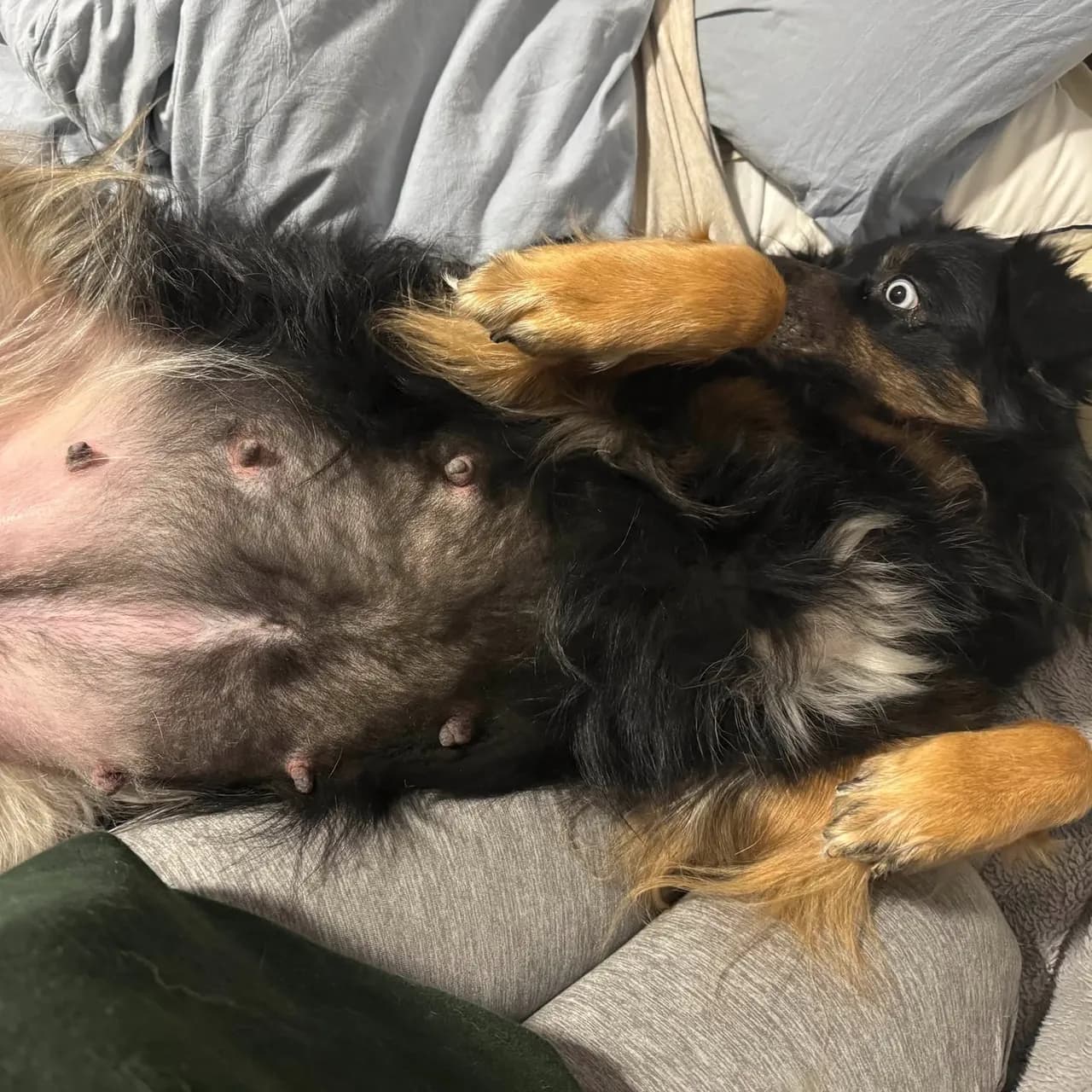
When Ali came into season, we looked at the whole picture — where she was physically, what our program had going on, and what kind of home life a litter would land into at that exact moment — and the timing simply did not line up.
There are a lot of reasons a responsible breeder passes on a given cycle, and almost none of them mean anything is wrong with the dog:
- The timing isn't right for the dam. Maybe she is still building back condition, coat, or weight from a previous litter. Maybe she is in the middle of a show or sport season. Maybe she is just a little young or a little less mature than we want her to be for this particular breeding.
- It's a question of capacity and timing. Raising a litter the way we do is a nine-week, around-the-clock job. What matters is never taking on more at once than we can give our full attention to — so when we already have puppies on the ground or another breeding planned, we look honestly at our bandwidth and space things accordingly. Sometimes that means a cycle gets skipped so every litter gets everything it needs.
- The stud or the pairing isn't ready. Sometimes the male we want to use isn't available, hasn't finished health testing, or the season falls at a time when we can't manage the logistics of a planned breeding properly.
- Life timing. Whelping and the weeks after are intense. If that window would land on top of travel, a family event, or anything that would keep us from being fully present for the dam and her puppies, we wait.
For Ali, it came down to the timing not being right — and once that is true, the decision makes itself. We would rather skip a cycle and breed her on a season when everything lines up than force a litter into a window where we could not do it well. The dog does not lose anything by waiting. A female dog does not experience a skipped cycle as a disappointment — she does not know it happened. What she gets instead is a breeder who only brings puppies into the world when the conditions are right for them.
Responsible Breeders Don't Breed Back-to-Back Forever
There is an old assumption — and, honestly, a practice among less careful breeders — that a female should be bred every single time she cycles for as long as she physically can. That is not how a thoughtful program works.
A responsible breeder treats how often a female is bred as its own deliberate decision, made fresh each cycle. In practice, that often looks like breeding on two consecutive cycles and then skipping one — but here is the part people miss: that pattern is not a universal rule, and it is not the same for every female.
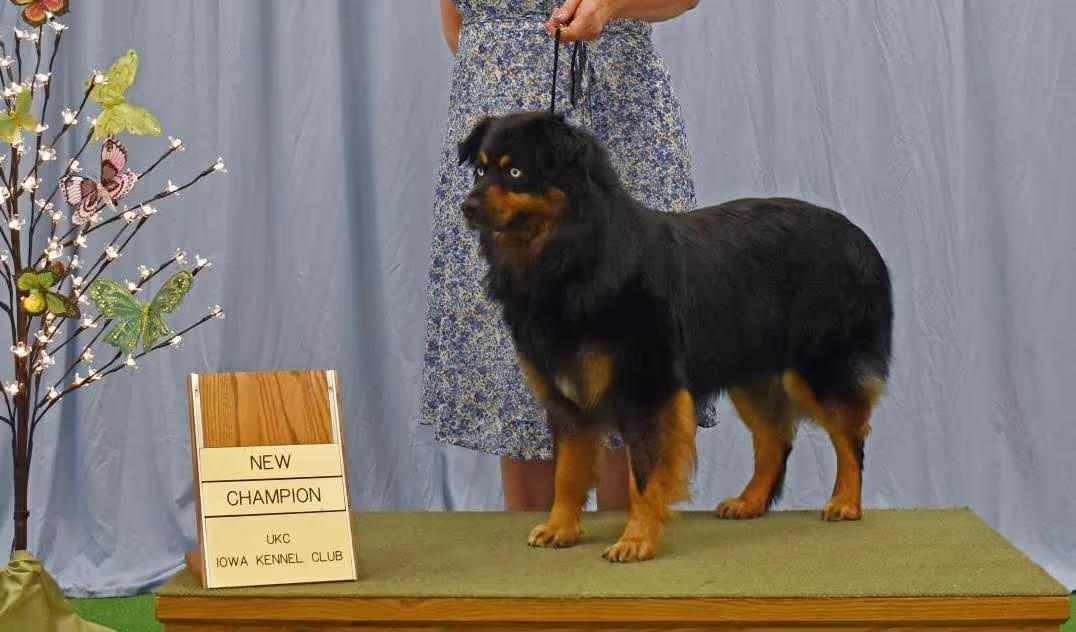
Every female recovers differently. Some come through a litter and bounce back to full condition quickly — coat, weight, muscle, and energy all back where we want them well before the next season. Others take longer. They need more time to rebuild, more time for their body to come fully back to itself, and pushing them onto the next cycle would mean breeding a dog who isn't yet in peak condition. The whole point of evaluating each female individually is that the calendar doesn't decide for us — she does. We look at the actual dog in front of us every cycle and ask whether she is genuinely ready, and we let the answer be different for different girls.
So "two on, one off" is a reasonable starting frame, not a law. The real standard is: breed her when she is in peak condition and the timing is right, rest her when she isn't, and never let convenience or momentum make the decision.
The Surprising Part: Skipping Cycles Isn't a "Free" Rest
Here is where most people's intuition is wrong, and where the veterinary science is genuinely counterintuitive.
The common assumption is that every skipped heat cycle is a gift to the female's body — a break, a rest, time off that can only help her. So surely the safest thing is to skip as many as possible and breed as little as you can?
It turns out it is not that simple. The reason has to do with what a heat cycle does to the uterus whether or not a female is bred.
Every time a dog goes through a heat cycle, her body produces progesterone for roughly two months afterward — the same hormone, at the same levels, whether she is pregnant or not. As far as her uterus is concerned, an empty cycle and a pregnant cycle look very similar hormonally. That repeated progesterone exposure, cycle after cycle with no pregnancy, gradually thickens the uterine lining and can lead to a condition called cystic endometrial hyperplasia — a buildup of cysts and fluid in the uterine wall that, over time, sets the stage for pyometra, a serious and potentially life-threatening uterine infection.
In other words, the uterus does not experience a skipped cycle as "rest." It experiences it as one more round of hormonal stimulation without the reset that a pregnancy provides. This is why a growing number of reproductive veterinarians now caution against skipping cycle after cycle as if empty seasons were harmless — because for the uterus, an unbred cycle carries much of the same wear as a bred one, and stacking up empty cycle after empty cycle is its own risk to her long-term reproductive health.
You can read the underlying veterinary reasoning in the Merck Veterinary Manual's overview of the cystic endometrial hyperplasia–pyometra complex and in recent research on the predisposing factors for endometrial hyperplasia and pyometra.
So What's the Responsible Balance?
If breeding too often is hard on a female, and skipping too often also carries risk, where does that leave a thoughtful breeder? Squarely in the middle — which is exactly where the individualized, cycle-by-cycle judgment comes in.
The goal is not to breed a female as many times as possible, and it is not to breed her as few times as possible. It is to:
- Breed her on good cycles when she is healthy, in peak condition, and the timing is right — making real use of her prime reproductive years rather than letting season after season pass empty.
- Skip cycles when the timing genuinely isn't right — when she needs to rebuild condition, when we already have a litter, or when the pairing or logistics aren't ready, the way we skipped Ali's recent cycle.
- Read each female individually — respecting that some recover faster than others and need different spacing, rather than applying one rigid formula to every dog.
- Retire her at the right time — and then spay her so that her uterus is no longer cycling at all, which removes the long-term hyperplasia and pyometra risk entirely once her breeding career is complete.
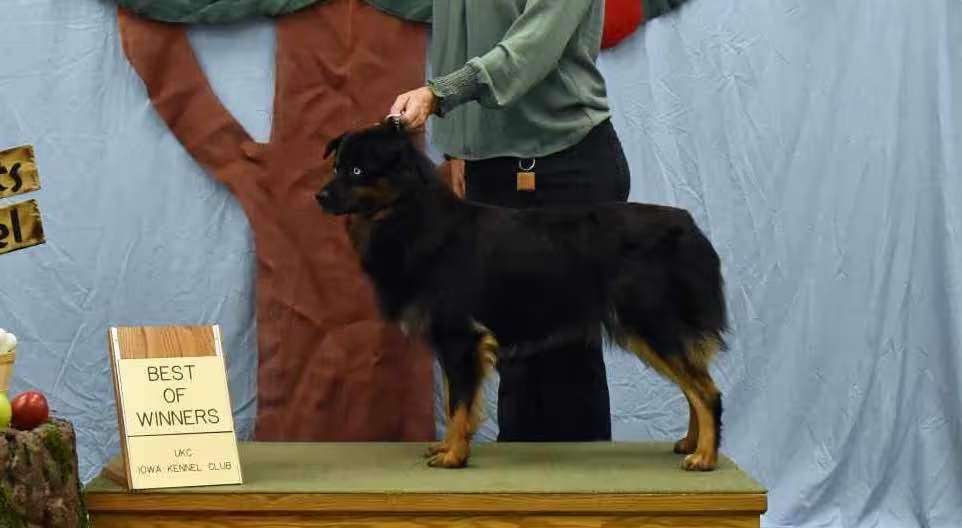
That last point is the resolution to the whole puzzle: the answer to "empty cycles aren't risk-free" is not "breed her constantly." It is to breed thoughtfully during her prime, retire her while she is still in excellent health, and spay her so that the cycling — and the risk that comes with it — stops for good.
Why We're Telling You This
We share this because skipping Ali's cycle is exactly the kind of decision that never makes it into a litter announcement. There is no photo of the puppies that weren't born this spring. But it is one of the truest examples of what responsible breeding actually is: a constant series of judgment calls about when not to act, made in service of the dog's health and the quality of every litter — not the breeder's schedule or the demand for puppies.
A breeder who breeds every female on every cycle isn't more productive. They are skipping the hardest and most important part of the job — the part where you look at a healthy, ready-looking dog in heat and decide, this time, to wait.
If you want to understand more about how we make these calls, our meet the breeder and the Queen City difference pages walk through how we evaluate our dogs at every stage. And if you are wondering whether breeding your own dog is the right path, our honest companion post on the questions to ask yourself first is a good place to start.
Frequently Asked Questions
Is it bad for a dog to skip a heat cycle without being bred?
A single skipped cycle is completely normal and not harmful — responsible breeders skip cycles all the time when the timing isn't right. The nuance is that repeatedly allowing cycle after cycle to pass empty is not the consequence-free "rest" people imagine, because each heat cycle exposes the uterus to progesterone whether or not the female is pregnant. Over many empty cycles, that repeated exposure can contribute to cystic endometrial hyperplasia and, eventually, pyometra. The responsible approach is to breed thoughtfully during a female's prime, retire her while she is healthy, and spay her so the cycling stops entirely.
Do responsible breeders breed back-to-back?
Sometimes, yes — breeding on two consecutive cycles and then skipping one is a common and accepted pattern, and there is sound reproductive reasoning behind not letting too many cycles pass empty. But it is not a rigid rule. Whether a particular female is bred on consecutive cycles depends entirely on how well she has recovered her condition, her age, and the timing of everything around the litter. Some females bounce back quickly; others need more time. We evaluate each female individually every cycle.
Why would a breeder skip a cycle if breeding her would produce more puppies?
Because producing the most puppies is not the goal — producing healthy, well-raised puppies from a female who is in the right condition at the right time is. We skipped Ali's recent cycle because the timing wasn't right, even though she is perfectly healthy. Forcing a litter into a window where we couldn't do it well, or breeding a female who isn't fully recovered, would compromise either the puppies or the dam. Waiting costs the dog nothing — she has no awareness a cycle was skipped — and it protects the quality of every litter we do produce.
How does pregnancy actually affect the uterus compared to an empty cycle?
Hormonally, the two months following a heat cycle look similar to the uterus whether the female is pregnant or not, because she produces progesterone either way. The key difference is that repeated empty cycles, with no pregnancy to interrupt the pattern, are associated over time with thickening of the uterine lining (cystic endometrial hyperplasia). This is why reproductive veterinarians increasingly advise against treating skipped cycles as automatically safer than bred ones, and why the long-term answer is to retire and spay a female once her breeding career is complete.
When should a breeding female be retired?
There is no single number that fits every dog, but the principle is to retire a female while she is still in excellent health — well before age or repeated cycles take a toll — and then spay her. Spaying after retirement removes the ongoing hormonal cycling, which eliminates the long-term risk of cystic endometrial hyperplasia and pyometra. A good retirement decision, like a good breeding decision, is made by looking at the individual dog rather than applying a one-size-fits-all rule.